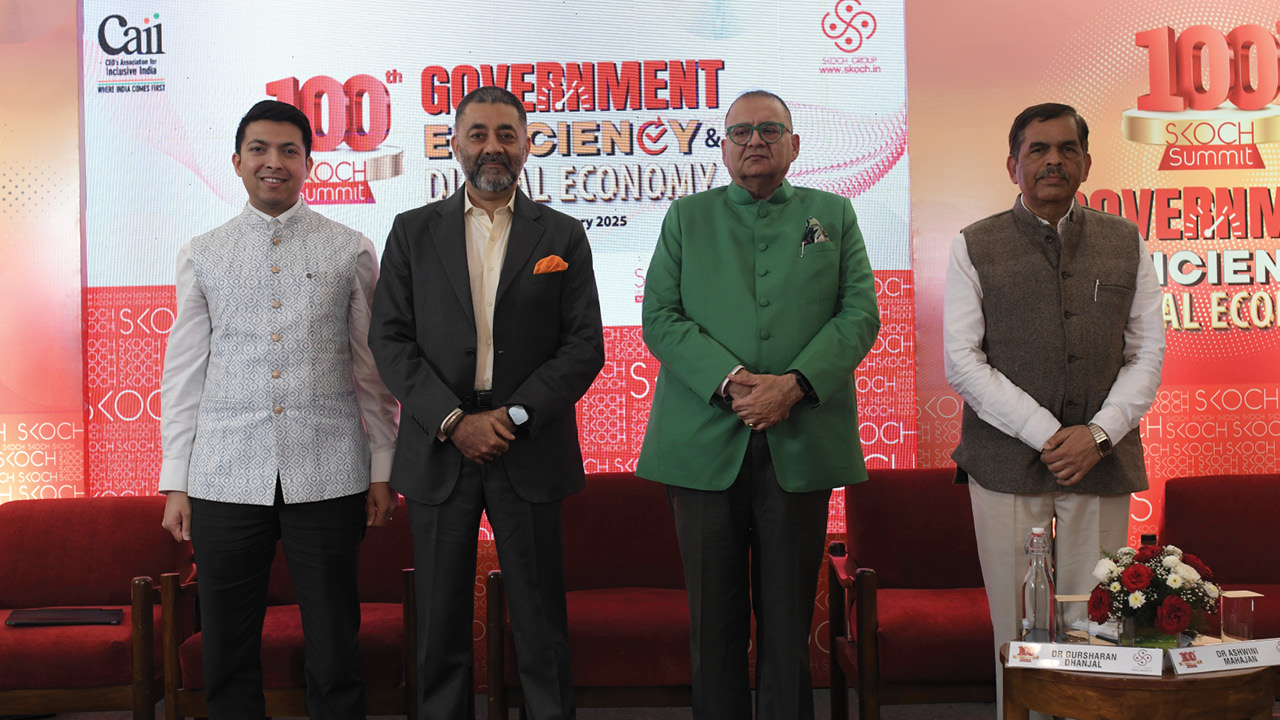
SKOCH Summit
Mr V Srinivas
Secretary, DARPG & DPPW, Government of India
Mr. V. Srinivas highlighted India’s transformative governance journey under the vision of Maximum Governance, Minimum Government. He detailed reforms in grievance redressal through CPGRAMS, digital transformation via eOffice and Mission Karmayogi, and the development of the Good Governance Index and NeSDA. Emphasizing technology, transparency, and citizen-centric service delivery, he underscored India’s growing global leadership in digital governance.
Mr V Srinivas at the 100th SKOCH Summit: Government Efficiency & Digital Economy
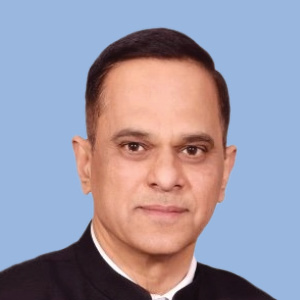
Mr V Srinivas
Secretary, DARPG & DPPW, Government of India
Key Points*
- Congratulated SKOCH Group leadership on the 100th Skoch Summit and highlighted Skoch’s long-term documentation and publications on governance.
- Framed the talk around “administrative reforms and government efficiency” within the broader theme of government efficiency and the digital economy.
- Cited the Prime Minister’s 15 August 2021 message: next-generation reforms, last-mile service delivery, and reducing unnecessary government interference (maximum governance, minimum government).
- Reiterated enduring public administration principles: rule of law, ethics, integrity/probity, impartiality, citizen-centric services, skilled and responsive workforce, and a smaller, more effective government.
- Emphasized public grievance redressal as a foundational pillar of good governance and central to reform.
- Connected the PM’s governance agenda to “Panch Pran” (15 August 2022): developed India, removing colonial mindset, pride in roots, unity, and sense of duty.
- Positioned Digital India (launched 1 July 2015) as a shift toward digitally empowered citizens and digitally transformed institutions, improving ease of living and ease of doing business.
- Highlighted CPGRS as a large-scale, tech-enabled grievance platform with tracking, feedback, dashboards, AI-driven analytics, multi-institutional support, faster timelines, high volume disposal, and measurable satisfaction.
- Described Mission Karmayogi and the iGOT platform (launched Oct 2024) as a continuous, indigenous, role-based capacity-building system for civil servants to adapt to modern governance.
- Detailed structural reforms to improve decision-making: rewriting the Central Secretariat Manual of Office Procedure (2019), universalizing e-Office, delayering file movement, delegating powers, digitizing central registry, adopting desk officer systems, and Swachh/records management campaigns that reduced clutter, freed space, and generated scrap-sale revenue—supported by governance metrics like the Good Governance Index and NeSDA.
* This content is AI generated. It is suggested to read the full transcript for any furthur clarity.
Transcript
Sameer Kochhar, Dr Garan Ganal, my good friend S Indrapal Singh, distinguished colleagues: at the outset, let us congratulate Sameer Kochhar, Chairman, SKOCH Group, for the 100 SKOCH Summit. It’s not 30 years of journey by SKOCH and 100 summits, numerous awards and documentation. I’ve had the opportunity to work closely and see his work. I’ve read his publications. The India 2047 book publication is quite a voluminous amount of work. The book discussions that they’ve held with regard to what Dr O. R. M. Ramchandran, one of our 1971 batch officers, had published—Bringing Government and Citizens Closer—was quite a comprehensive reading.
So today it’s my great privilege to address each one of you. I’ve been associated with administrative reforms for a very long time. November 2018 I was posted here, and for the past 7 years I’ve been witness to the transformative journey that India’s governance models have undergone.
So the subject of today’s discussion—government efficiency and digital economy—we have two plenary sessions: the state of government efficiency (we did see a presentation in terms of how the metrics look) and digital economy and governance that will follow this session. So in today’s session, I will present my thoughts on the subject: administrative reforms and government efficiency.
Let me start with a quote from what Prime Minister Modi said on 75th Independence Day, that is 15th August 2021. What he said from the ramparts of Red Fort was that, “In this decade of Amrit Kaal we will give priority to next generation reforms. We will ensure that all facilities like service delivery should reach citizens up to the last mile. It should reach the last person seamlessly without hesitation or any kind of difficulty for the overall development of the country. Unnecessary interferences by the government and government processes in the lives of people has to be ended.” This was the model on which the maximum governance, minimum government policy framework was based.
And if you go into the history of administrative reforms, we’ve had the first Administrative Reforms Commission in 1966, thereafter the second Administrative Reforms Commission in 2005, a huge number of documentation on public administration and public policy. The foundational principles remain: rule of law, public service ethics, integrity, probity, impartiality, citizen-centered services, skilled, representative, responsive workforce, a smaller government.
There are also areas like performance evaluation. Many of us who submit annual performance appraisal reports submit key result areas at the beginning of the year and then see how the key result areas shape up in the middle of the year and at the end of the year. E-governance, social policy and service-oriented government, emergency management, urban management (which is a huge challenge for 21st century), human rights, cultural diversity, social cohesion—these are areas that we work on.
For the last 5 days we were having the International Institute of Administrative Sciences, DARPG India Conference, and one of the brand lectures was delivered by Professor Andrew Massey of King’s College London. As I heard him, I thought I’ll share one of his quotes in today’s discussion. “Of all the above areas which I have listed, the redressal of public grievances is the most profound and most ancient in terms of written law and the foundation of good governance. It structures the relationship of politics, the administrative state and the citizens. It is infrequently discussed core of good governance and central to reform.”
So when I see the Honorable Prime Minister’s call for next generation reforms, there is a very ambitious agenda for good governance that he has outlined in his third term. And this ambitious 16-point agenda that has been outlined by the Honorable Prime Minister focuses on what is called the “Panch Pran”—the five resolutions that were announced from the ramparts of Red Fort on 15th of August 2022. Now these form the basics of the core principles of good governance: the goal of a developed India, to remove any trace of colonial mindset, to take pride in our roots, and unity and sense of duty among citizens.
So what does maximum governance, minimum government policy—and if you recall the Digital India movement of July 1st 2015 when it was launched—one of my own projects, the Digital Seva, was launched as part of the Digital India. What it envisages is a digitally empowered citizen and a digitally transformed institution. Fully digital institutions are what we wish to develop, and also citizens who are digitally empowered to avail the services that government is placing online.
So bringing citizens and government closer using technology is important for both ease of living and also for ease of doing business. So there is a multi-pronged approach to achieve this: grievance redressal systems to be fully digitized; a whole-of-government approach to be adopted in formulating and implementing policies; there is a Committee of Secretaries that is looking at regulatory compliance and easing up regulatory compliance; upskilling—the Mission Karmayogi, which envisages upskilling and reskilling of employees to adopt new e-governance solutions; and periodic monitoring and quality assessments of governance models using effective metrics.
We did see a presentation on how metrics on transformation governance has been presented by SKOCH Foundation today—quite interesting—and I’ll share how the good governance index that the DARPG has developed, as also the National e-Services Delivery Assessment that the DARPG has developed, looks and compares with regard to this particular index.
At the heart of this effective policy-making and commitment for good governance is the principle of social justice, equity, transparency and accountability. And this is to be achieved by a saturation approach in implementation of priority sector schemes. And the vision that has been outlined is “Sabka Saath, Sabka Vikas, Sabka Vishwas, and Sabka Prayas,” which is the overarching national goal.
Let me take up the first issue that is effective redressal of public grievances. The Honorable Prime Minister has been speaking about it from a number of fora. He has spoken about it in his Mann Ki Baat; he has spoken about it in review meetings in PRAGATI; he has spoken about it in Council of Ministers. And India’s policy for grievance redressal places tremendous emphasis on quality of grievance redressal as also on timelines of grievance redressal.
Today the CPGRS platform represents the world’s largest interface for effective redressal of public grievances. It has been adopted and implemented across all ministries and departments—attached, subordinate and autonomous bodies. All state government portals are integrated and uses advanced technologies. It provides comprehensive tracking and feedback mechanisms. There’s also a feedback dashboard where every citizen who has filed a grievance is contacted and his feedback is taken, and it is assessed for satisfaction levels. It has also set up a huge number of dashboards.
Governance in India in 21st century is far more nuanced than what governance models were in 20th century. I recall my discussion with Dr D. U. R. Subbar—the topper of the 1972 batch—and I did ask him what is the difference in governance models between his era and what the challenges that we face today. He said, “Shas, there’s no difference. The overwhelming priority is to stand up for public good against all odds.” It is slightly more nuanced than what Dr Subbar said. Contemporary governance models require examination of disaggregated data sets on a very large platform to come to some kind of an evidence-based decision making. That is where advanced technology platforms, particularly use of AI or disaggregated data analysis, emerging technologies can be extremely helpful.
The CPGRS uses two advanced dashboards: one is called a Tree Dashboard and one is called the Integrated Grievance Management System, both of which are AI-driven portals to ensure that a deeper understanding of grievance root cause analysis, as also the individuals who are filing it, the officials who are monitoring it, can be undertaken right up to the village level, individual level.
The institutional support for running this very, very large system comes from more than 200 experts and 20 institutions. The NIC provides technology support. There is BSNL that operates the call center. The Common Service Centers are integrated with the CPGRS portal. There is C-DAC and Bhashini because grievances are translated into all languages. The Quality Council of India, there’s Ernst & Young—there’s a huge group of agencies.
As I said, IIPA, the National Institute of Smart Governance—and collectively what has been implemented was a 10-step reform that resulted in a significant increase in the number of grievances that were addressed every month. For the last 30 months we’ve had more than 1,00,000 grievances being redressed. The timelines of grievance redressal have come down from 60 days to 45 days to 30 days to currently 21 days. And in actual practice we see in 13 days.
The Government of India assures every citizen who files a grievance on the portal or writes to the Prime Minister that a response will be sent to him in about 10 working days. For managing such a large system in which more than 30 lakh citizens apply, there are 1,04,000 officers that are deployed. We also have, in addition to these, 4,000 officers who are deployed on the system. There are a huge number of technology support providers who are available—about 200 technology providers who work backend to ensure that this system works flawlessly.
1 Cr 20 lakh grievances have been redressed in the last 5 years. It’s a massive number of grievances that have been redressed, and the satisfaction levels have gone up to above 55%. It has been recognized as India’s 100 best technology ideas by India Today, and also as a state-of-the-art grievance redressal system for replication across 56 countries across the globe by the Commonwealth Secretariat.
Let me speak about the Mission Karmayogi competency model. The Karmayogi competency model was launched by the Honorable Prime Minister in October 2024. It envisages that the civil service keeps itself abreast of the contemporary developments of governance. It has done away with classroom teaching, which is didactic classroom learning, and provides huge number of interfaces using the iGOT platform. I hope each one of you is registered on iGOT and has been able to access the iGOT platform.
What I have seen is younger officers, senior colleagues, even much older people on the verge of retirement, have enrolled themselves to undertake huge number of courses on iGOT. Even I speak today, several DARPG officials are participating in one of the competency module trainings at CSOI. It is based on an indigenous development and seeks to transform every employee from a Kachahri to a Karmayogi. And these transitions have been envisaged from a rule-based civil servant to a role-based civil servant.
Every time there is a transfer we find that the learning curves are fairly steep. So the iGOT Mission Karmayogi platform ensures that a much smoother transition is possible, and also if you’re there on the job you can reinvent yourself to do the same job in a much more effective manner.
The subject of today’s discussion is increasing efficiency in government. Increasing efficiency in government, particularly in terms of decision making, has been a top priority across multiple governments. It has been an overarching goal—like improving justice delivery. Improving efficiency in government starts with: how do we improve decision making?
And one of the first challenges that I faced was: can we undertake 21st century decision models without a digital secretariat? And the first step was we rewrote the Central Secretariat Manual of Office Procedure in 2019. The rewriting of the Central Secretariat Manual of Office Procedure enabled the transition from what was a Central Secretariat which had very low adoption to the e-Office, to a Central Secretariat where 99% of the receipts—that is 5 lakh receipts a month—are digital receipts, and 40 lakh files are e-files. That is, almost 95% files are used as e-files now.
That was possible because e-Office was universalized, not only across central ministries and departments, but also across attached autonomous subordinate offices. Government of India financed states to take up e-Office and implement it. In fact, I do have this memory of Government of Jammu & Kashmir shifting almost 280 truckloads of files from Jammu to Srinagar as part of the Darbar movement. e-Office enabled simultaneous operationalization of both secretariats at the same time.
The sheer benefit in terms of having a digital secretariat were seen to be believed. It brought down the timelines of processing files on an e-Office system—on an e-file system. It was impossible to hide inefficiency; inefficiency could be identified. And we could go into the next step of having a four-pronged approach for increasing efficiency in decision making that envisaged: delayering, where the number of levels through which a file passes should be brought down to four; administrative and financial delegation of powers; central registration units being fully digitized; and the last one was adoption of a desk officer system, in which under secretaries and deputy secretaries could be empowered to take decisions and communicate with field formations.
Delayering was pursued with great intent in Government of India. The number of levels were seen to be over eight—the number of levels through which a file passed. Delayering ensured, implemented over 4 years, could bring it down to 4.07 levels. It was possible because the silos were broken. Additional secretaries and joint secretaries were kept in one group; there was no vertical reporting. Similarly, level jumping was permitted. And it was ensured that the channels of submission across every ministry were reviewed. It was comprehensive work that was undertaken.
The delayering also enabled massive number of additional staff being identified who could be redeployed, and that led to this massive efficiency increase that has been found out in the SKOCH reports—improved governance models that came in. If you look at the Government of India’s own governance metrics, we find that there is a massive improvement in the speed of decision making across governance.
The other area of work that was taken up was with regard to the Swachh campaigns. Government offices were very cluttered places. The minute you enter a government office, the first thing you see are files. The first thing you enter any government office you find a massive clutter of paper which has not been weeded out—files which have not been separated—paper everywhere, thousands of volumes. The special campaign for institutionalizing Swachh and reducing pendency in government was a very huge success.
Over the last four years it has actually weeded out, brought in improved records management practices, and weeded out 1 Cr 31 lakh files across ministries. Every ministry was asked to undertake, on a regular basis, record management practices. Records officers and ministries were trained at the School of Archival Studies. Conservation practices were brought in place, and digitization was ensured.
1 Cr 31 lakh office files being weeded out meant that almost 645 lakh square feet of office space was freed—huge amount of office space. In fact, I recall in Ministry of Culture going into the next room—I could not recognize—there was so much space that was available in that room.
It also ensured that automobile scrap—many vehicles are scrapped which were not sold on time—electronic scrap, scrap that was lying in store rooms of offices, all of which needed to be disposed. So the scrap sale policies were often frequently reviewed, and scrap sales over the last four years generated 2,364 crores. That was the quantum of scrap that we were carrying in 11.5 lakh government offices. There were photocopiers lying there, there would be vehicles lying—it was an incredible amount of scrap that government was carrying.
The Prime Minister has mentioned it. If you see his response in the reply to the Honorable President’s address, he has made a mention that cleaning up of office spaces has been one of the major success stories in government. He has tweeted about it a number of times. He mentioned about it in his 26th Mann Ki Baat on November 24th on the same subject, saying that office spaces need to look good. Administrative efficiency can go up if you have a digital working environment and if you have a clean office environment where you can work—that is when teamwork can be developed.
A third area of work has been developing metrics, and the DARPG was mandated to take up two big metrics that were to be developed. One was called the Good Governance Index. This was an exercise that was started in 2015, and it took many years to complete. The first Good Governance Index, which is an assessment of states, was published in 2019, and thereafter the second one came up in 2021, and the third one—the 2023 one looks like a bit dated data—so we’re looking at a 2025 index.
The National e-Services Delivery Assessment was published in 2019 after 4 years of formulation, and the second one was published in 2021, and the third one was published in 2023.
Now what the Good Governance Index has said is that there is a positive movement in governance models across states, particularly larger states—even in smaller states there is considerable movement. It’s trying to understand how, for example, the Gujarat model of governance works, and for that the District Good Governance Index was also pursued.
Now the District Good Governance Index, which looks at evaluation of almost 350 districts of India—particularly the Gujarat model of development had fascinated me. What we found was: why is it that Gujarat constantly tops India’s Good Governance Index? One of the reasons is that the collective firepower of 33 districts of Gujarat working at the same level—the discrepancy in the levels at which the ranks across 60 indicators of Gujarat work on 10 sectors is almost identical, very marginal difference.
And when you compare it with, say, other states—say Jammu & Kashmir or Uttar Pradesh—where you find the divergence between the top performing districts and the lower performing districts is slightly higher, so the average levels pulls the state down. But in the case of Gujarat, where almost all districts are functioning at the same level, it takes the index up to a much higher level. So you find Gujarat topping across multiple sectors, be it in agriculture, commerce, be it in economic development, health sector—across sectors—a uniformly high ranking gives them a cumulative higher aggregate ranking.
The National e-Services Delivery Assessment was formulated with the objective to pitch India’s e-governance models on par with what was shown as the UN Development Index. So today the National e-Services Delivery Assessment assesses e-services across all ministries and departments of Government of India. It examines the major platforms that are operated—be it e-Naran, be it Bhavishya, be it CPGRS, be it any other major portal that you’re running—and benchmarks it against what was achieved in the previous years. It identifies the performance across five categories: particularly content availability (how often is a website updated), ease of use, status and request tracking, also security and data privacy. And there are four more new parameters like use of emerging technologies, open government—whether open government access is provided or not.
What we found in India’s e-services journey was: the pace at which India digitized its e-services was quite rapid. We had found in 2019 only about 48% of the total services that we are providing were e-services. Today 75% of the services that India provides are e-services. 19,500 services are provided as e-services. It is expected that by 2026 hopefully we will be touching about 90%—so fast is the pace of adoption of e-services.
The quality of e-services also—there have been improvements, particularly in cyber security areas—there have been significant improvements that are being witnessed.
Recognizing meritocracy with the Prime Minister’s Awards for Excellence in Public Administration have been comprehensively revamped. They bring in huge number of grassroots level innovations that have been taken up. In fact, the broadening of the innovation category particularly for district collectors has ensured that more than a thousand innovations are submitted every year. There’s also innovations of central ministries, state governments that are submitted. Then priority sector programs—in fact the Prime Minister’s award scheme has enabled kickstarting of the performance and taking the performance in many priority sector schemes to much higher levels. K India, for example—once an award category was introduced, the performance went up significantly.
These awards are conferred on 21st of April every year. And 21st April 2025 the Prime Minister would confer these awards from Vigyan Bhavan Plenary Hall. And last time it was conferred, 26,000 officials participated in the online function. It’s a very popular award category.
The other one is the National e-Governance Awards. These are more in terms of e-governance. And the dissemination of both these award winners is through the regional conferences, as also through the national good governance webinars and the national conferences.
Another innovation that has been introduced to celebrate India’s governance is the Good Governance Week. The Good Governance Week is celebrated from December 19th to 25th every year, and it is accompanied by what is called the Prashasan Gaon campaign, wherein government has asked all district collectors, all field formation, to go right down to the village level and hear service delivery applications, as also redressal of public grievances.
The collective firepower of 780 district collectors going to the village formations to ensure service delivery applications are addressed, as also grievances are addressed, is quite phenomenal. 4 Cr service delivery applications could be disposed of within 5 days’ time from December 19 to 25. That is the kind of manpower deployment that we can bring in terms of sheer scaling up of administrative efficiency.
There’s also improving pensioners’ welfare. And improving pensioners’ welfare is an area where a lot of empathy and compassion is required. And more than 2 Cr pensioners—with whom I have worked with for a number of years—there have been specific areas of work. It’s also a highly technology-driven area, wherein every pensioner expects on the first of every month his pension should be paid to him, and every official who’s retiring expects that he will be given a pension payment order on the date of retirement.
There are pension disbursing banks. The State Bank of India has the maximum number of central pension processing centers across 20 states they have established. There’s also a pensioners’ SAA. There’s a CPGRS portal that listens to it. And the digital empowerment of pensioners—the end-to-end digitization of the pension payment process—has been a big feature.
So the number of pension forms have been simplified to make it a single form that is auto-populated from the service book stage to the pension processing stage, with almost 125 entries being populated from e-HRMS directly into the Bhavishya platform.
The other area has been the Digital Life Certificate campaign. The DLC campaign this year, particularly using face authentication, has seen 1.60 Cr pensioners availing Digital Life Certificates. Within a period of 20 seconds you can submit your DLC—20 seconds, sitting at your residence. Within 20 seconds the hassle of going to a government treasury or to a government office or to a bank to submit your life certificate is no longer necessary. You can just download the app, blink your eyes, and immediately the system will take your Digital Life Certificate on board.
There are two more futuristic models of governance that the government has introduced. One is the Chintan Shivir. Now the Chintan Shivir is one area that I found quite fascinating. It cuts across government works in vertical hierarchies. Vertical hierarchies—everybody works in a hierarchy—it’s difficult even to know who’s sitting in your next room unless he is in your hierarchy.
The Chintan Shivir ensures that interpersonal relations improve. Everybody sits together for 48 hours to 72 hours and discusses identified common areas of discussion. In fact, we had our Ministry of Personnel Chintan Shivir that was held over 2 days’ time, in which the Honorable Prime Minister came to address the concluding session, and it was quite fascinating in terms of how much one could learn from each other—because governance works in very, very rigid hierarchical structures, and it was very often difficult to reach out to other colleagues outside these strict silos.
So the Honorable Prime Minister shared his vast experience in governance, and he said that institutions—it should be live institutions—that impersonal models of governance need to find life through deeper personal commitment. Now this can be achieved through personal interactions. It can be achieved through spending time together to think about common good and seeking to find happiness in every job assigned.
The corollary to this is: lack of commitment, inability to work in teams, inertia at workplace, can often result in institutional decay. I have often seen institutions rising and falling with individual leadership, and that makes a lot of difference. Individuals—committed individuals—who are driven with a seriousness of purpose can bring in transformative changes.
This kind of reform in CPGRS was possible because of the collective leadership provided by more than 1,00,000 officers who could find enthusiasm. My colleague Dr S. Tripathi, who’s the Director General, IIPA, tells me that it is so tough even for an audit report to get replies on time. But here is CPGRS, wherein in 10 days’ time you’re able to provide a reply. It’s almost magical that government sends a reply to a citizen. Citizen’s voice is available and his feedback is taken. How are you able to manage it? It is possible only because technology enables disaggregated analysis: every officer can be identified, every citizen can be followed up with, working with states.
In fact, it’s a great pleasure to work with states. And how do you transform state secretariats? Central Secretariat becoming a digital secretariat is an important feature of the transformation.
When I looked at the Manual of Office Procedure—states—the first one I was asked to interact with was: there’s a Committee on Good Governance that was set up by Government of Maharashtra—very senior officers—and their Manual of Office Procedure was written in 1961. A Manual of Office Procedure written in 1961 which does not permit digitization in a big way can find little chance of transforming a secretariat.
The transformation of the Central Secretariat was possible because e-Office was adopted and incorporated and integrated into secretariat procedure through rule-bound system. The same one was done with the Maharashtra Manual of Office Procedure, which was upgraded and released in 2024.
A District Good Governance Index was taken up with Maharashtra. With Jammu & Kashmir have had a very significant engagement—in fact 25 visits in the last 5 years—transformation of their own portal, adoption of e-Office, capacity building of a number of J&K Administrative Service officers, and also with the Right to Service Commissions.
What I did find was: particularly the Right to Services did have tremendous impact in terms of ease of doing business and ease of living. Functional as also time-bound disposal of service delivery applications by the Right to Service Commissions ensured that there was considerable accountability levels within government. And the auto-appeal system that Government of Haryana’s Right to Service Commission introduced was quite a game changer in terms of providing speedy service disposal.
I also had the opportunity to work with a number of Northeastern states. And having been here for so long, every state one gets to see very closely—each of the Administrative Reforms departments, the functioning of the state government. And in Northeast, the adoption of e-Office up to the district level in Manipur was quite a game changer.
So to conclude, let me say that I’ve tried to collate and present to you the gamut of work that has been done in the past decade in terms of bringing efficiency in government. We’ve tried to improve our administrative processes, rewrite rules, revitalize the secretariat, and build stronger institutions through teamwork. It has enabled millions of Indians to reach the benefits of good governance.
And the imposing 182 m statue of Sardar Vallabhbhai Patel provides inspiration for the nation’s relentless commitment to excellence in Amrit Kaal period. So let me end with a quote from the Prime Minister: “In the last century when India won its freedom, it inspired many other countries to free themselves from colonial rule. In this century when India sets benchmarks for growth, it will inspire many other countries to do the same.”
These words I found echo in the last 5 days when almost 60 countries’ senior civil servants, public administration experts, as also senior research scholars, professors—more than 750 of them—were in Delhi for interactions of the IIAS. They found that India’s growth momentum was so strong—the administrative models, the strength of its digital governance portals—it can find tremendous echo in many developing and emerging market countries, and also a beacon for many, many developed economies.
So let me thank you, Mr Kocher, for inviting me today to share my thoughts, and Danal G, thank you very much. And I hope you’ve benefited from the discussion. I close my comments here. Thank you.