SKOCH Summit
Industry and Infrastructure
Filter:









India’s ambition to achieve developed economy status by 2047 under the Viksit Bharat vision rests on expanding productive capacity, on engineering a structural transition towards innovation-led, knowledge-intensive growth. It is a shift that is fundamentally dependent on the quality, coherence and forward-orientation of its regulatory architecture.
This conference advances the argument that regulatory framework design is a primary macroeconomic variable, not a secondary administrative consideration and that India’s ability to sustain high-quality growth over the coming decades will be determined in significant part by whether its institutions are recalibrated to incentivise discovery, reward complexity and attract long-horizon investment.
Drawing on productivity economics and institutional analysis, the conference will examine the relationship between regulatory design and key economic performance indicators (including total factor productivity (TFP), incremental capital-output ratio (ICOR) and the depth of industrial upgrading) to demonstrate that regulatory fragmentation, compliance asymmetries and institutional gaps represent binding constraints on India’s innovation potential.
It will interrogate a critical structural tension at the heart of India’s development moment. Rather than just focusing on deregulation, it is an opportune time for India to advance a capability-centric model of regulatory modernisation, one that builds institutional credibility, reduces uncertainty for R&D-intensive investors and creates the enabling conditions for domestically anchored innovation ecosystems to take root and scale.
Instead of narrowly focusing on deregulation, the conference discusses a capability-centric model of regulatory modernisation. Such a model should build institutional trustworthiness. It should reduce uncertainty for R&D-intensive investors, create legal certainty for citizens and enterprises and establish enabling conditions for domestically anchored innovation ecosystems to grow and scale. The conference will also examine in what way strategic conformity with international regulatory criteria and global best practices can serve as an instrument of economic statecraft.
Know More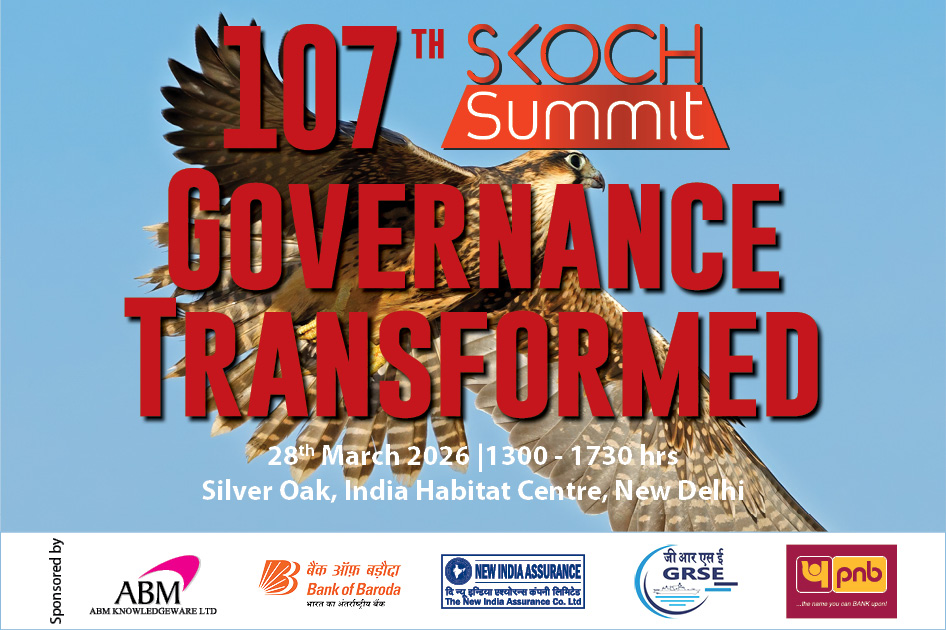

Governance in India is undergoing a decisive transformation. Intent-driven policymaking is giving way to outcome-oriented execution, where credibility is earned not by announcements but by measurable impact on citizens’ lives. The emerging paradigm places delivery, institutional capacity and last-mile effectiveness at the centre of governance leadership. Districts and municipalities are becoming the true engines of change as highlighted by SKOCH State of Governance Report 2025.
At the same time, this transformation is being mirrored within India Inc. Notably, the SKOCH India Involved framework highlights a parallel shift in corporate behaviour: companies are moving from compliance-led approaches to purpose-driven performance. In this new approach, governance, digitalisation and societal impact are deeply integrated into strategy. Importantly, governance is no longer a back-office function; it is now the architecture that binds purpose with execution. This shift ensures that growth is ethical, transparent and sustainable.
Together, these trends signal a convergence of public and corporate governance into a unified model of accountability. Specifically, this model is data-driven, technology-enabled and citizen-centric. For example, digital platforms are scaling transparency, infrastructure is strengthening delivery and leadership is increasingly defined by the ability to institutionalise outcomes.
“Governance Transformed” is therefore not a thematic aspiration. It is an operational reality in which performance and impact are co-created across state systems and enterprises. This process is shaping India’s journey toward India@2047.
Know More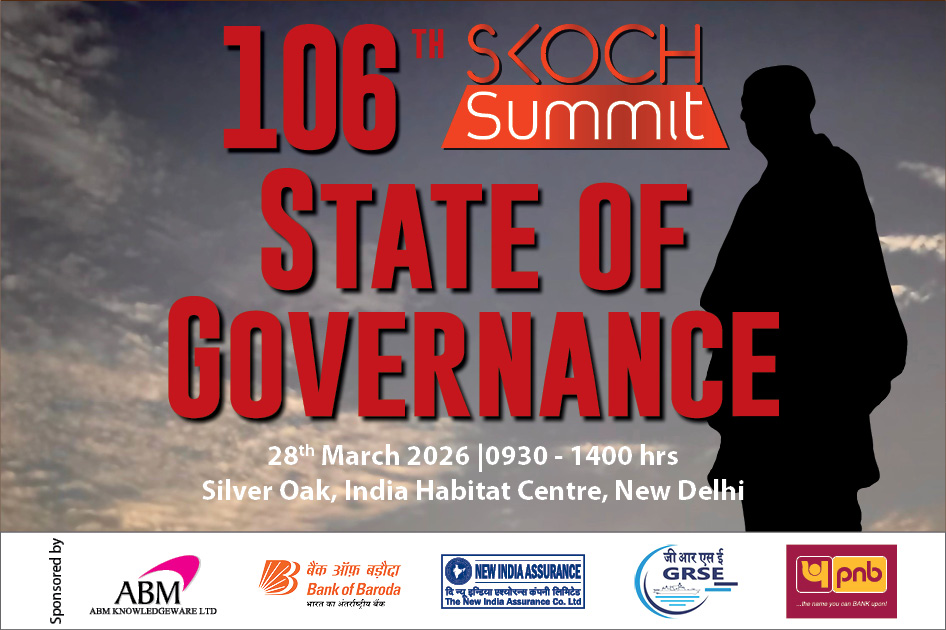


India’s governance story in 2025 is best understood not through intent, announcements or policy volume, but through outcomes that can be measured, verified and experienced by citizens. Evidence emerging from the SKOCH State of Governance Assessment makes one reality unmistakably clear: governance performance today is being shaped by the quality of execution rather than the ambition of design. States that have invested in institutional capacity, district-level leadership and integrated service delivery are demonstrating sustained gains, while those relying on legacy administrative approaches are facing increasing competitive pressure.
The findings from the 2025 assessment confirm that governance excellence is no longer episodic or sector-specific. It is cumulative, layered and systemic, built over years of sustained administrative reform and reinforced through continuous feedback from the ground. Governance leadership today reflects the ability of states to institutionalise reforms rather than merely launch them.
Know More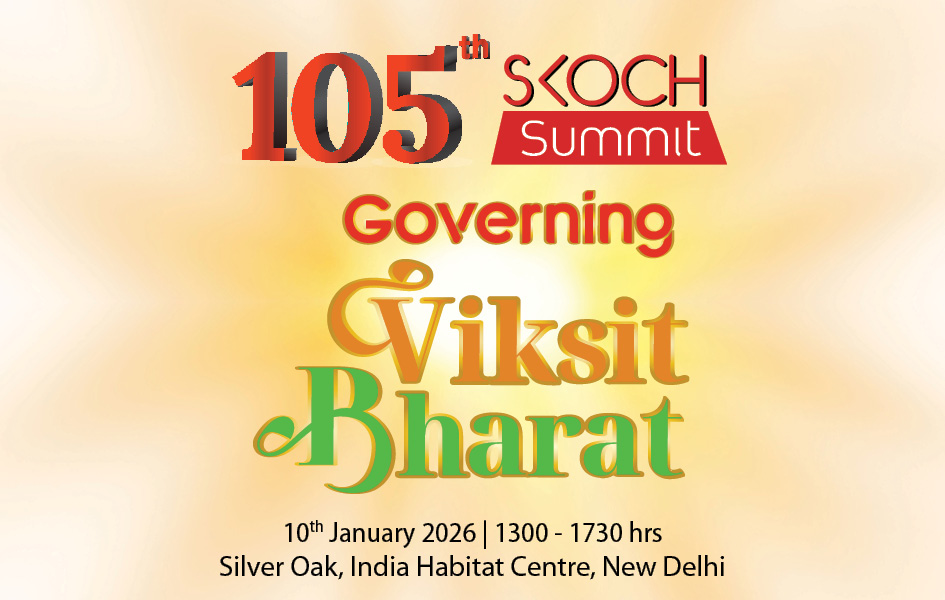

India’s development trajectory is unfolding amid a rapidly evolving geopolitical and geoeconomic environment marked by global power shifts, supply chain realignments, technological disruption and climate stress. In this context, governance has emerged as the decisive factor shaping sustainable, resilient and inclusive growth.
Domestically, India’s federal paradigm is undergoing a significant transformation, with states assuming a more strategic role in driving economic outcomes. States are increasingly at the forefront of attracting investment, developing infrastructure, skilling, urbanisation, and delivering social services. Competitive federalism is evolving into a collaborative, performance-oriented framework.
India’s journey towards becoming a developed nation will ultimately be determined by how effectively its states govern, innovate and deliver in an increasingly complex global order.
Know More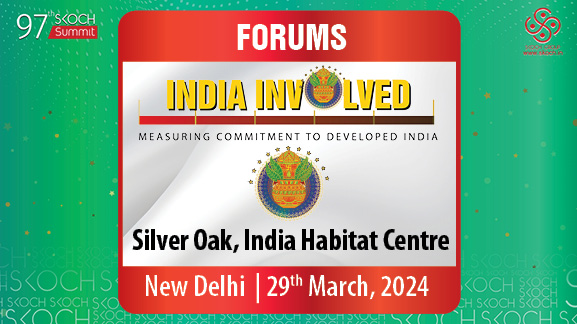
97th SKOCH Summit
India Involved
Measuring Commitment to Developed India









The 97th SKOCH Summit focused on assessing India’s active participation in its journey toward becoming a developed nation. The Inaugural Session set the tone by highlighting the role of inclusive participation in national development. Discussions on the Comprehensive Economic Impact of Cloud showcased how cloud technology is driving digital transformation and contributing to GDP growth. The summit also examined how to ESG Faster & Better, emphasizing actionable strategies for integrating environmental, social, and governance goals into business models. Sessions like ESG & IT – Joined at the Hip demonstrated how technology can accelerate ESG compliance and reporting. The Digital Dimension of Indian Growth highlighted the critical role of digital infrastructure and innovation in India's economic progress. Finally, Why CFOs Care About ESG explored the financial imperatives behind sustainability, underlining how ESG performance is increasingly tied to long-term profitability and investor confidence.
Know More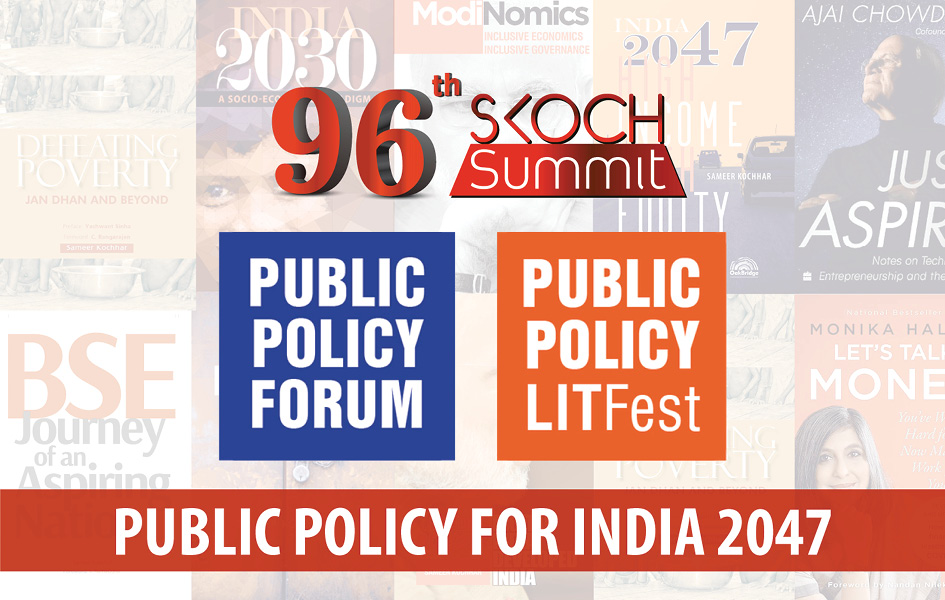



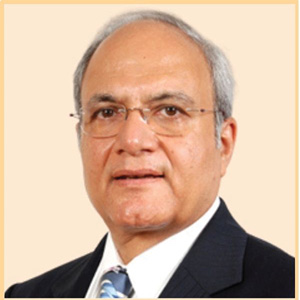
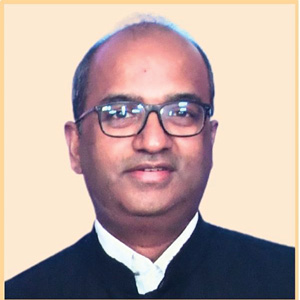
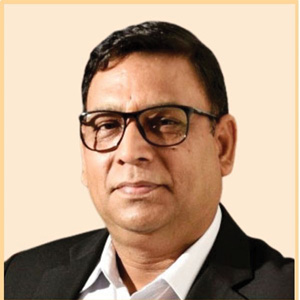

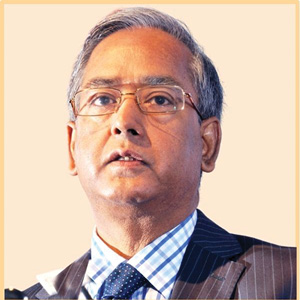

The 96th SKOCH Summit – Public Policy for India 2047 brings together policymakers, economists, and industry leaders to chart India’s long-term development vision. The sessions explore the evolution of public policy as a science, the manufacturing and hardware revival, and India’s leadership in AI innovation for global impact. Discussions emphasize empowering MSMEs, deepening and securing markets, and promoting financial literacy as key levers of inclusive growth. The summit also revisits India’s journey toward AatmaNirbhar Bharat, highlighting reforms that blend self-reliance with global competitiveness. Collectively, the panels outline a roadmap for a resilient, data-driven, and equitable India by 2047.
Know More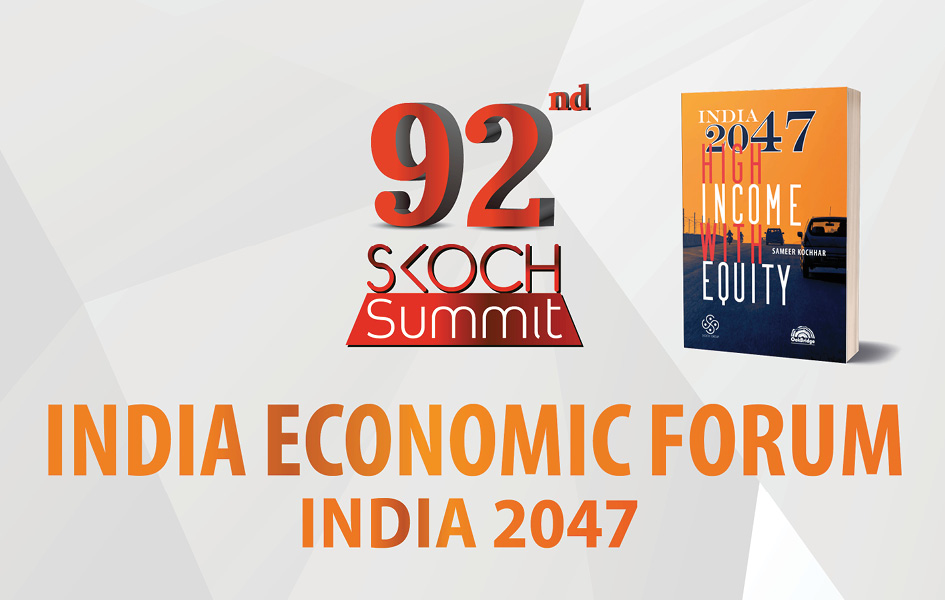
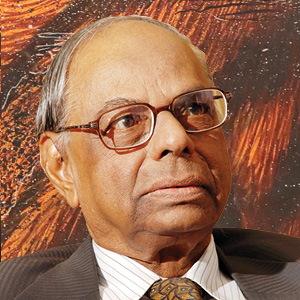

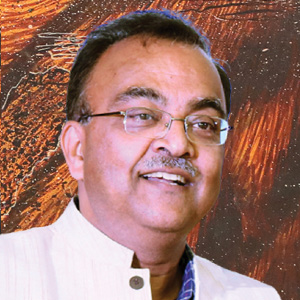
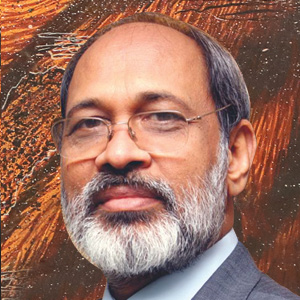

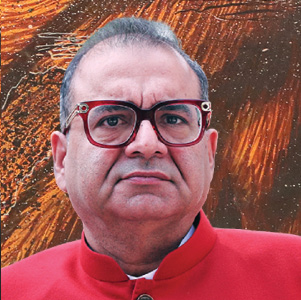




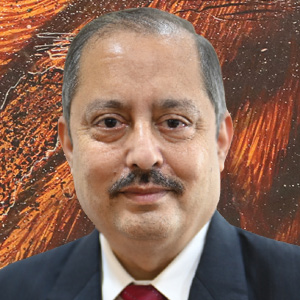
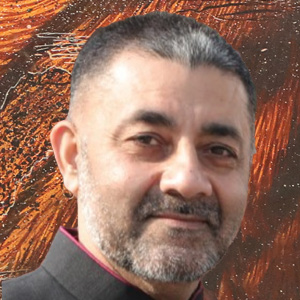
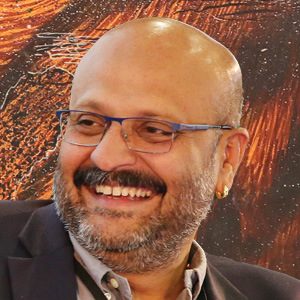
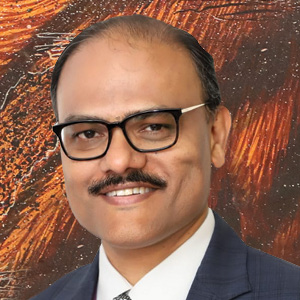

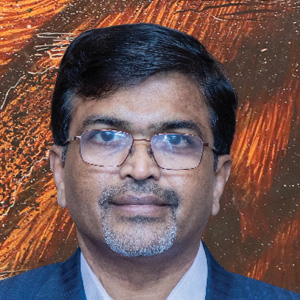
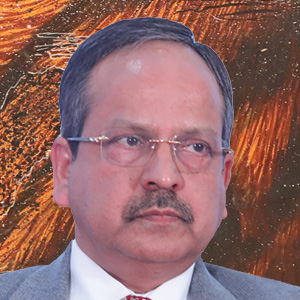
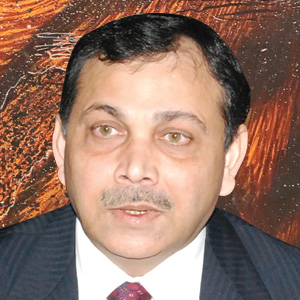
The 92nd SKOCH Summit—India Economic Forum, themed "India 2047: High Income with Equity," brought together leading economists, policy analysts, and industry experts. The discussions centered on charting India's socio-economic trajectory towards becoming a high-income nation by 2047 while ensuring equitable growth. Highlights included the ceremonial release and comprehensive discussion of the book India 2047 - High Income with Equity by Sameer Kochhar. The summit also featured deliberations on BFSI, FinTech, and PSU sectors, recognizing their crucial role in India's developmental goals and financial inclusion. Key speakers included members of the Economic Advisory Council to the Prime Minister and former senior government officials.
Know More










The 91st SKOCH Summit, themed "State of Governance," on May 4, 2023, was a platform for showcasing and deliberating on innovations in public sector service delivery. The key panel discussions focused intensely on cutting-edge governance practices across crucial sectors. These included a session on Innovations in Education and Skill Development, which featured officials from Bihar, Chhattisgarh, Kerala, and Uttarakhand discussing modernization and training. A dedicated panel on Innovations in Finance highlighted advancements in state tax and excise departments, featuring J&K and Maharashtra. Furthermore, the summit hosted in-depth discussions on Innovations in Planning and Development and Municipal Governance, showcasing best practices in urban development, smart city projects, and sustainable planning from states like Maharashtra, MP, Tripura, Ludhiana, and Tirunelveli. The entire event was structured around the presentation and recognition of over 79 projects that received the prestigious SKOCH Order-of-Merit for excellence in governance.
Know More



The 87th SKOCH Summit, themed "State of Governance" on January 18, 2023, featured focused discussions on key areas of public administration and development. The Ease of Doing Business panel, moderated by Dr. Gursharan Dhanjal, brought together senior officials from Assam, Tamil Nadu, Telangana, and West Bengal to discuss bureaucratic and industrial reforms, particularly focusing on MSME development and handloom co-operatives. A second major panel on Innovations in Science & Technology highlighted the role of government bodies in leveraging technology for development, featuring experts from the Science and Technology Councils and Space Application Centres of Tamil Nadu, Gujarat, Arunachal Pradesh, Odisha, and Assam. The summit served as a platform for acknowledging numerous state projects, which received the prestigious SKOCH Order-of-Merit recognition.
Know More






The 81st SKOCH Summit – State of Governance highlights India’s progress in strengthening governance and development outcomes across critical sectors. The summit opens with discussions on the evolving governance landscape, followed by focused sessions on education, forest, and environmental management driving sustainable growth. Panels on energy and transport explore innovations in infrastructure, renewable resources, and digital governance shaping state performance. The event culminates with the prestigious SKOCH Award and SKOCH Order-of-Merit recognitions, celebrating exemplary initiatives and institutions contributing to inclusive, efficient, and transparent governance in India.
Know More


















The 78th SKOCH Summit – State of Governance brings together leaders and practitioners to assess how governance reforms are shaping development across India. The sessions review the performance of districts and states, with focused discussions on progress in energy, transport, and overall development outcomes. The summit highlights innovations, administrative improvements, and sectoral achievements that are strengthening governance at multiple levels. It culminates with the SKOCH Award and SKOCH Order-of-Merit, recognising outstanding projects and institutions driving effective, citizen-centric governance nationwide.
Know More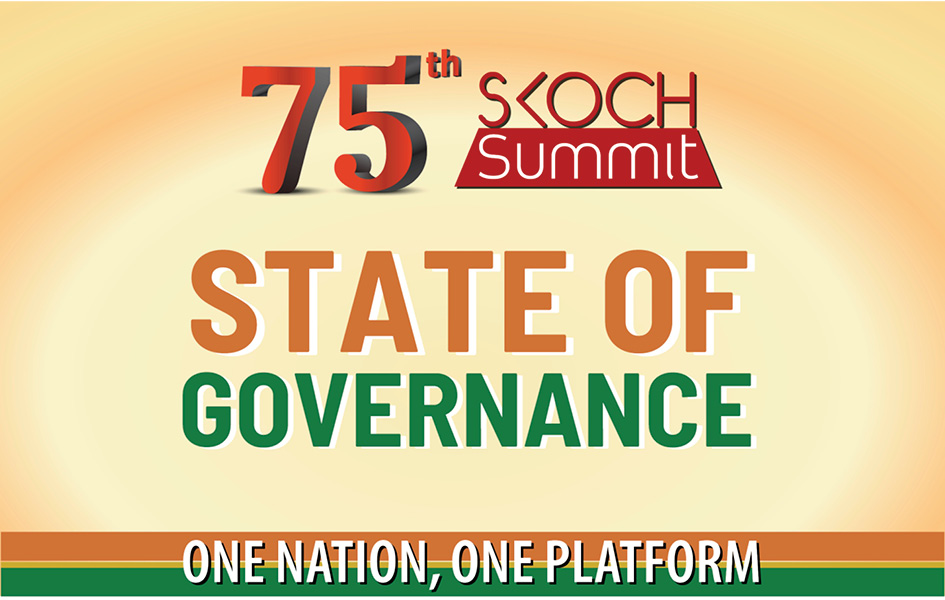









The 75th SKOCH Summit – State of Governance brings together leaders and practitioners to assess how governance reforms are shaping development across India. The sessions review the performance of districts and states, with focused discussions on progress in energy, transport, and overall development outcomes. The summit highlights innovations, administrative improvements, and sectoral achievements that are strengthening governance at multiple levels. It culminates with the SKOCH Award and SKOCH Order-of-Merit, recognising outstanding projects and institutions driving effective, citizen-centric governance nationwide.
Know More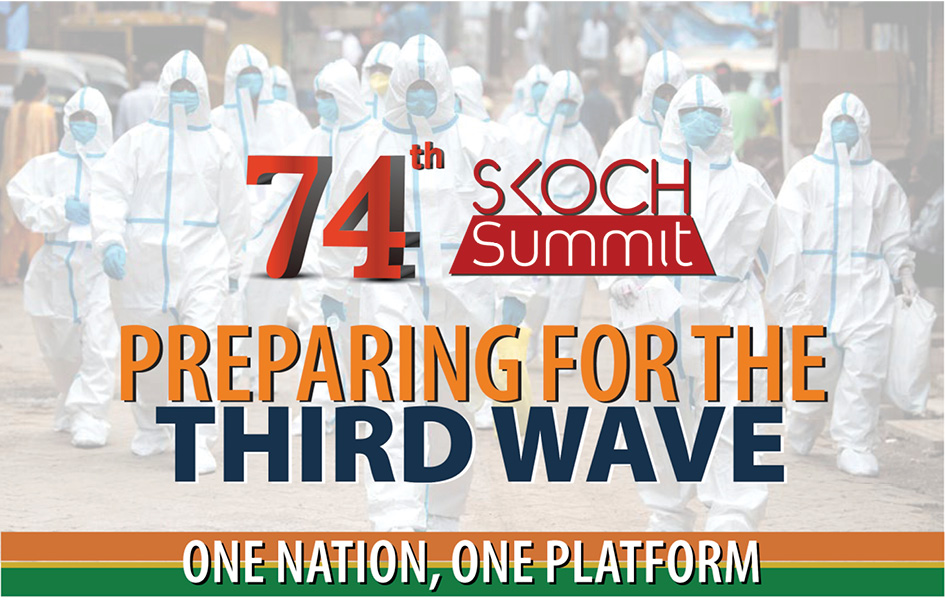


















There is no more a question mark. The third wave of coronavirus has become 'inevitable' now.
There are only questions like when a new variant of COVID-19 will hit the country and whether and how well the centre, states, metros, and districts have prepared for it.
Reuters' survey, based on an opinion poll of 40 doctors, scientists, epidemiologists, and professors across the globe, says it may hit India by October. Director, All India Institute of Medical Sciences (AIIMS), India's premier health institute, Dr Randeep Guleria says that the 'inevitable' third wave could arrive in the next six to eight weeks while Maharashtra State Task Force member Rahul Pandit fears it may arrive earlier than expected if people do not observe COVID-appropriate behaviour. The task force believes that 10 percent of the total cases in the third wave could comprise children and young adults.
SKOCH Group, one of India's leading think tanks dealing with socio-economic issues with a focus on inclusive growth since 1997, is organising a National Consultation 'Preparing for the Third Wave'. The consultation would look at the views of the centre, state, cities and districts. To be organised in three parts, the first conference on the subject would take place on 3 July.
Know More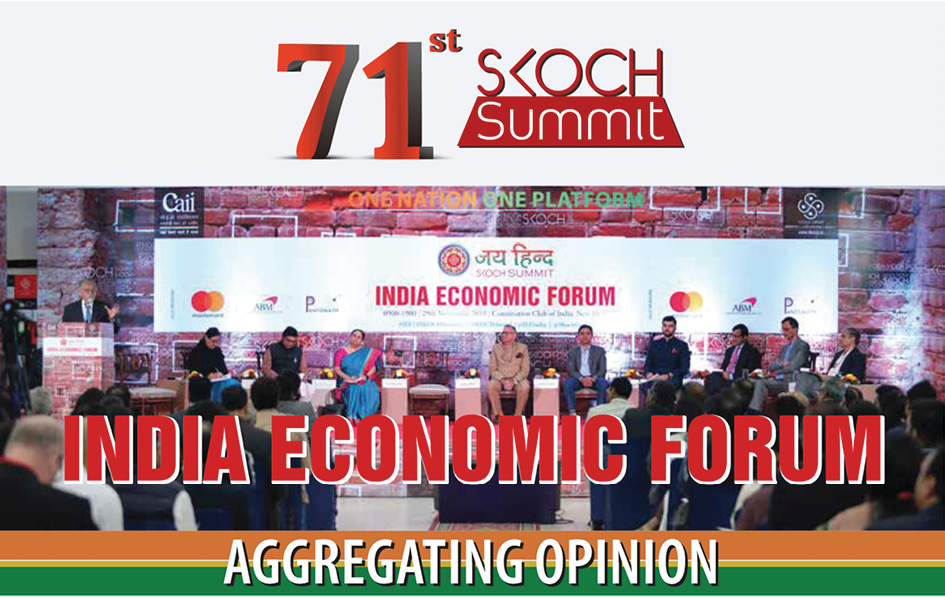















AatmaNirbhar Bharat is a far-reaching programme not only for making India self-reliant but also to put it on a higher growth trajectory This growth we describe as AatmaNirbhar Growth has to be spatially dispersed, job generative and equitable. This then would ensure a 'V' shaped recovery post-COVID and not a 'K' shaped one that has a few stakeholders concerned. India Economic Forum would return actionable recommendations.
AatmaNirbhar Bharat is a far-reaching programme as envisioned by the Hon'ble Prime Minister and we believe that it would logically lead to AatmaNirbhar Growth.
India Economic Forum, this year focuses on this and through consultations with all relevant stakeholders provide a road map and recommendations that would chart this path. The key challenges would be increasing consumption, handling debt situation, getting more private investment as merely government spending may not suffice to generate employment, focus on finding resources to fund infrastructure development and finally doing all this while not losing sight of Environment, Sustainability and Governance.
Being organised soon 20 days after the Union Budget, the idea is to crystallise ways in which the budget can be translated into AatmaNirbhar Growth.
Last year too, the Forum had returned several recommendations. These were published as special issue of INCLUSION magazine and are also available online at: https://inclusion.in/category/inclusion/road-to-recovery/
Know More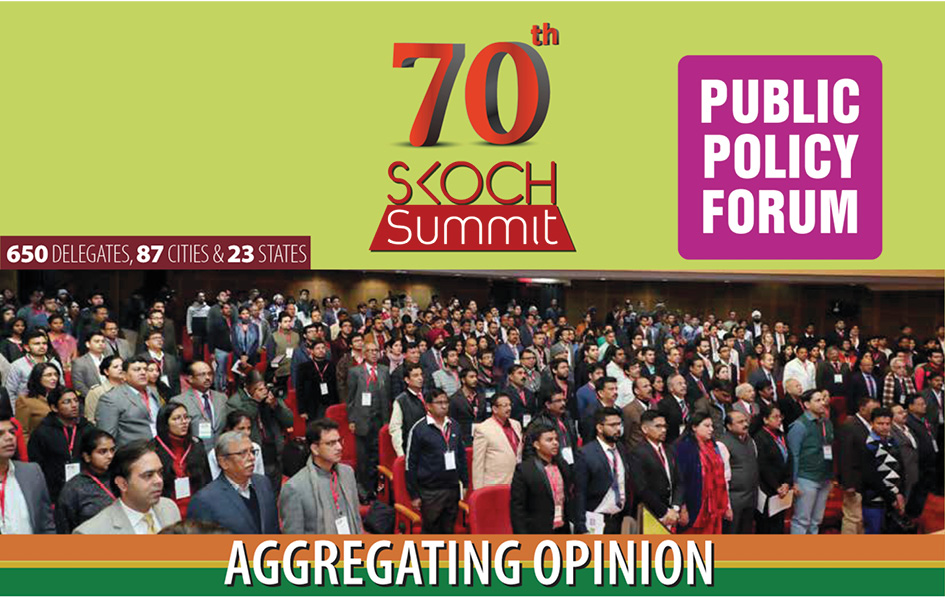






















The 70th SKOCH Summit, themed Public Policy Forum, served as a critical platform to analyze India's governing frameworks in the digital age, particularly in the context of the post-COVID world. The forum convened to address emerging policy imperatives, focusing on how to build resilient systems that ensure both national sovereignty and citizen-centric services.
A central pillar of the discussion was data governance, with panels dedicated to the Personal Data Protection (PDP) Bill and its profound implications. Policymakers and experts debated how to strike a balance between protecting a nascent digital economy, ensuring individual privacy, and enabling data-driven governance. Further sessions explored inclusive growth mechanisms, including public policy directives for tribal and marginalized communities, and the vital role of Panchayati Raj institutions in ensuring last-mile transparency and accountability.
Ultimately, the 70th Summit reinforced the SKOCH mandate of bringing "felt-needs" to the forefront of policy. It championed the idea that effective public policy is the cornerstone of participatory democracy, requiring robust frameworks for data, decentralization, and public health to make inclusive growth a reality.
Know More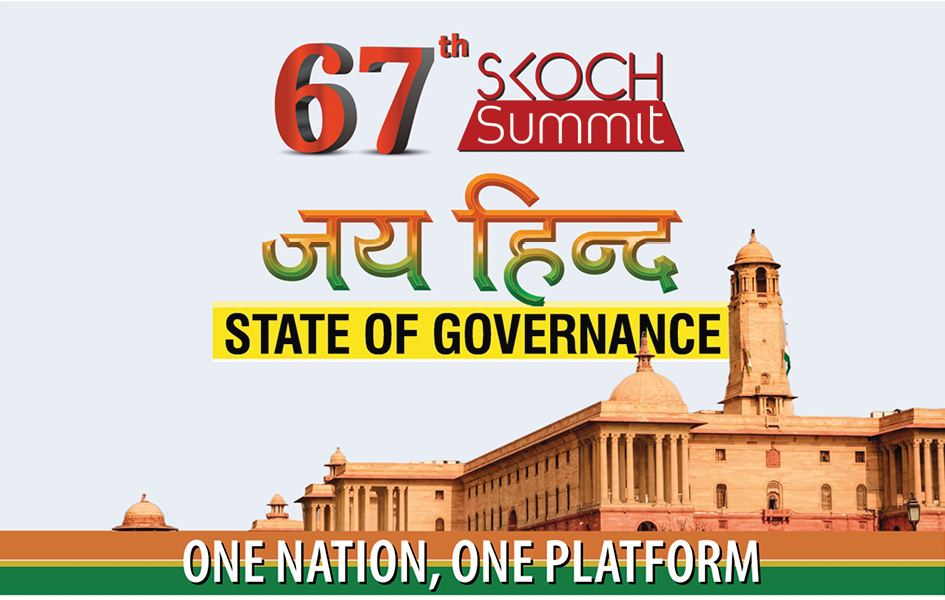

















The 67th SKOCH Summit, themed "Jai Hind: State of Governance" and held in October 2020, focused on evaluating the effectiveness and resilience of India's governance frameworks, particularly highlighting the nation's response during the challenging first year of the COVID-19 pandemic. The summit aimed to identify and celebrate impactful governance projects that demonstrated patriotism through dedicated public service delivery.
Discussions centered on assessing how various government departments and state initiatives adapted to the crisis, ensuring continuity of essential services and implementing relief measures. Key areas likely included healthcare management, digital service delivery under lockdown conditions, supply chain maintenance, and economic support mechanisms. The "Jai Hind" theme emphasized projects that showcased national spirit and commitment to citizen welfare, aligning governance outcomes with patriotic duty. The SKOCH Awards presented during the summit recognized specific projects from ministries and states that exemplified excellence and positive impact during this period.
The 67th Summit served as a crucial stock-taking exercise during the pandemic, reinforcing SKOCH's belief that robust governance, characterized by adaptability, citizen-centricity, and effective implementation even under duress, is fundamental to national strength and progress.
Know More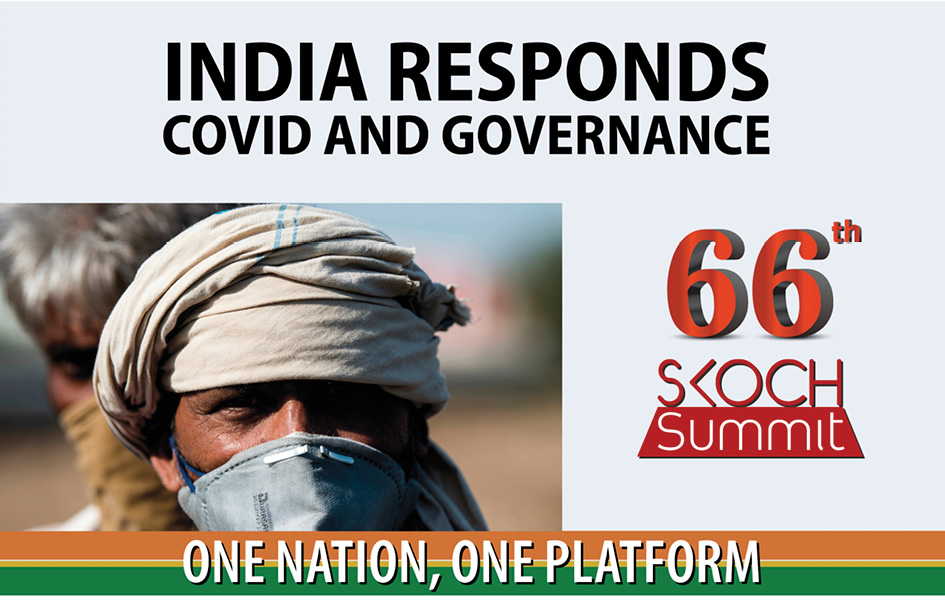





The 66th SKOCH Summit, themed "India Responds: COVID and Governance" and held in July 2020, was convened specifically to analyze and showcase India's multi-faceted response to the initial, critical phase of the COVID-19 pandemic. The summit's primary objective was to understand how governance systems at all levels—national, state, and local—adapted and performed under the unprecedented stress of the health crisis and subsequent lockdowns.
Key discussions centered on the immediate public health response, economic relief measures, use of technology for tracking and management (like contact tracing apps), ensuring supply chains for essential goods, and the role of district administrations and local bodies in frontline crisis management. The summit highlighted innovative solutions and best practices adopted by various government entities to mitigate the pandemic's impact, focusing on resilience, citizen communication, and service delivery continuity. SKOCH Awards presented during this summit specifically honored projects and initiatives demonstrating effective governance and impactful interventions directly related to the COVID-19 response.
This summit served as an early, crucial assessment of India's governance capabilities during a major crisis. It underscored the SKOCH principle of evaluating governance based on real-world outcomes and adaptability, emphasizing the importance of technology, inter-departmental coordination, and community involvement in navigating national emergencies.
Know More


Self-reliance is a survival imperative. for has several dimensions. For MSMEs it means the twin objectives Of producing for local consumption and also producing for exports. For Hi-Tech it is a question of national security as well as global leadership. In a world dominated by big-tech. India has to lead and not be digitally colonised- The wireframe of governance needs to be strengthened at all three levels of center, state and local bodies.
This is imperative for pushing the Atmanirbhar agenda as policy. implementation. finances and success are all dependent on governance. Keeping this in mind, the 65th SKOCH Summit tries to show the path towards the light at the end Of the tunnel.
Know More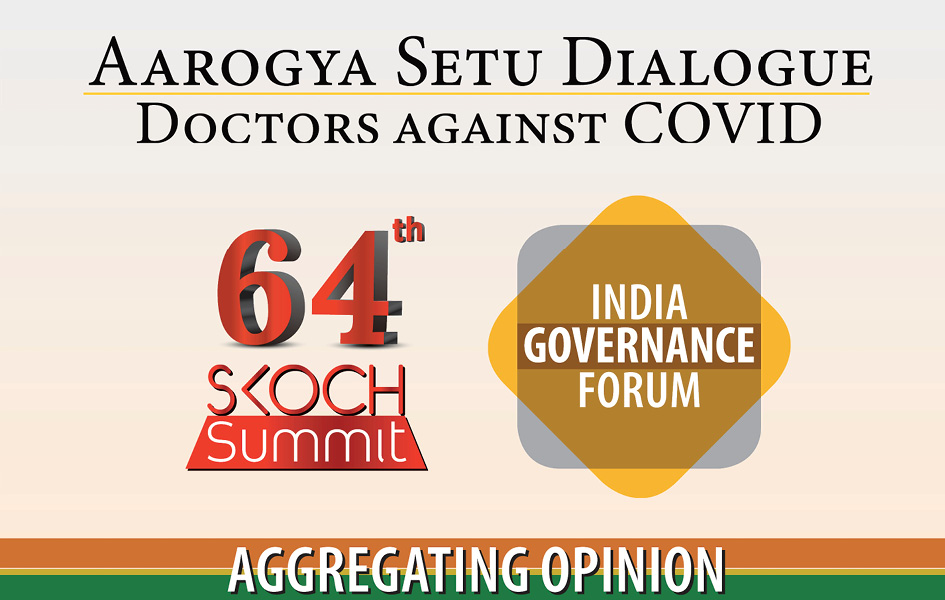




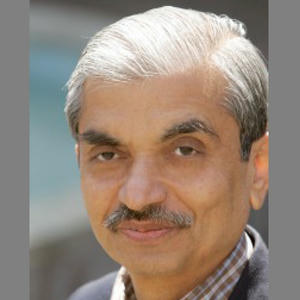
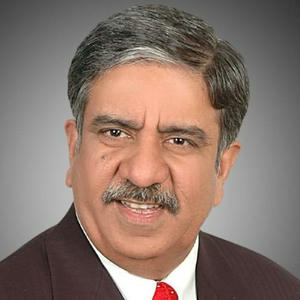
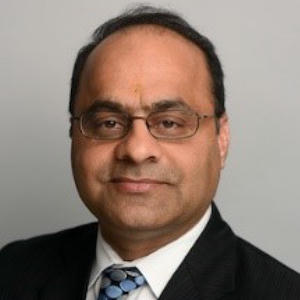



This session of the 64th SKOCH Summit, themed "India Governance Forum – Doctors Against COVID," was convened in April 2020 to specifically address the critical role of the medical community during the initial onslaught of the pandemic. The forum aimed to understand the challenges faced by healthcare professionals and highlight their frontline efforts in combating the unprecedented health crisis.
Discussions likely centered on the immediate experiences of doctors and healthcare workers, focusing on treatment protocols, availability of PPE, hospital infrastructure readiness, patient management strategies, and the mental and physical toll on medical staff. The forum provided a platform for sharing best practices, discussing emergent medical responses, and potentially formulating recommendations for policymakers regarding healthcare system support and resource allocation during the pandemic's early phase.
This forum underscored the vital human element within the governance response to COVID-19. It highlighted SKOCH's commitment to bringing practitioners' ground-level perspectives into the policy discourse, recognizing the indispensable contribution of healthcare professionals in the national fight against the pandemic.
Know More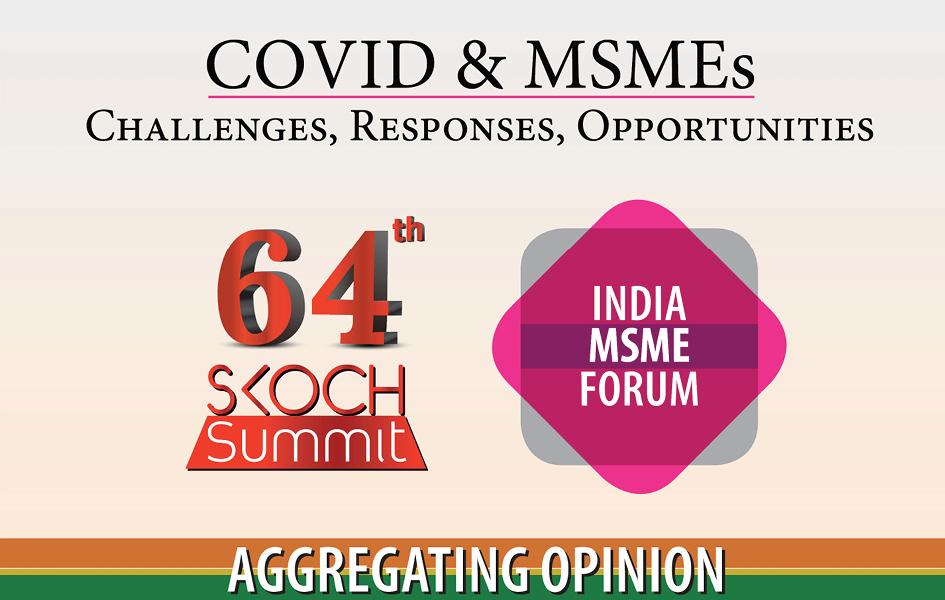








This forum, part of the 64th SKOCH Summit in April 2020, specifically addressed the severe impact of the COVID-19 pandemic and the ensuing nationwide lockdown on India's Micro, Small, and Medium Enterprises (MSMEs). The objective was to assess the immediate challenges faced by the sector and explore potential relief measures and survival strategies.
Discussions focused on the acute disruptions faced by MSMEs, including supply chain breakdowns, labor shortages, liquidity crunches, order cancellations, and the inability to meet fixed costs during the lockdown. The forum likely explored the effectiveness of initial government relief packages, debated the need for further financial assistance (like credit guarantees, loan moratoriums), and discussed strategies for business continuity, digital adoption, and accessing available support schemes. Voices from MSME owners and industry associations were central to understanding the ground realities.
This forum highlighted the critical economic dimension of the COVID-19 crisis, focusing on a sector vital to India's employment and growth. It underscored SKOCH's focus on inclusive economic policy, bringing the specific vulnerabilities and needs of MSMEs into the national discourse to advocate for targeted interventions and support mechanisms during an unprecedented economic shock.
Know More


India Economic Forum set out to reframe the growth conversation from how much we invest to how efficiently we convert investment into output. The summit argued that India must focus on lowering the ICOR (Incremental Capital–Output Ratio) and capturing higher value in global supply chains if it is to move beyond incremental gains and aim for a multi-trillion-dollar economy.
Dialogue among economists and policy leaders converged on a pragmatic outlook: growth prospects were anchored in the 6–6.5% band in the near term, but unlocking the next step requires structural reforms—from factor-market flexibility and productivity upgrades to disciplined public investment and smarter regulation. The emphasis was on outcomes over outlays: channel capital where it yields the most, compress execution lags, and hard-wire accountability.
A strong policy through-line was the health of MSMEs and the credit plumbing that sustains them. The forum spotlighted instruments like GST-based bill discounting backed by a government guarantee fund to ease working-capital stress and speed up receivables, linking everyday enterprise finance to the macro goal of durable, broad-based growth. In this telling, reforms are not abstract—they are the pipes and protocols that determine whether India’s real economy breathes freely.
Know More


“Jai Hind: $5 Trillion Transformation” reframed India’s growth ambition as a design problem: how to mobilize investment at scale, hard-wire productivity, and make markets and institutions pull in the same direction. The summit’s tracks — from finding investments and policy-making for a $5 trillion economy to the climate–growth nexus — argued that the next leap requires capital deepening alongside disciplined execution and regulatory clarity.
A strong current in the discourse was economic sovereignty in the digital era: India contributes brains to the world’s tech giants, but must also own innovation and value chains at home. Speakers pressed for policies that keep strategic platforms and data within Indian hands, linking this to competitiveness, jobs, and national capacity.
Equally, the summit insisted that growth quality matters as much as growth speed. Panels called for climate-aligned industrial strategy, resilient infrastructure and finance, and reforms that lower execution gaps so every rupee yields more output. The broader message: a $5 trillion milestone is a waypoint, not the destination — the aim is a durable, inclusive trajectory toward the next orders of magnitude.
Know More


“State of Power, Oil & Gas” took stock of a sector at an inflection point—where reliability, affordability, and the energy transition must be reconciled with the hard constraints of utility balance sheets and legacy infrastructure. The summit mapped the reform arc from policies and regulations to operations on the ground, examining people, processes, and technology adoption across DISCOMs and upstream/downstream value chains. Cybersecurity and grid modernisation emerged as cross-cutting imperatives rather than afterthoughts.
Discussions pressed on execution: how to stabilise DISCOM finances, reduce AT&C losses, professionalise utility governance, and scale digital tools for metering, billing, and outage management. The programme’s emphasis on “emerging policies, regulations & reforms” and “innovation & new technologies” reflected a sector being rewired in real time—where regulatory clarity and operational discipline must travel together.
Recognition at the summit underlined outcomes, not optics—spotlighting ministries and enterprises advancing measurable change, while media coverage captured the broader message: India’s power and hydrocarbon systems will anchor growth only if reform translates into reliable, tech-enabled service at the last mile. In this telling, energy policy is nation-building by other means.
Know More


“Smart Technologies, Sustainable Growth” explored how technology becomes a multiplier only when it is embedded in institutions, markets, and everyday delivery. The summit treated digital rails—identity, payments, data platforms—as public infrastructure that can compress transaction costs, expand access, and create new productivity frontiers for citizens and enterprises alike. It argued that technology is not a parallel track to development, but the wiring that makes development systemic and scalable.
Discussions connected smart with sustainable: energy and utilities modernization, insurance and financial services, and urban management were examined through the lens of tech-enabled efficiency, resilience, and responsible growth. Rather than celebrating gadgets, the focus stayed on operating models—how to institutionalize standards, interoperability, and accountability so that digital tools translate into measurable outcomes.
The core message was pragmatic and forward-looking: sustainable growth demands more than adoption; it requires governance that can absorb technology, regulate prudently, and keep citizens at the centre. By turning marquee technologies into everyday public value, the 46th SKOCH Summit advanced a playbook for compounding inclusion and competitiveness together.