SKOCH Summit







Agenda
AatmaNirbhar Bharat is a far-reaching programme not only for making India self-reliant but also to put it on a higher growth trajectory This growth we describe as AatmaNirbhar Growth has to be spatially dispersed, job generative and equitable. This then would ensure a 'V' shaped recovery post-COVID and not a 'K' shaped one that has a few stakeholders concerned. India Economic Forum would return actionable recommendations.
AatmaNirbhar Bharat is a far-reaching programme as envisioned by the Hon'ble Prime Minister and we believe that it would logically lead to AatmaNirbhar Growth.
India Economic Forum, this year focuses on this and through consultations with all relevant stakeholders provide a road map and recommendations that would chart this path. The key challenges would be increasing consumption, handling debt situation, getting more private investment as merely government spending may not suffice to generate employment, focus on finding resources to fund infrastructure development and finally doing all this while not losing sight of Environment, Sustainability and Governance.
Being organised soon 20 days after the Union Budget, the idea is to crystallise ways in which the budget can be translated into AatmaNirbhar Growth.
Last year too, the Forum had returned several recommendations. These were published as special issue of INCLUSION magazine and are also available online at: https://inclusion.in/category/inclusion/road-to-recovery/
0900 - 0930
AatmaNirbhar Growth: Curtain Raiser
The session opened with a focus on Atma Nirbhar Bharat as a pathway to inclusive and sustainable economic growth, setting the tone for discussions on jobs, infrastructure, and structural reforms. Dr. Deepali Pant Joshi emphasized the urgent need for large-scale job creation, stronger manufacturing, and improved infrastructure to harness India’s demographic dividend and reduce widening inequalities. She highlighted the importance of shifting labor from agriculture to higher productivity sectors, formalizing the unorganized workforce, and investing in skills and digitization. The discussion underscored the role of public investment, industrial clusters, and geographically dispersed development, particularly in underserved states and smaller cities. Financial sector efficiency, social safety nets, and coordinated macroeconomic policy were identified as critical to post-COVID recovery. Mr. Sameer Kochhar supported these views while stressing realistic policymaking within resource constraints and cautioning against inflationary expansion. He reframed Atma Nirbhar Bharat as an export-oriented growth strategy and called for stronger MSME support, institutional reforms, and an urban employment guarantee. Overall, the session highlighted the need for balanced, inclusive, and job-driven growth backed by effective policy implementation.
Welcome: Dr Gursharan Dhanjal, Managing Director & Editor, SKOCH Group
Book Release: The New Economic Paradigm - India in the Covid World by Deepali Pant Joshi
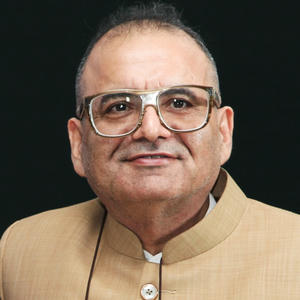
India in the Covid World: Dr Deepali Pant Joshi, Distinguished Fellow, SKOCH Development Foundation & Former Executive Director, RBI
Mr Sameer Kochhar, Chairman, SKOCH Group
Dr Gursharan Dhanjal
Managing Director & Editor, SKOCH Group
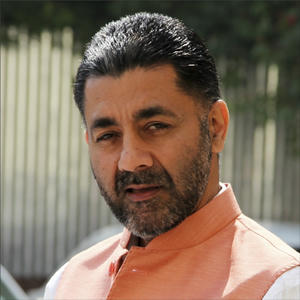
Dr Gursharan Dhanjal, MA, M.Phil, PhD from Delhi University, an expert in development economics. He is Vice Chairman, SKOCH Group. He is also Editor of INCLUSION—a quarterly publication that focuses on inclusive growth related areas. He has led various research projects, impact assessments and field studies in MSMEs, women empowerment, entitlements, rights, sanitation, social inclusion, health, financial inclusion, e-governance and ICT for development that included traversing across the country, collecting citizen voices for over two decades now. A prolific writer, Dr Dhanjal has contributed over 200 columns in leading national dailies including The Hindustan Times, The Times of India, The Financial Express and The Pioneer. He has published research papers in several journals of repute in addition to authoring following widely acclaimed books: Tarapur: The Politics of Nuclear Age; and, Infrastructure and Governance. He was member of the Working Group on ICT in Higher Education constituted by Planning Commission for the 12th Five Year Plan.
Mr Sameer Kochhar
Chairman, SKOCH Group
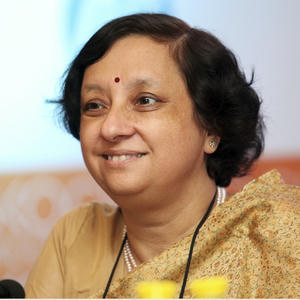
Reforms historian and author of best-seller ModiNomics, Sameer Kochhar is Chairman, SKOCH Group. He is a passionate advocate of social, digital and financial inclusion and is a foremost expert on governance and inclusive growth. His work has been acclaimed globally and endorsed by Mr Narendra Modi, Mr M Venkaiah Naidu, Dr Manmohan Singh, Mr Arun Jaitley, Mr P Chidambaram, Mr Yashwant Sinha, Dr C Rangarajan and Dr Montek Singh Ahluwalia and so on. In his thinking and writings and activities, his profound admiration for India's economic reforms and in extension, those outstanding personalities who strive to make these reforms more meaningful and broad-based comes out clear and unambiguous.
Dr Deepali Pant Joshi
Distinguished Fellow, SKOCH Development Foundation & Former Executive Director, RBI
0930 - 1110
AatmaNirbhar Growth: A Macroeconomic View
AatmaNirbhar Bharat is a far-reaching programme not only for making India self-reliant but also to put it on a higher growth trajectory. This growth we describe as AatmaNirbhar Growth has to be spatially dispersed, job generative and equitable. This then would ensure a ‘V’ shaped recovery post-COVID and not a ‘K’ shaped one that has a few stakeholders concerned. India Economic Forum would return actionable recommendations.
This session critically examined whether Atmanirbhar Bharat can drive India’s growth while balancing global integration and domestic capacity building. Panelists agreed that self-reliance must not translate into protectionism and emphasized the need for clarity in messaging, positioning it instead as globally competitive “Vishwanirbhar” growth. Discussions highlighted the importance of trade-offs in policymaking, especially between import substitution, exports, and participation in global value chains. Manufacturing was identified as essential for job creation, but success depends on improving ease of doing business, reducing logistics and capital costs, and strengthening domestic capabilities. Concerns were raised about excessive state intervention, implementation gaps, and the risk of policy overreach through schemes like PLI. The financial sector was seen as more resilient post-pandemic, with reforms like DFI and bad banks expected to support investment-led growth. Panelists also stressed the need for human capital development, better governance, and institutional capacity to handle complex reforms. Finally, inclusive growth—through regional balance, labor mobility, and access to basic goods and services—was emphasized as central to making Atmanirbhar Bharat effective and sustainable.
Welcome: Dr Gursharan Dhanjal, Managing Director & Editor, SKOCH Group
Conferring of SKOCH Challenger Award by Mr Sameer Kochhar, Chairman, SKOCH Group on Dr Shekhar Shah, Director General, National Council of Applied Economic Research (NCAER)
Felicitation by Dr Rajat Kathuria, Director and Chief Executive, Indian Council for Research on International Economic Relations (ICRIER)
Acceptance by Dr Shekhar Shah
Welcome: Dr Gursharan Dhanjal, Managing Director & Editor, SKOCH Group
Conferring of SKOCH Challenger Award by Mr Sameer Kochhar, Chairman, SKOCH Group on Prof Sachin Chaturvedi, Director General, Research and Information System for Developing Countries (RIS)
Felicitation by Dr Rathin Roy, Managing Director (Research and Policy), Overseas Development Institute (ODI)
Acceptance by Prof Sachin Chaturvedi
Moderator: Prof Anil D. Sahasrabudhe, Senior Editor, Economic Times
Dr Rathin Roy, Managing Director (Research and Policy), Overseas Development Institute (ODI)
Dr Rajat Kathuria, Director and Chief Executive, Indian Council for Research on International Economic Relations (ICRIER)
Prof Sachin Chaturvedi, Director General, Research and Information System for Developing Countries (RIS)
Dr Shekhar Shah, Director General, National Council of Applied Economic Research (NCAER)
Dr Soumya Kanti Ghosh, Group Chief Economic Advisor, State Bank of India
Dr Soumya Kanti Ghosh, Group Chief Economic Advisor, State Bank of India
Prof Anil D. Sahasrabudhe
Senior Editor, Economic Times
Dr Shekhar Shah
Director General, National Council of Applied Economic Research (NCAER)
Dr Rathin Roy
Managing Director (Research and Policy), Overseas Development Institute (ODI)
Prof Sachin Chaturvedi
Director General, Research and Information System for Developing Countries (RIS)
Dr Rajat Kathuria
Director and Chief Executive, Indian Council for Research on International Economic Relations (ICRIER)
Dr Soumya Kanti Ghosh
Group Chief Economic Advisor, State Bank of India
1110 - 1220
New Education Policy & The Economy
The New Education Policy is perhaps the most well written and impactful policy document in recent times. From school education to higher education, on the supply side, infrastructure provisioning, teacher training, benchmarking with international standards, and building world-class research institutions that are able to compete in global rankings are vital to transforming the Indian education system. On the demand side, at the school level, improving learning outcomes, ensuring foundational literacy, access to learning materials are key and, at the collegiate level, enhancing the higher order skilling, training and employability of the nation’s youth to focus on creating a future-ready workforce are the requisites. For India to become a $10 trillion economy, education will play a key role in creating a tectonic shift that will empower its youth into becoming a valuable, skilled and highly productive workforce.
Key issues:
- How can the NEP be leveraged to realise India’s demographic potential and unleash its economic potential?
- How can we leverage technology to achieve the vision set out by the NEP?
- How do we build world class globally competitive research Universities in India?
This session explored the role of the National Education Policy (NEP) in leveraging India’s demographic dividend and driving economic growth through education reform. Panelists emphasized the need for a strong foundation in school education, particularly in achieving foundational literacy and numeracy, as a prerequisite for long-term national progress. The discussion highlighted the importance of skills, innovation, multidisciplinary learning, and flexibility in curriculum to create employable and problem-solving graduates. Technology was identified as a key enabler for scaling quality education, especially through online platforms, teacher training, and blended learning models. There was a strong focus on building world-class universities through autonomy, research funding, international collaboration, and breaking the public-private divide. Concerns were raised around public financing, infrastructure gaps, and inequalities in access to education, especially in rural and disadvantaged regions. Panelists also stressed the need for discovery mechanisms, mentorship, and stronger links between education and economic value creation. The importance of integrating school and higher education as a continuum, along with community engagement and district-level institutions, was underscored. Overall, the session called for inclusive, well-funded, and outcome-driven education reforms to transform India’s human capital into a global strength.
Dr Gursharan Dhanjal, Managing Director & Editor, SKOCH Group
Conferring of SKOCH Challenger Award by Mr Sameer Kochhar, Chairman, SKOCH Group on Dr C Raj Kumar, Vice Chancellor, Jindal Global University
Felicitation by Ambassador Dr Mohan Kumar, Chairman, Research and Information System for Developing Countries (RIS)
Opening Remarks & Chair: Prof Deepak B Phatak, IIT-B Mumbai & Director, SKOCH Development Foundation
Prof Anil D. Sahasrabudhe, Chairman, All India Council for Technical Education (AICTE)
Dr C Raj Kumar, Vice Chancellor, Jindal Global University
Ms Meeta W Sengupta, Education Strategy, Policy and Research

Dr Rukmini Banerji, Chief Executive Officer, Pratham
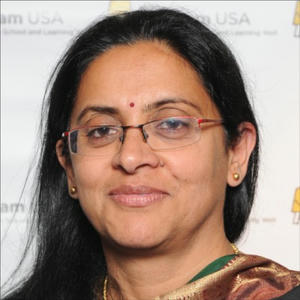
Dr Protiva Kundu, Additional Coordinator-Research, Centre for Budget and Governance Accountability

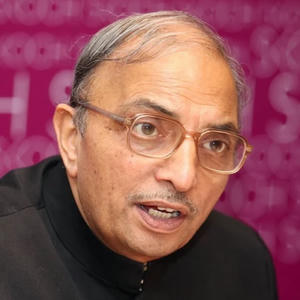
Dr Deepak B Phatak
Director, SKOCH Development Foundation and Chairman, Board of Governors, IIT Indore
Dr. Deepak B. Phatak is the Director of SKOCH Development Foundation and serves as the Chairman of the Board of Governors at IIT Indore. He is renowned for his contributions to the fields of education and technology in India. Dr. Phatak has played a pivotal role in advancing technical education and research, particularly through his leadership at IIT Indore. Dr. Phatak's expertise and vision continue to inspire advancements in academia, technology, and public policy across the country.
Prof Anil D. Sahasrabudhe
Chairman, All India Council for Technical Education (AICTE)
Dr Rukmini Banerji
Chief Executive Officer, Pratham
Dr C Raj Kumar
Vice Chancellor, Jindal Global University
Ms Meeta W Sengupta
Education Strategy, Policy and Research
Dr Protiva Kundu
Additional Coordinator-Research, Centre for Budget and Governance Accountability
1220 - 1330
Environment, Social & Governance
The shift of the investment priorities of future generations is evident from what we are passing through today. With increasing investments into areas and businesses that can help societies become more equitable, inclusive and sustainable through business practices and internal systems, businesses are increasingly being held to higher standards of social responsibility.
The COVID-19 has necessitated that a platform be created for handling future pandemics. Although it is once in a century eventuality, but humankind cannot be surprised once again. Equally important is to universalise health as well as energy which will go a long way in eradicating poverty.
On the environmental front, this could mean helping meet climate change goals, responsible use of natural resources to minimize pollution & waste generation and effective management. On the social front, this pertains to a business’s internal behaviours towards its shareholders and stakeholders from consumers, to human capital and supply chains. For corporate governance, this could entail strong business ethics, refraining from anti-competitive practices, tax transparency and boardroom diversity, transparent ownership and control, fair executive pay and sound accounting practices.
Key issues:
- How do we drive social impact and economic growth through technology focused ESG investments?
- How do we democratize access to funds available for impact investments?
- How do we create a positive environment for bolstering such investments for India’s economic future?
This session examined the growing importance of Environmental, Social and Governance (ESG) frameworks as a critical factor influencing investor decisions, corporate behavior, and sustainable development. The discussion highlighted that ESG is no longer optional, with global capital increasingly shifting toward ESG-compliant investments and standardized reporting gaining momentum. Panelists emphasized the need for India to proactively shape its own ESG framework rather than adopt external models, while balancing global standards with local realities. Key themes included the importance of long-term investing, responsible supply chains, and the role of ESG in driving real social and environmental impact. Gender diversity and inclusive governance were identified as essential components of strong corporate performance and sustainability. Concerns were raised about ESG potentially becoming over-regulated like CSR, risking reduced effectiveness and innovation. The panel also discussed challenges in democratizing access to ESG funds, the need for institutional reforms, and the importance of aligning labor, environmental, and policy frameworks with ESG goals. Overall, the session called for a balanced, flexible, and context-driven ESG approach supported by clear standards, better implementation, and collaborative policymaking.
Opening Remarks: Dr Gursharan Dhanjal, Managing Director & Editor, SKOCH Group
Moderator: Mr U K Sinha, Distinguished Fellow, SKOCH Development Foundation & Former Chairman, SEBI
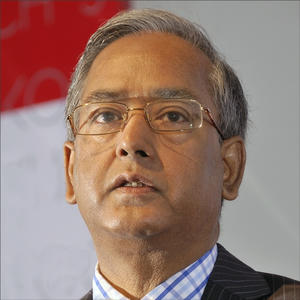
Ms Amrita Agarwal, National Lead, Health Systems Design, Bill & Melinda Gates Foundation
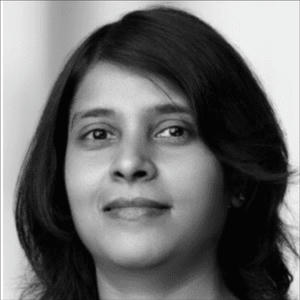
Ms Sutapa Sanyal, Former Director General of Police
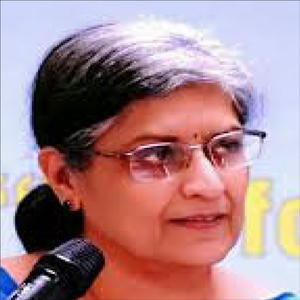
Ms Deepali Khanna, Managing Director, Asia Regional Office, The Rockefeller Foundation

Mr Govind Sankaranarayanan, Director & Managing Partner, ECube India
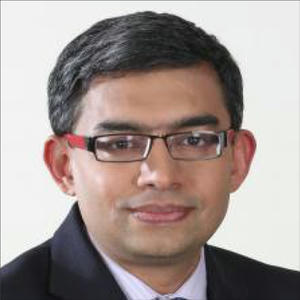
Prof Amir Ullah Khan, Research Director, Centre for Development Policy and Practice
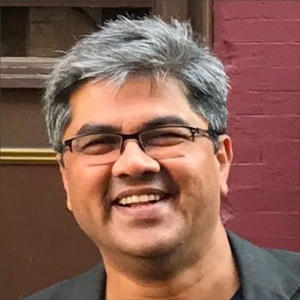
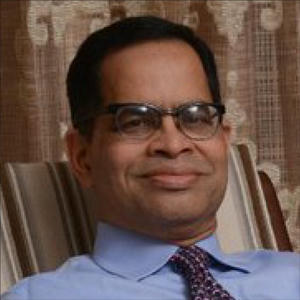
Mr Mrutyunjay Mahapatra
Distinguished Fellow, SKOCH Development Foundation and Member, Governing Council, Reserve Bank Innovation Hub
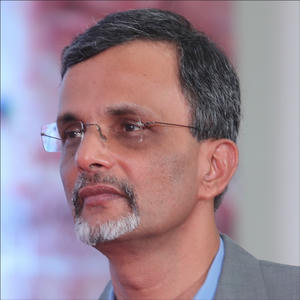
Dr V Anantha Nageswaran
Part-time Member, Economic Advisory Council to the Prime Minister
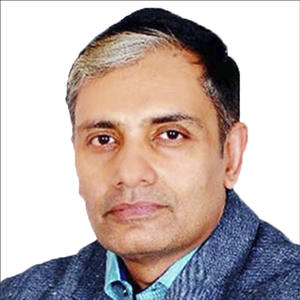
Mr Subhomoy Bhattacharjee
Consultant, Research & Information System for Developing Countries (RIS)

Dr Bornali Bhandari
Senior Fellow, National Council of Applied Economic Research (NCAER)
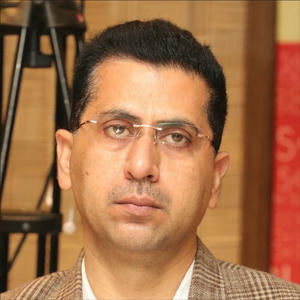
CA Rohit Vaswani
Member - Advisory Board, BVSS & Founder Partner, Raj K. Sri & Co.