SKOCH Summit
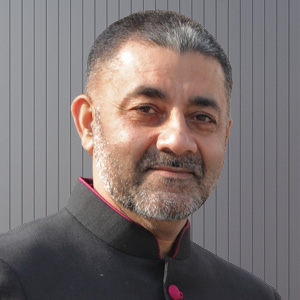
Dr Gursharan Dhanjal
Vice Chairman, SKOCH Group
Dr Gursharan Dhanjal, MA, MPhil, PhD from Delhi University and an expert in strategic affairs, is Vice Chairman, SKOCH Group. He is also the Editor of INCLUSION—a quarterly publication that focuses on development and addresses inclusive growth-related issues. INCLUSION has completed six years. He has over 20 years of work experience ranging from academics to research and business journalism to consulting. He started his career as an Assistant Professor and taught at Delhi University for five years before joining Asia Business News (India)—Dow Jones, a premier broadcaster of business and financial news during the mid-90s. He also worked for CNBC for over three years during the late 90s.
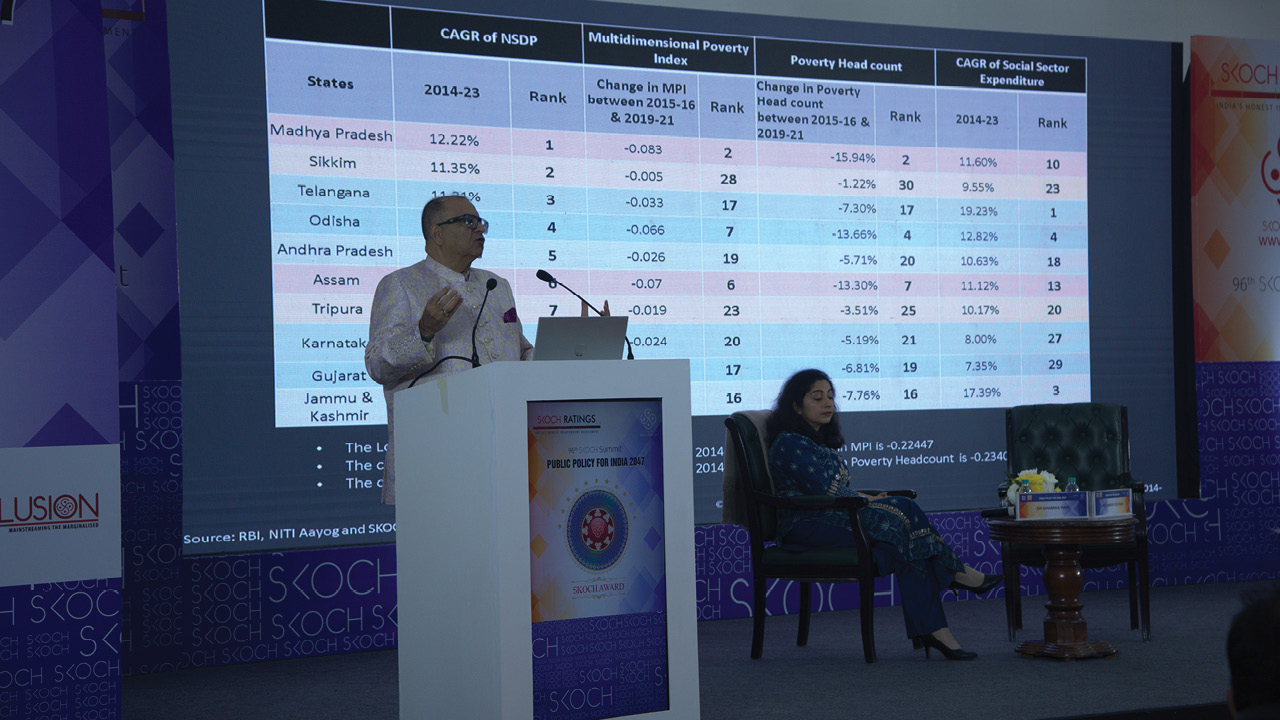
Dr Gursharan Dhanjal at the 108th SKOCH Summit: Public Policy Forum - Regulatory Framework for Viksit Bharat
Dr Gursharan Dhanjal
Vice Chairman, SKOCH Group
Key Points*
- The speaker welcomed Professor Mahendra Dev, dignitaries, distinguished guests, and participants to the 108th SKOCH Summit Public Policy Forum.
- He recalled SKOCH’s association with Professor Mahendra Dev dating back to 2008–09.
- He highlighted Professor Dev’s early vision for India’s development journey toward 2047.
- He distinguished between the reform process and the need for a strong regulatory framework.
- He noted that SKOCH’s 25-year journey and summits have contributed significant learning on public policy and reform.
- He emphasized that transformation requires vision, continuity, and perseverance.
- He stated that the quality of regulation will matter more than regulation alone.
- He linked India’s future regulatory framework to competition, trust, innovation, and global assimilation.
- He stressed that India must move from being a factory of the world to becoming a product nation and knowledge economy.
- He concluded by calling for disruption in existing structures to achieve a 30 trillion plus Viksit Bharat economy by 2047.
* This content is AI generated. It is suggested to read the full transcript for any furthur clarity.
Transcript
Good morning uh ladies and gentlemen.
I have the pleasure of uh welcoming our chief guest today, Professor Mahendra Dev, chairman to the Economic Advisory Council of the Prime Minister, along with other dignitaries on the dis, distinguished guests.
Ladies and gentlemen, when we say regulatory framework for Viksit Bharat, there is always a genesis for everything. I just will for once go back to the days of our discussion and conversation with the Professor Mahendra Dev that dates back to 2008 and 9, and we have maintained that continuum of not only engaging with him, learning from him, and the vision that he professed at that time for India to be where it is today and moving forward 2047, a lot was talked about by him even then.
So what I mean to say is that when we talk about a reform process, it's much different than the regulatory framework. India has come a long way. We have had a huge amount of learning from even the SKOCH summits that we have organized in the last 25 years, 108th today public policy forum.
Not that we have talked about regulation, but so far we focused essentially on reforms, but today we talk in terms of regulatory framework. We believe that there are three things which are important in order to have any kind of transformation. One is the vision, second is uh continuity and third is perseverance. And I'm glad to say that we have remained committed to all these three.
The central proposition of today's conference is the regulatory architecture as it is going to be evolved. So what we say is that we do not simply focus on the regulation. We believe that it is going to be the quality of regulation which is going to be more important.
We never talked about Viksit Bharat. If we go back, it was the Hindu rate of growth. It was uh uh the license raj closed economy. We have gone the other way. So it is competition, it is trust and when we talk about the regulatory framework, it is going to be based on innovation. It is going to be based on assimilation with what happens globally and to become competitive and build trust.
So from merely a you know a factory of the world, we need to become a product nation. Moving forward, we also need to become a knowledge economy and that will happen only by way of owning that knowledge, which is the intellectual property having a place in the world.
We are not going to be Viksit Bat 30 trillion plus economy by 2047 with the existing structure. So there has to be disruption.
So today we have the finest of the talent, the minds, the brain, not only in the audience but as well as on uh the dis to deliberate on this and to make a prescription as to moving forward how is that going to happen.
So ladies and gentlemen, I welcome you all once again. Dignities on the dis. We look forward to learning from your experiences and the vision that you're going to share with us moving forward. And I have the pleasure of declaring the 108 summit public policy forum formally open.
Thank you very much.
Thank you so much.