SKOCH Summit


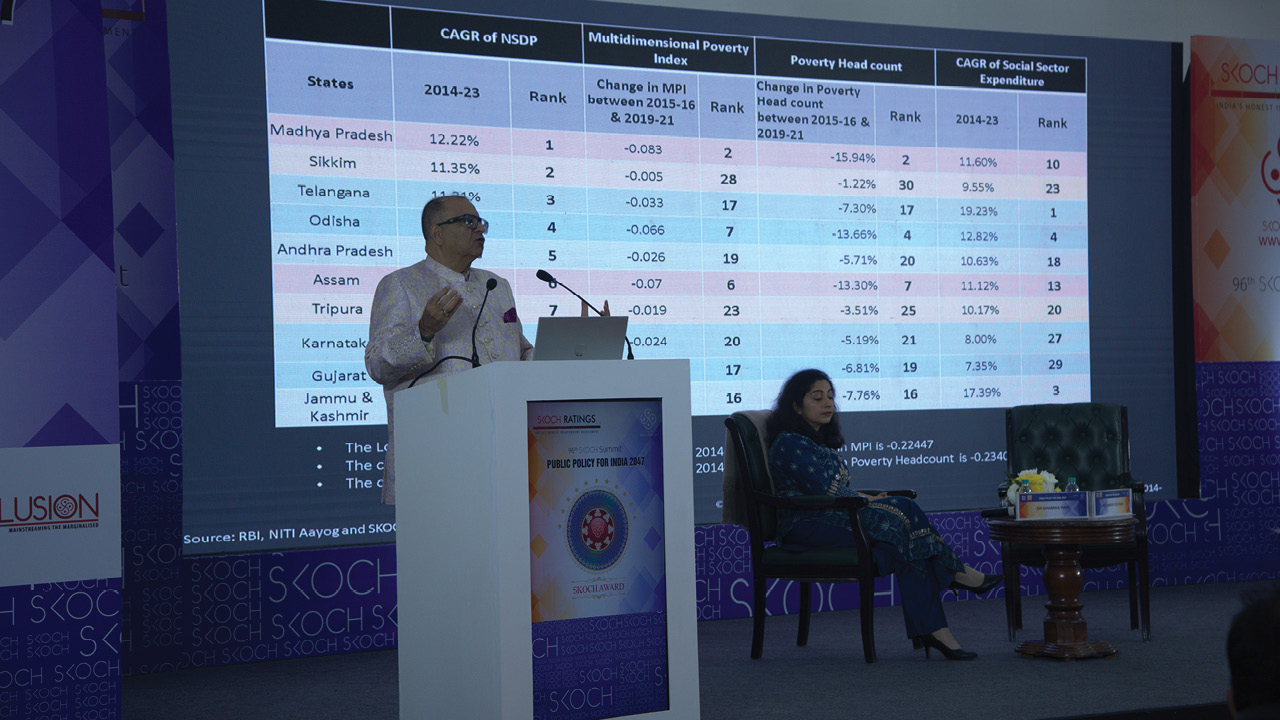
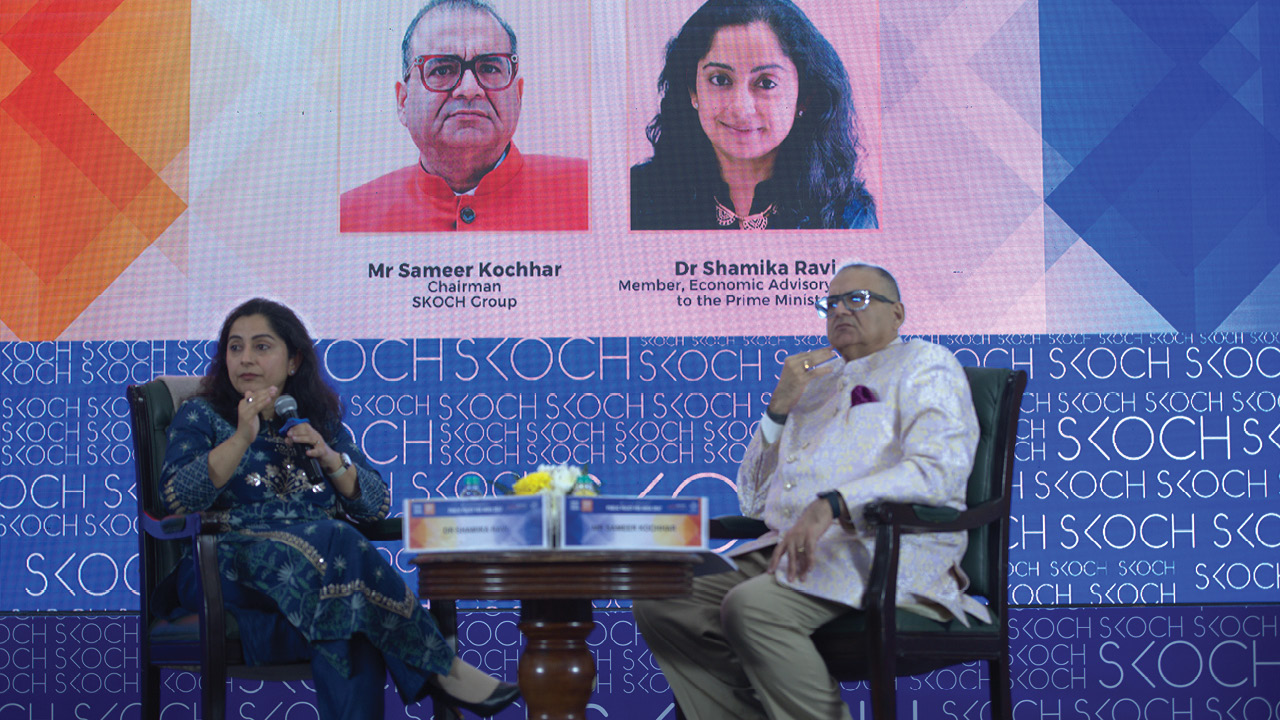
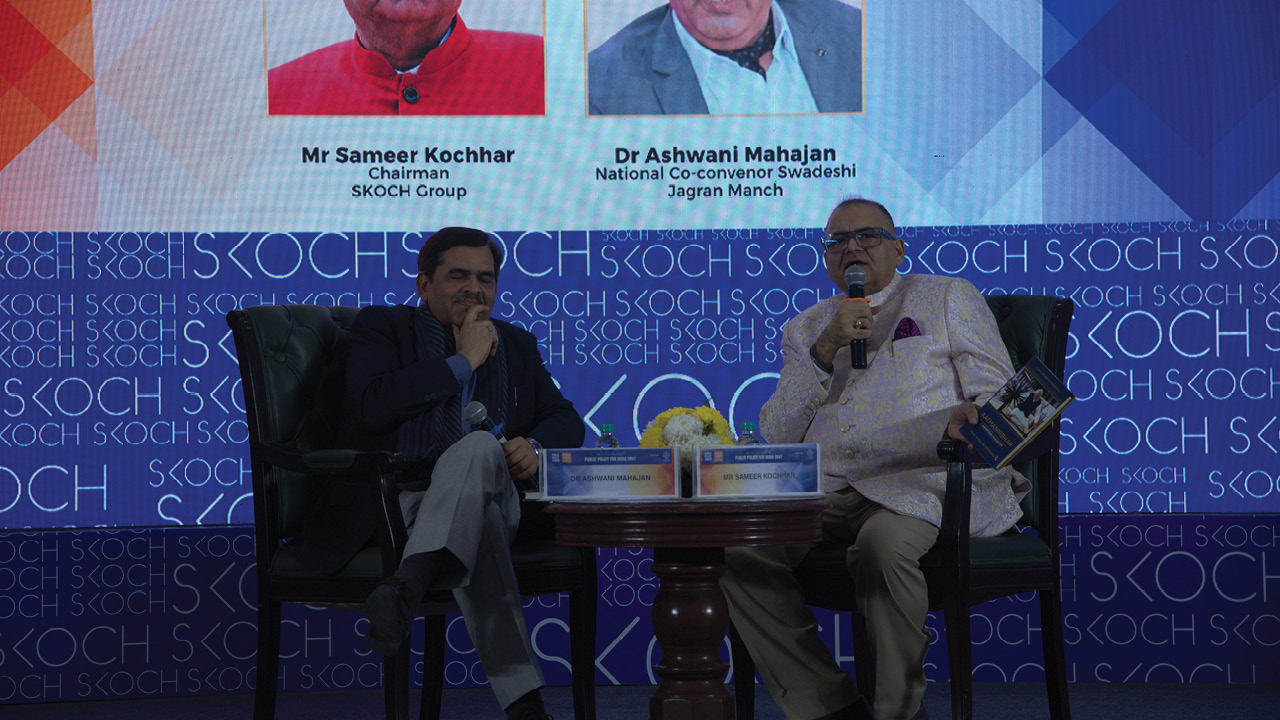
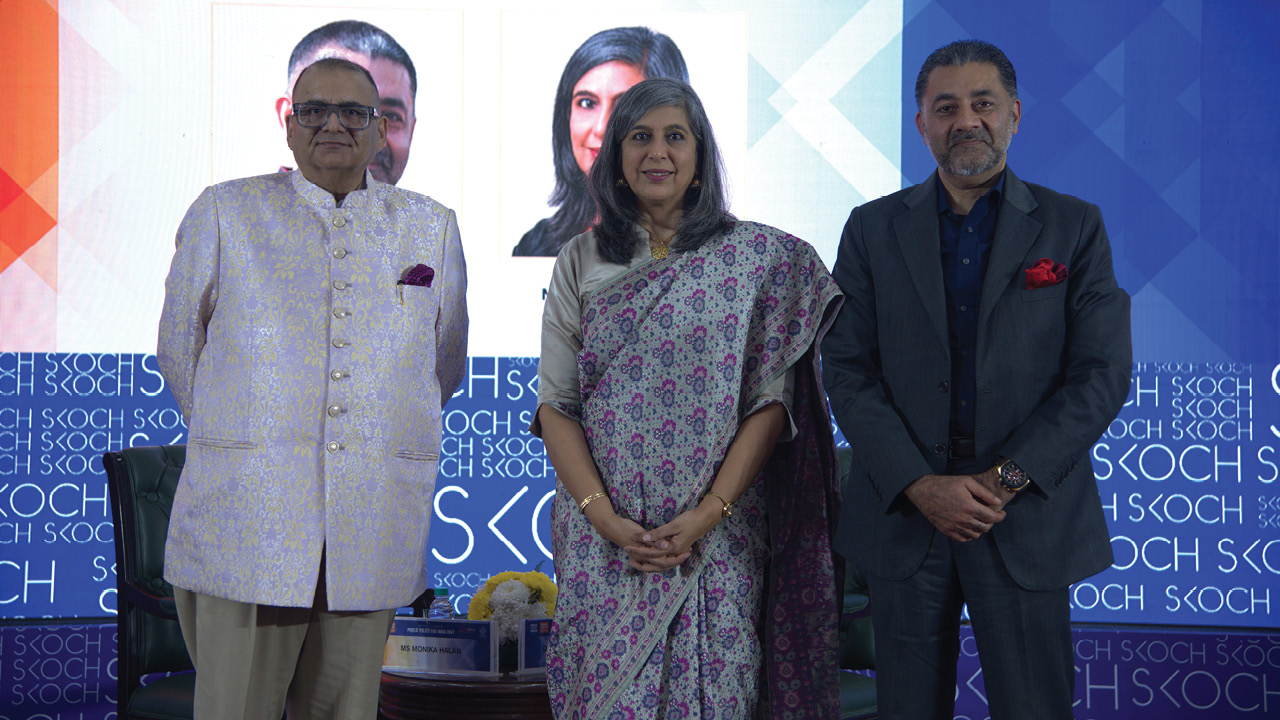




India’s ambition to achieve developed economy status by 2047 under the Viksit Bharat vision rests on expanding productive capacity, on engineering a structural transition towards innovation-led, knowledge-intensive growth. It is a shift that is fundamentally dependent on the quality, coherence and forward-orientation of its regulatory architecture.
This conference advances the argument that regulatory framework design is a primary macroeconomic variable, not a secondary administrative consideration and that India’s ability to sustain high-quality growth over the coming decades will be determined in significant part by whether its institutions are recalibrated to incentivise discovery, reward complexity and attract long-horizon investment.
Drawing on productivity economics and institutional analysis, the conference will examine the relationship between regulatory design and key economic performance indicators (including total factor productivity (TFP), incremental capital-output ratio (ICOR) and the depth of industrial upgrading) to demonstrate that regulatory fragmentation, compliance asymmetries and institutional gaps represent binding constraints on India’s innovation potential.
It will interrogate a critical structural tension at the heart of India’s development moment. Rather than just focusing on deregulation, it is an opportune time for India to advance a capability-centric model of regulatory modernisation, one that builds institutional credibility, reduces uncertainty for R&D-intensive investors and creates the enabling conditions for domestically anchored innovation ecosystems to take root and scale.
Instead of narrowly focusing on deregulation, the conference discusses a capability-centric model of regulatory modernisation. Such a model should build institutional trustworthiness. It should reduce uncertainty for R&D-intensive investors, create legal certainty for citizens and enterprises and establish enabling conditions for domestically anchored innovation ecosystems to grow and scale. The conference will also examine in what way strategic conformity with international regulatory criteria and global best practices can serve as an instrument of economic statecraft.
Arrival, Tea, Meet and Greet
Picture with Mr Sameer Kochhar, Chairman, SKOCH Group
Inaugural Session: Regulatory Framework for Viksit Bharat
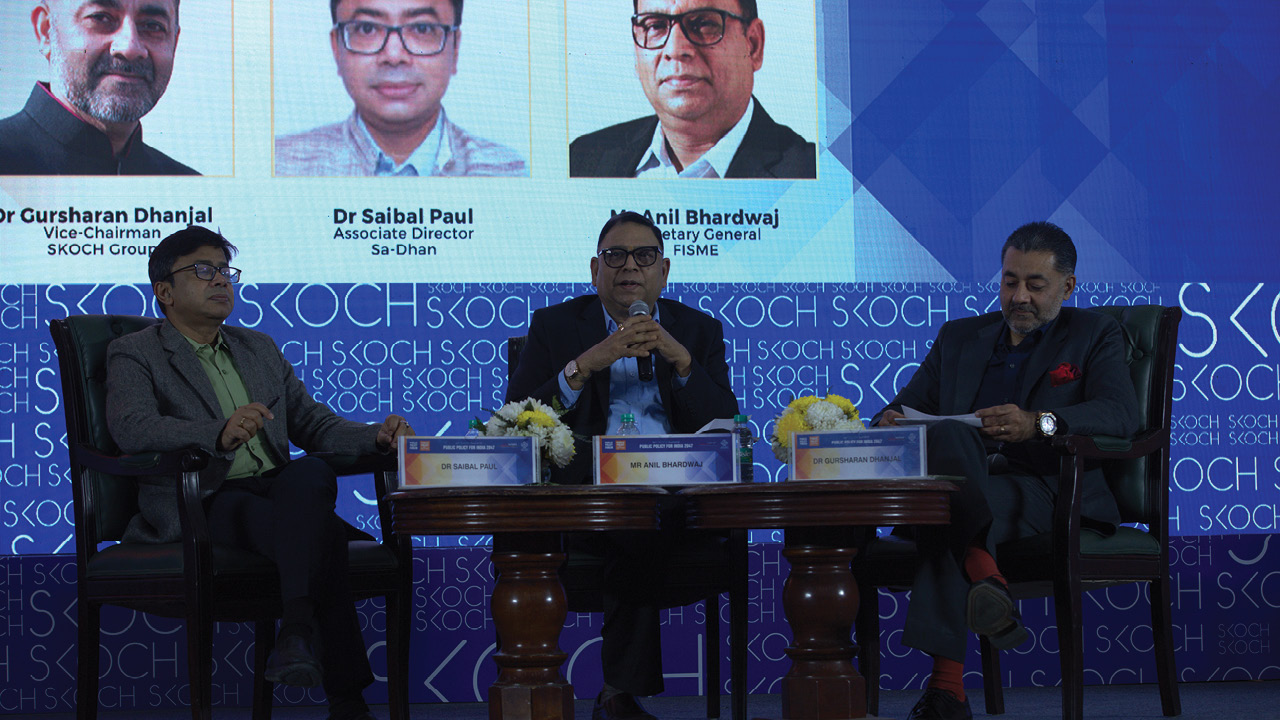
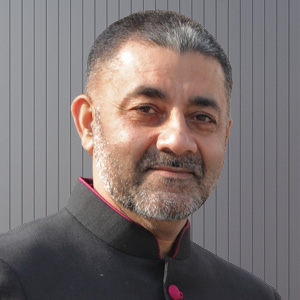
Welcome: Dr Gursharan Dhanjal, Vice-Chairman, SKOCH Group
Summary: Dr Dhanjal welcomed Professor Mahendra Dev, dignitaries, distinguished guests, and participants to the 108th SKOCH Summit Public Policy Forum. He reflected on SKOCH’s long association with Professor Dev since 2008–09 and acknowledged his early vision for India’s journey toward 2047. The speaker distinguished between reforms and the need for a stronger regulatory framework, emphasizing that the quality of regulation will be more important than regulation itself. He highlighted vision, continuity, and perseverance as essential for transformation. He also stressed that India’s future must be built on competition, trust, innovation, and global assimilation. The speaker called for India to move from being a factory of the world to becoming a product nation and knowledge economy. He concluded by underlining the need for disruption in existing structures to achieve a 30 trillion plus Viksit Bharat economy by 2047.*
View Full Transcript
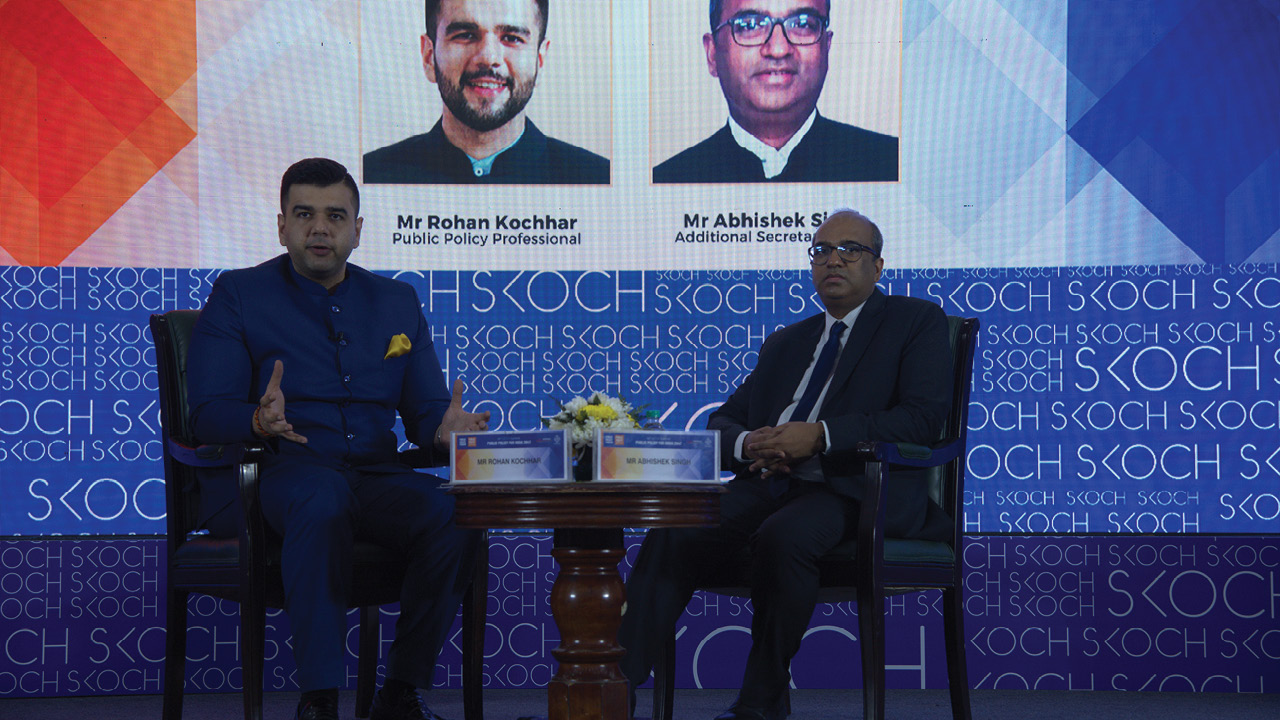
Opening Remarks: Mr Sameer Kochhar, Chairman, SKOCH Group and Mr Rohan Kochhar, Founder, SKOCH Law Offices
Summary: Mr Sameer Kochhar framed Viksit Bharat as an economic arithmetic problem rather than just an aspiration, defining it as India’s journey toward becoming a 30 trillion economy by 2047. He emphasized that achieving this goal will require sustained high growth over more than two decades. While India already has the ambition, he stated that the real question is what kind of economic and regulatory architecture can make this target achievable. He noted that India’s investment rate is already around 30% of GDP, making productivity the key constraint. The speaker explained that the focus must shift from how much India invests to how much output is generated from every rupee invested. He described Viksit Bharat fundamentally as a productivity project and invited Rohan Kocher to present their co-authored paper on the regulatory framework and the changes required.*
View Full Transcript
The speaker presented Viksit Bharat as India’s goal of becoming a US $30 trillion economy by the centenary of independence, arguing that this target depends on productivity rather than only higher spending or investment. He explained that India must ensure capital, labor, and ideas move faster to their most productive use, making regulation central to the growth equation. The speaker highlighted that achieving the target will require 7.8% to 8% real growth, an IICOR below 4, and TFP growth of about 3.1%. He identified logistics costs, power losses, contract delays, low R&D spending, and patent pendency as measurable barriers to productivity. He also used sectors such as semiconductors, agricultural biotechnology, and pharmaceuticals to show how better rules can unlock growth. The speaker proposed five principles for regulatory modernization: appropriability with proportionality, administrative velocity, institutional capacity, incentive alignment, and evaluability. He concluded that India’s road to US $30 trillion runs through productivity, and productivity is ultimately built by rules.*
View Full Transcript
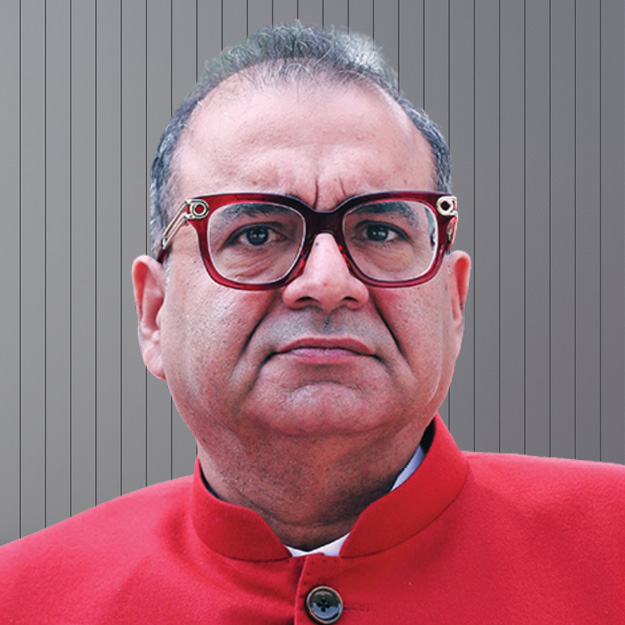
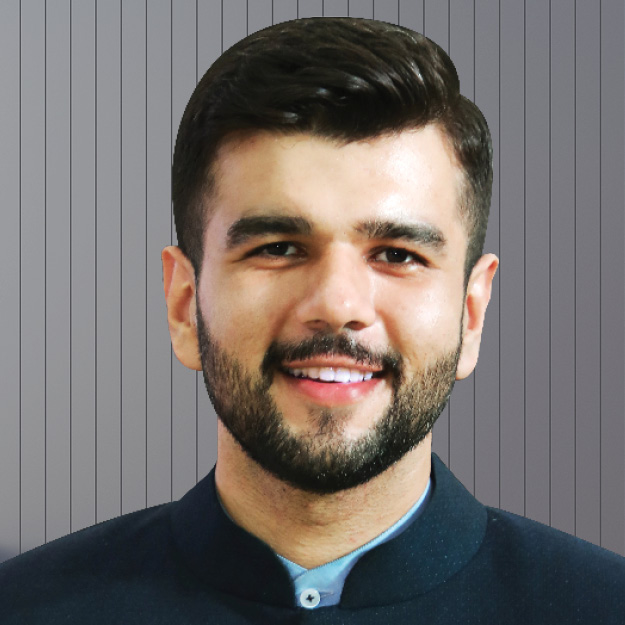
Keynote: Prof S Mahendra Dev, Chairman, Economic Advisory Council to the Prime Minister (EAC-PM)
Summary: The speaker outlined three core goals for India by 2047: becoming a developed nation, ensuring inclusiveness through employment, skills, health and education, and achieving growth through sustainable and climate-resilient practices. He emphasized that India’s legal and regulatory architecture must evolve alongside its ambition to become a 35 trillion economy. He identified investment and exports as two key engines of growth, arguing that India must improve both investment levels and ICOR efficiency. The speaker clarified that Atmanirbhar Bharat and Swadeshi are about competitiveness and quality, not a return to pre-1991 import substitution. He highlighted process reforms as a quieter but transformative route to improve governance, reduce transaction costs, and strengthen ease of doing business and living. He also called for legal reforms, faster contract enforcement, and predictable dispute resolution to build investor confidence. He concluded that India’s future will depend not only on the reforms it undertakes, but on how effectively they are implemented.*
View Full Transcript
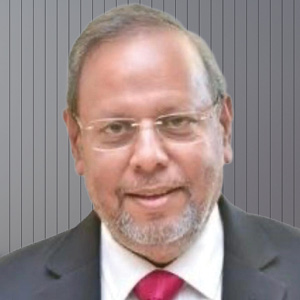
Dr Manoj Kumar, Additional Secretary, Legislative Department, Ministry of Law & Justice
Summary: The speaker emphasized that ease of accessing law is the next frontier of regulatory reform for Viksit Bharat. He argued that before compliance, regulation, and accountability can happen, citizens and businesses must first understand what the law requires of them. He described legal uncertainty as an invisible cost that creates friction, delays, higher expenses, and ultimately suppresses innovation and growth. The speaker positioned access to law not merely as a legal reform, but as an economic, competitiveness, productivity, and development reform. He highlighted plain language as a powerful tool for constitutional inclusion, citizen understanding, better compliance, and trust-building. He proposed a future-ready national access to laws architecture built on accessibility, clarity, interoperability, trustworthiness, and intelligence. He concluded that Viksit Bharat will require regulations and laws that are trusted, understood, accessible, and usable by citizens.*
View Full Transcript
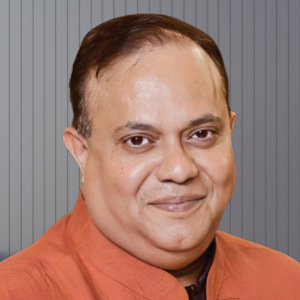
Dr Shekhar Aiyar, Director and Chief Executive, ICRIER
Summary: The speaker focused on trade regulation in the context of rising geoeconomic fragmentation, where stalled multilateral negotiations, increasing trade restrictions, and the weakened WTO dispute system are reshaping global commerce. He argued that India’s strategic strength lies in being a well-connected “connector country” with trade links across the geopolitical spectrum. However, he noted that India still does not trade enough compared to peers, making export growth and labor-intensive manufacturing critical for improving productivity and using the demographic dividend. He called for cutting red tape, reducing non-tariff barriers, modernizing customs, and improving coordination between agencies such as customs, GST, and RBI. He supported more bilateral FTAs, especially in labor-intensive sectors, while cautioning that India must not compromise its strategic autonomy with third countries. He also recommended expanding regional trade, considering CPTPP and RCEP, and participating more actively in plurilateral trade arrangements. He concluded that India should keep the rupee liberal, as an artificially overvalued rupee would act like a tax on exports.*
View Full Transcript

Prof Sachin Kumar Sharma, Director General, RIS
Summary: The speaker emphasized that Viksit Bharat is not merely an economic target but a promise to the next generation, where the quality of regulation will play a decisive role. He highlighted that India must choose whether it will remain a follower of international rules or become an active rule shaper known for quality, innovation, and trust. He noted that global uncertainty, rising protectionism, and a weakening globalization framework make regulatory capability and policy space especially important. The speaker stressed that international trade will be crucial for achieving both the US $30 trillion economy goal and the US $2 trillion export target by 2030. He identified non-tariff barriers, standards, compliance costs, and product quality as major challenges for India’s export competitiveness. He argued that India must engage proactively in global rulemaking on sustainability, AI governance, digital governance, and WTO-related issues. He concluded that smart regulation, appropriate guardrails, domestic reforms, and the ability to co-author international trade rules will be essential for achieving Viksit Bharat by 2047.*
View Full Transcript

Reserved
Tea Break
Prof S Mahendra Dev
Chairman, Economic Advisory Council to the Prime Minister (EAC-PM)
He served as Director and Vice Chancellor of IGIDR, Mumbai (2010–2022) and earlier chaired the Commission for Agricultural Costs and Prices. He was Vice Chairman of IFPRI’s Board, a member of the National Statistical Commission, and Director of CESS, Hyderabad. He has 150 publications, 23 books, and has advised global agencies and Indian government committees. He has received several awards, including the Malcolm Adisesaiah Award.
View MoreDr Manoj Kumar
Additional Secretary, Legislative Department, Ministry of Law & Justice
Dr. Manoj Kumar serves as Additional Secretary to the Government of India in the Ministry of Law & Justice (Legislative Department), where he plays a central role in shaping, modernising, and strengthening the country’s legislative and regulatory ecosystem. A visionary reformer and institution-builder, he has led key national initiatives to transform legislative governance through digital, technology-enabled, and AI-driven frameworks aligned with the vision of Viksit Bharat@2047.
His work bridges law, technology, and citizen empowerment by advancing plain-language lawmaking, interoperability across legal and judicial databases, and the revamp of India Code into a seamless, accessible, and data-driven platform. These efforts collectively embody his commitment to People-First Legislative Governance, ensuring that laws become easier to access, understand, and comply with for every citizen.
For his contributions to public service, reform, and institutional excellence, Dr. Kumar has received several prestigious national and international honours, including the (i) Mahatma Gandhi Samman, (ii) Atal Samman, and (iii) Nelson Mandela Leadership Award.
A prolific author and thought leader, he has written extensively on law, governance, public policy, and institutional transformation. His books, policy papers, and research contributions continue to shape contemporary discourse on legislative reform, digital governance, and the evolution of India’s public institutions.
View MoreDr Shekhar Aiyar
Director and Chief Executive, ICRIER
Shekhar Aiyar is Director and Chief Executive of the Indian Council for Research on International Economic Relations (ICRIER). Previously he held a number of senior roles at the International Monetary Fund, including Assistant Director of the Research Department and Mission Chief for Germany. He has been a Visiting Scholar at Johns Hopkins University, an Advisor to the Bank of England and a Non-Resident Fellow at Bruegel. He has published widely in peer-reviewed journals, while also writing columns for the New York Times and Financial Times. He holds a BA in Economics from Delhi University, an MA in Philosophy and Economics from Oxford University, and a Ph.D. in Economics from Brown University.
View MoreProf Sachin Kumar Sharma
Director General, RIS
Prof. Sharma brings over two decades of expertise in international trade development cooperation, and multilateral and regional negotiations. His research, advocacy, and capacity-building work have shaped discussions on trade and development, agricultural subsidies, investment, food security, sustainability, market access, trade disputes, transparency, LDC graduation, Aid for Trade, and negotiations at the WTO, FAO, G20, and in regional trade agreements.
He holds an M.Phil. and a PhD in Economics from Jawaharlal Nehru University (JNU), Delhi, with a specialisation in the WTO, international trade, quantitative techniques, and agricultural policy. He is skilled in econometrics, Computable General Equilibrium (GTAP), Partial Equilibrium Modelling, and statistical tools, with extensive experience in trade analytics.
A prolific scholar, Prof. Sharma has authored six books, numerous peer-reviewed journal articles, several working papers, and book chapters, in addition to regularly contributing to policy debates through articles in leading newspapers and participating in global forums.
Before joining RIS, he served as a Professor at the Centre for WTO Studies (CWS) at the Indian Institute of Foreign Trade. At CWS, he led and supervised a multidisciplinary team of economists, lawyers, and officials, working on a wide range of economic, development, and legal issues. His evidence-based policy inputs, analysis, and recommendations were extensively utilised by many developing countries and LDCs to comply with WTO obligations and to advance negotiations on agriculture and sustainability, including securing the perpetual peace clause on food security and shaping disciplines on domestic support.
Through knowledge sharing, critical inputs on proposals, and capacity-building initiatives, he also coordinated with key members of the G-33 to develop and advocate common negotiating positions among high-level policymakers of developing countries and LDCs.
Representing India, he made significant contributions to South-South Cooperation through WTO proposals on domestic support, sustainability, food security, cotton, Special and Differential Treatment, and several other issues, many of which were co-sponsored by 75 countries from the G-33, OACPS, and the African Group. His initiatives played a pivotal role in invoking the Bali Peace Clause, thereby safeguarding India’s public stockholding programs for food security from WTO disputes. As an integral member of the Indian delegation, he played a crucial role in negotiations at the last five WTO Ministerial Conferences. He has conducted numerous training programmes on trade issues to strengthen South-South cooperation and collaborated with leading organisations, think tanks, and UN agencies.
As Director General of RIS, Prof. Sharma envisions strengthening RIS as the premier institution of the Global South, providing cutting-edge, development-oriented research and policy dialogue on contemporary global economic challenges. He aims to further RIS’s mission of fostering South-South cooperation, supporting evidence-based policymaking, and ensuring that the voices of developing countries are strongly represented in the international economic discourse.
View MoreMr Sameer Kochhar
Chairman, SKOCH Group
Reforms historian and author of best-seller ModiNomics, Sameer Kochhar is Chairman, SKOCH Group. He is a passionate advocate of social, digital and financial inclusion and is a foremost expert on governance and inclusive growth. His work has been acclaimed globally and endorsed by Mr Narendra Modi, Mr M Venkaiah Naidu, Dr Manmohan Singh, Mr Arun Jaitley, Mr P Chidambaram, Mr Yashwant Sinha, Dr C Rangarajan and Dr Montek Singh Ahluwalia and so on. In his thinking and writings and activities, his profound admiration for India's economic reforms and in extension, those outstanding personalities who strive to make these reforms more meaningful and broad-based comes out clear and unambiguous.
View MoreDr Gursharan Dhanjal
Vice Chairman, SKOCH Group
Dr Gursharan Dhanjal, MA, MPhil, PhD from Delhi University and an expert in strategic affairs, is Vice Chairman, SKOCH Group. He is also the Editor of INCLUSION—a quarterly publication that focuses on development and addresses inclusive growth-related issues. INCLUSION has completed six years. He has over 20 years of work experience ranging from academics to research and business journalism to consulting. He started his career as an Assistant Professor and taught at Delhi University for five years before joining Asia Business News (India)—Dow Jones, a premier broadcaster of business and financial news during the mid-90s. He also worked for CNBC for over three years during the late 90s.
View MoreMr Rohan Kochhar
Founder, SKOCH Law Offices
Rohan Kochhar stands at the intersection of economics, social science, and law, leveraging his multidisciplinary expertise to drive impactful change in public policy, emerging technologies, and ESG (Environmental, Social, and Governance) initiatives. As the founder of SKOCH Law Offices, Rohan has built a boutique law firm renowned for its deep domain knowledge and innovative approach to legal challenges.
View MorePanel: Innovation and Moving India Up the Value Chain
The panel discusses how India can shift from compliance-centric to capability-centric regulation. It covers regulatory sandboxes, adaptive licensing, sector-specific innovation cells, better coordination among regulators, stronger technical talent, data-driven supervision, faster clarifications and more predictable enforcement. The focus is not on whether India should regulate innovation, but on how to build regulatory capacity to do so intelligently, proportionately and confidently.
India cannot afford a regulation culture that is either blindly permissive or reflexively prohibitive. Excessive risk aversion can push innovation offshore, discourage experimentation, slow technology adoption and trap firms in lower value production segments. Equally, weak or poorly designed regulation can cause consumer harm, systemic risks, market distortions and loss of public faith.
Moderated by Prof Subhomoy Bhattacharjee, whose work on regulatory governance brings together economics, law, institutions and public policy, the discussion begins by examining how India can strengthen the analytical competencies of regulators. Next, Mr Pradeep S Mehta’s expertise in Regulatory Impact Assessment helps frame the need for evidence-based rulemaking, cost-benefit analysis, stakeholder consultation, sunset clauses, competition assessment and institutional feedback loops. Dr Raghavender GR then offers the perspective of intellectual property and pharmaceuticals, where innovation depends on a delicate balance among incentives for research, affordability, public health, technology transfer and global competitiveness. Finally, Mr Dilip Chenoy addresses Web3 and Virtual Digital Assets, outlining the regulatory challenge of protecting consumers and financial stability without dismissing an entire technological architecture that may shape future digital infrastructure, tokenisation, payments, contracts and decentralised applications.
Summary:
The session focused on India’s innovation journey and the regulatory frameworks needed to support the next phase of growth. It began by noting that India has moved from limited innovation to a startup ecosystem of over two lakh startups with major private capital commitments. The speakers categorized startups into models that adapt global ideas for India, ventures that improve efficiency, and companies doing genuine innovation in sectors such as space, blockchain, virtual digital assets, medical devices, and drones. A recurring theme was that technology is moving faster than policy, making faster regulatory response essential. The session emphasized that India must shift from being a rule taker to becoming a rule creator and rule giver. Regulatory Impact Assessment was highlighted as an important tool to make compliance more capability-driven and productivity-driven. The government perspective linked India’s improved Global Innovation Index ranking, patent filings, trademark systems, Startup India, and the SIPP scheme to stronger IP and innovation support. Speakers also reflected on missed opportunities in electronics, semiconductors, renewable manufacturing, EV supply chains, cloud infrastructure, and software products due to delayed policy action. The discussion highlighted AI-led innovation in sports, especially cricket, women’s cricket and kabaddi, as emerging areas of large-scale investment and market demand. Public health innovation was discussed through India’s role as the pharmacy of the world, its generic medicines industry, vaccine capacity, TRIPS flexibilities, and compulsory licensing. The session concluded that India must balance innovation, regulation, sovereignty, affordability, and quality while building frameworks that enable rather than constrain future growth.*
Prof Subhomoy Bhattacharjee, Consulting Editor, Business Standard & Professor of Practice, OP Jindal Global University

Dr Raghavender GR, Senior Consultant (IPR), Dept for Promotion of Industry & Internal Trade (DPIIT), Govt. of India

Mr Dilip Chenoy, Chairperson, Bharat Web3 Association
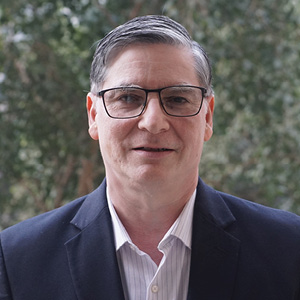
Mr Pradeep S Mehta, Secretary General, CUTS International
Ms Tasmita Sengupta, Senior Research Associate, CUTS International

Prof Subhomoy Bhattacharjee
Consulting Editor, Business Standard & Professor of Practice, OP Jindal Global University
Subhomoy Bhattacharjee, with twenty-two years of experience in journalism, is a Consulting Editor for Business Standard. His areas of interest include public policy, especially regulatory issues, finance and urban development.
He is the author of Special Economic Zones (SEZ) in India: Myths and Realities. He has authored a study on the Land Acquisition Act, a project on comparative land prices in India’s selected districts and its relation with industrialisation, commissioned by GIZ, India, and TARI. He has previously contributed to other books, including Media at Work in China and India: Discovering and Dissecting (SAGE, 2015).
Subhomoy studied economics at Shri Ram College of Commerce and at Delhi School of Economics, both affiliated to the University of Delhi. He began his career as a civil servant, joining the Indian Information Service through the civil services exam. He has subsequently worked with The Economic Times and was until recently the deputy editor at The Indian Express while writing for The Financial Express too.
Presently, he is also a consultant with Research and Information Systems for Developing Countries (RIS). He frequently appears on television and radio on economic news programmes and has lectured in several universities in India and abroad, on public policy.
View MoreMr Pradeep S Mehta
Secretary General, CUTS International
A student of law and economics, Pradeep Mehta (78) is the founder Secretary General of the Jaipur-based Consumer Unity & Trust Society (CUTS International), a global economic policy research, advocacy and networking, NGO, established in 1983 in India, with centres in Nairobi, Lusaka, Hanoi, Accra, Geneva and Washington DC.
Currently he is a Member of the WTO DG’s NGO Advisory Board, for the third time, among several other bodies. He has also served on the India G20/B20’s Council on Africa’s Economic Integration, GOI’s Board of Trade; Better Regulatory Advisory Group; Steering Committee on Ecomark etc.
Recipient of the M R Pai Award in 2007, Scindia School’s Old Boy of Eminence Award in 2018, the SKOCH Excellence Award in 2021 and for BW Social Impact Award in 2023 for his dedication to promoting competition and consumer protection.
Appointed as Professor of Practice, Public Policy at the JECRC University, Jaipur in 2026 and has been a visitng Afellow at Loyola University, Chicago and Manchester .University, UK.
A prolific writer and change maker, Mehta has been defined by the noted economist: Jagdish Bhagwati as a living treasure and a gift to India.
View MoreDr Raghavender GR
Senior Consultant (IPR), Dept for Promotion of Industry & Internal Trade (DPIIT), Govt. of India
Dr. G.R. Raghavender is a distinguished expert in Intellectual Property Rights (IPR) and a retired Joint Secretary to the Government of India and currently serve as Senior Consultant (IPR) at the Department for Promotion of Industry & Internal Trade (DPIIT), Government of India. A career civil servant from the Central Secretariat Service (CSS) selected through the UPSC Civil Services Examination, 1988.
During his service, he held several key leadership positions, including Joint Secretary in the Department of Justice, Ministry of Law & Justice, and Joint Secretary in the Department of Industrial Policy and Promotion (now DPIIT), Ministry of Commerce & Industry. He also had an additional charge as Director General of the National Productivity Council (NPC) from November 2015 to May 2016. As Registrar of Copyrights at the Indian Copyright Office for over six and a half years, he played a pivotal role in shaping India’s modern copyright framework, including spearheading the Copyright (Amendment) Act, 2012, the Copyright Rules, 2013, and the implementation of online registration and payment gateway for copyright, the digitisation of documents, the adoption of a distinctive office logo, and the successful attainment of ISO 9001 certification in 2014.
At the international level, he actively participated in multiple WIPO Standing Committee on Copyright and Related Rights (SCCR) meetings, RCEP negotiations, and several Free Trade Agreement (FTA) negotiations, including the recently concluded India–EU FTA,2026 as a member of the Indian delegation. I contributed to the successful conclusion of two landmark international instruments: the Beijing Treaty on Audiovisual Performances (2012) and the Marrakesh Treaty (2013). He also contributed to the recently concluded WIPO Treaty on Intellectual Property, Genetic Resources and Associated Traditional Knowledge (GRATK), 2024 and the Riyadh Design Law Treaty (RDLT), 2024.
Further, he also served as a WIPO resource person and copyright law expert in Singapore, Chengdu, and Kampuchea and contributed to the revision of copyright legislation in Nepal, Bhutan, the Maldives, the Philippines, and Myanmar. In addition, he regularly give talks on various IPR subjects at international and national seminars, including programmes organised by WIPO, Geneva, and at leading law universities and institutions across India.
Academically, he holds a PhD in IPR, with research focused on IP protection in the context of text and data mining and artificial intelligence, an LLM and LLB, and an MA in Development Studies (Public Policy & Management) at ISS, The Hague, the Netherlands.
View MoreMr Dilip Chenoy
Chairperson, Bharat Web3 Association
Mr. Dilip Chenoy is Chairperson, Bharat Web3 Association. He has held leadership roles across India's foremost industry bodies, including as Secretary-General of FICCI, MD & CEO of NSDC, Director-General of SIAM, and Deputy Director-General of CII, with extensive contributions to policy and industry development.
View MoreMs Tasmita Sengupta
Senior Research Associate, CUTS International
Tasmita Sengupta is a Senior Research Associate at CUTS International with a background in Economics and Development Studies from IIT Guwahati. Her research focuses on economic regulation and competition, using Regulatory Impact Assessment (RIA), with expertise in conducting policy research, stakeholder engagement and evidence-based policymaking. She also specializes in workers' welfare, particularly in the platform economy, and the social dimensions of Environmental, Social and Governance (ESG) frameworks. She has contributed to multiple articles on the above areas for CUTS. As an emerging development practitioner, her work seeks to bridge rigorous research and policy action to promote inclusive and sustainable economic outcomes.
View MoreVote of Thanks: Mr Atul K Thakur, Senior Secretary, State Development Council & India-Nepal Centre, PHD Chamber of Commerce and Industry
Summary: The speaker delivered the vote of thanks on behalf of PHD CCI and SKOCH, expressing gratitude to all participants despite the shortage of time. He called for appreciation of SKOCH and its continued spirit of engagement with economic reforms. He noted that 2026 marks 25 years of India’s economic reform journey, which began in 1991 under then Finance Minister Dr. Manmohan Singh. The speaker emphasized that the reforms changed India’s history permanently and helped the country arrive economically with a human face. He observed that successive governments since 1991 have continued to uphold the progressive elements of reform. He also acknowledged SKOCH’s institutional role in supporting the finer aspects of India’s economic transformation. He concluded by thanking everyone present and handing the program back to the host.*
View Full Transcript
Awards
Lunch
Awards
Mr Atul K Thakur
Senior Secretary, State Development Council & India-Nepal Centre, PHD Chamber of Commerce and Industry
View More* This summary content is AI generated. It is suggested to read the full transcript for any furthur clarity.