SKOCH Summit
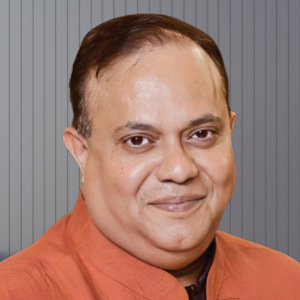
Dr Manoj Kumar
Additional Secretary, Legislative Department, Ministry of Law & Justice
Dr. Manoj Kumar serves as Additional Secretary to the Government of India in the Ministry of Law & Justice (Legislative Department), where he plays a central role in shaping, modernising, and strengthening the country’s legislative and regulatory ecosystem. A visionary reformer and institution-builder, he has led key national initiatives to transform legislative governance through digital, technology-enabled, and AI-driven frameworks aligned with the vision of Viksit Bharat@2047.
His work bridges law, technology, and citizen empowerment by advancing plain-language lawmaking, interoperability across legal and judicial databases, and the revamp of India Code into a seamless, accessible, and data-driven platform. These efforts collectively embody his commitment to People-First Legislative Governance, ensuring that laws become easier to access, understand, and comply with for every citizen.
For his contributions to public service, reform, and institutional excellence, Dr. Kumar has received several prestigious national and international honours, including the (i) Mahatma Gandhi Samman, (ii) Atal Samman, and (iii) Nelson Mandela Leadership Award.
A prolific author and thought leader, he has written extensively on law, governance, public policy, and institutional transformation. His books, policy papers, and research contributions continue to shape contemporary discourse on legislative reform, digital governance, and the evolution of India’s public institutions.
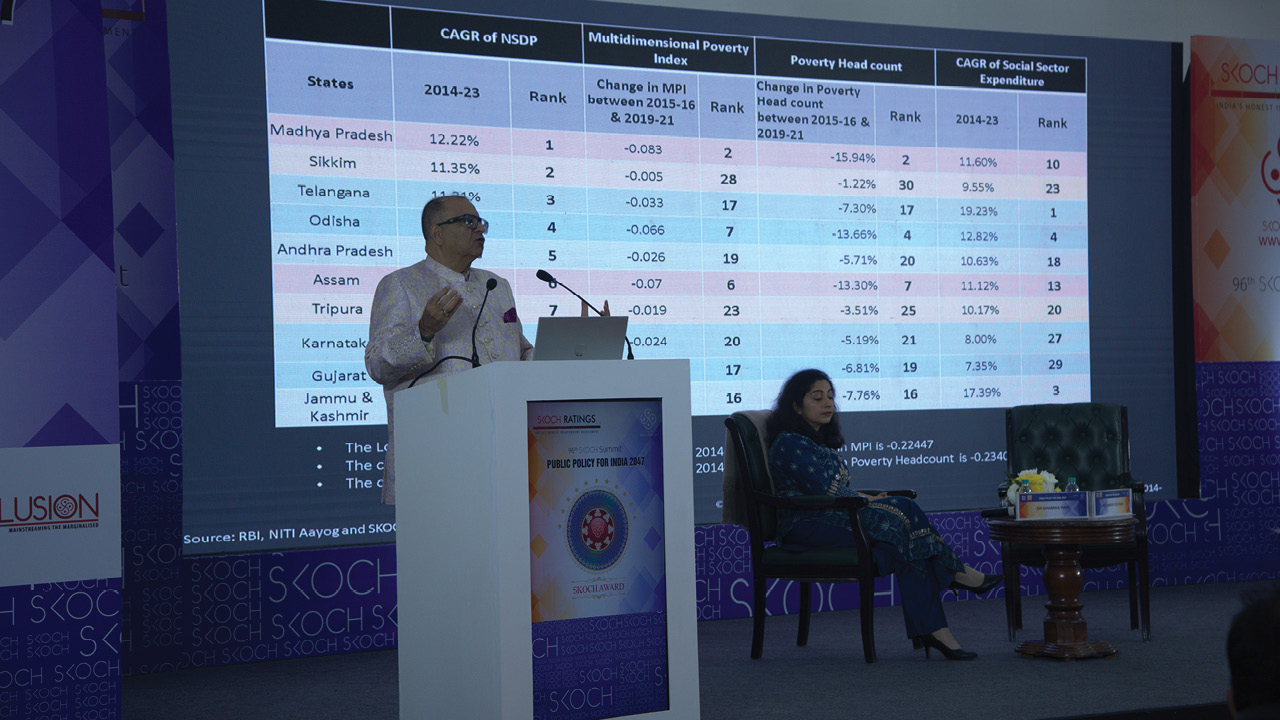
Dr Manoj Kumar at the 108th SKOCH Summit: Public Policy Forum - Regulatory Framework for Viksit Bharat
Dr Manoj Kumar
Additional Secretary, Legislative Department, Ministry of Law & Justice
Key Points*
- The speaker emphasized that ease of accessing law is the next frontier of regulatory reform for Viksit Bharat.
- He argued that before compliance comes understanding, and before ease of doing business comes ease of understanding the law.
- He identified legal uncertainty as an invisible cost that creates friction, delay, expense, and suppresses innovation.
- He stated that the challenge is not always overregulation, but often the under-accessibility of laws.
- He described legal infrastructure as essential to every contract, investment, enterprise, innovation, and economic transaction.
- He positioned access to law as an economic, competitiveness, productivity, and development reform.
- He highlighted plain language in legal and regulatory discourse as a tool for constitutional inclusion and citizen empowerment.
- He said legal modernization must move beyond repositories of legal information toward citizen-centric ecosystems of legal understanding.
- He proposed five pillars for a national access to laws architecture: accessibility, clarity, interoperability, trustworthiness, and intelligence.
- He concluded that a Viksit Bharat will be built through regulation that is trusted, understood, and accessible.
* This content is AI generated. It is suggested to read the full transcript for any furthur clarity.
Transcript
Professor Mahendra Dev ji, Dr. Shekhar Aiyar, Professor Sachin Kumar Sharma, Mr. Sameer Kochhar, Mr. Dhanjal and of course Mr. Rohan Kochhar, colleagues from the government, industry and the academy are present here today. Good morning to you.
It is a privilege to participate in this very important discussion on regulatory framework for Viksit Bharat.
Before moving forward, let me mention that I was very keenly listening to like all of us here the views and thoughts of Professor Mahendra Dev ji on the three goals and in particular the process reforms and the legal reforms and uh especially some of those issues touching on law and justice and related areas.
Of course, he's very kindly mentioned some deep work we have done on decriminalization and removal of obsolete laws. The Jan Vishwas movement is still on. There more to come in times to come even on legal reforms on the challenges around adjudication and most particularly aligning the understanding of business and justice for our honorable judges. I think that's an area it would be a great and impactful initiative if that takes shape in times to come.
When we discuss regulation, we often focus on some familiar questions. How many approvals are required? How many compliances exist? How quickly can permissions be granted or obtained? And how efficiently can disputes be resolved?
These are no doubt very important questions. But today I wish to place before this distinguished gathering a more fundamental one. Can citizens, businesses or innovators easily know what the law requires of them?
So I'll be largely pondering around this area for the next few minutes and see where we stand and where we need to go because before compliance comes understanding, before regulation comes awareness, and before accountability comes accessibility and before ease of doing business comes ease of understanding the law.
I submit that the ease of accessing law is the next frontier of regulatory reforms for a Bharat that we are envisioning towards moving towards 2047. Indeed, it may become one of the defining pillars of our journey towards Viksit Bharat by 2047.
Economists often measure compliance costs as we were we saw today in the presentation by Mr. Kochhar and of course in the views of Professor Mahendra Dev ji businesses measure transaction costs governments measure procedural delays yet there exists another cost that often remains invisible and not talked about too much the cost of legal uncertaintity.
Consider a startup founder who has just tried to envision a journey for herself. Before she can comply with a regulation, she must first discover the regulation. And before she discovers it, she must know where to look. And before she knows where to look, she must know that it exists in the first place.
This information asymmetry creates frictions. Friction creates delay. Delay creates cost. and cost suppresses innovation. Innovation then in turn drives growth. Therefore, the entire cyclical effect comes to the point that what appears to be a legal problem ultimately becomes an economic problem.
The challenge is not always overregulation but most often it is under accessibility of laws.
We traditionally think of infrastructure as roads, ports, airports, power systems and digital networks. In recent years, India has shown the world how DPIs can transform governance at population scale. We have Aadhaar, UPI, Digilocker and so on. Together they reduced friction, expanded participation, strengthened trust.
This success teaches us one very important lesson in the legal domain. Infrastructure becomes transformative when it democratizes access.
But there is one another infrastructure that needs attention. Legal infrastructure. As we discussed, as we heard in the morning today, every contract, every investment, every enterprise, every innovation and every economic transaction ultimately depends on legal certaintity. And legal certaintity begins with legal accessibility.
When legal information is difficult to access, trust becomes expensive. And therefore, in turn, when trust becomes expensive, growth becomes slower.
Therefore, access to law should not be viewed merely as a legal reform. It should be seen as an economic reform, a competitiveness reform and a productivity reform and ultimately therefore a development reform considering the vision that we have set for ourselves.
Friends, let me also talk about the constitution in this perspective. The Constitution of India is not merely a governance document as you are aware. It is a citizen empowerment document. It guarantees justice, liberty, equality, dignity and provides remedies and ultimately it seeks to ensure that every citizen can participate fully in the life of the republic.
You will agree that the constitutional guarantees become meaningful only when citizens are able to understand and access the legal framework through which these guarantees are delivered. A right unknown is often a right unrealized. Similarly, remedy not understood may remain a remedy not pursued at all. and entitlement hidden behind complexities may remain inaccessible despite such uh entitlements existing in law.
The journey from constitutional promise to constitutional delivery therefore passes through one very critical gateway and that gateway is access to law. Access to law therefore is a convergence of constitutional governance, regulatory governance and economic governance.
Friends, moving on to one other very important aspect on access to laws. One of the most powerful reforms available to us is also one of the simplest ones. It's a plain language. use of plain language in our legal and regulatory discourse.
For past decades, we have debated what laws should contain. The coming decades may increasingly require us to focus on how laws are understood.
Plain language is often misunderstood as simplification. Simplification and use of plain language may at times converge, but they're not necessarily the same things. It is not simplification of legal rights. It is not simplification of legal obligations. It is not simplification of legislative precision alone. It is simplification of access to laws.
A citizen should not require specialized training to understand the law that governs or grants the citizen rights or sets obligations or gives opportunities. The law belongs to the people. Therefore, wherever possible, the law must increasingly be capable of speaking to the people.
In a democracy of India's scale and diversity, clarity itself becomes public good. Just keeping a laws clear and in a language that people can understand itself is public good.
Plain language is therefore not merely a drafting technique. It is a tool of constitutional inclusion. It helps transform legal information into citizen understanding and therefore citizen understanding into citizen empowerment. It strengthens transparency, improves compliance, reduces avoidable disputes and deepens trust between citizens and institutions.
In this regard, I want to mention that uh because of our efforts and of course cooperation from the bar council, use of plain language has been made a compulsory course in the LLB programs of all law schools in India effective 2026.
Let me now touch upon reimagining access of law in the digital age. Every era leaves behind a defining institutional innovation. The 20th century witnessed the expansion of representative institutions. The early years of the 21st century saw the rapid growth of digital governance. The coming decades may and should be remembered for something equally transformative. The democratization of access to laws.
Historically, legal systems were designed around publication. As we have always seen in the past, laws were enacted by the parliament and thereafter gazettes were published, records were maintained and archives were created. But attention was not sufficient attention was not given for making available the laws to the people who need to consume the laws to benefit from the laws and to meet the obligations.
That model served an important purpose in our journey thus far. But the expectations of citizens, businesses and institutions have changed dramatically. Today the challenge is no longer the availability of legal information. The challenge is accessibility, discoverability, comprehension, usability and trust.
In the digital society that we are rapidly transforming into the next stage of legal modernization must therefore move beyond repositories of legal information towards more citizencentric ecosystem of legal understanding.
As Bharat move toward moves towards Viksit Bharat by 2047 one can envision what may be described as a future ready national access to laws architecture. A lot of work is being done by the government. Uh but I would I'm trying to touch on these at a very broad scale.
An ecosystem that enables every citizen, entrepreneur, investor, innovator and institution to discover, understand and navigate the law with confidence.
Such an architecture may rest upon five foundational pillars. First, accessibility. The law should be available anytime anywhere in the form that are usable by citizens, businesses and institutions alike. Second, clarity. Legal information should increasingly be presented in ways that improve understanding and preserving legal precision. Third, interoperability. Different components of the legal ecosystem should increasingly operate in a connected and coherent manner. Fourth, trustworthiness. Citizens and businesses should be able to rely on upon authentic, authoritative and updated legal information from trusted public sources. And finally, the fifth, intelligence. Emerging technologies including AI can assist discovery, navigation and understanding while preserving the primacy of human judgment and constitutional values.
The objective is very very simple. The burden of navigating complexity should progressively shift from the citizen or the consumer to the system, not the other way around.
And I hope in times to come we're able to create some consumption matrices to throw up data on the level of consumption of benefits granted by law and otherwise unreachable to the people so that we can evaluate what further steps need to be taken uh to further the cause of access to laws.
As Bharat moves towards becoming one of world's leading economies by 2047, the complexity of our regulatory ecosystem will inevitably increase. A larger economy is more innovative economy. A more innovative econ economy may in certain key areas be more regulated economy and a more regulated economy would require greater legal accessibility.
The key sectors shaping our future like artificial intelligence, quantum technologies, biotech, digital assets and even emerging technologies which we cannot yet fully imagine will require agile, adaptive and trusted regulatory systems. A developed Bharat will therefore require not only better regulations, it will require regulations that are easier to understand and easier to navigate.
Regulatory excellence, my friends, will increasingly depend upon accessibility, predictability, and trust.
Friends, over the years, I have often spoken about three foundational principles for future ready governance. Trust, transparency, and technology. The three T's. Ease of accessing law sits precisely at the intersection of all the three.
When citizens can understand the law, trust would definitely increase. When laws become easier to discover, transparency gets a push. When technology reduces barriers to access, governance becomes more and more efficient. Some of the issues that uh Rohan was touching upon. Clarity creates transparency. Transparency builds trust and technology enables both.
These three pillars therefore form the foundation of regulatory excellence and regulatory excellence is indispensable to achieving the visions and goals of Viksit Bharat.
Friends, allow me to conclude with a reflection. The first generation of reforms focused on access to government. The second generation focused on access to public services. The third generation focused on access to digital infra. And the next generation must focus on access to law because law is not merely an instrument of regulation. It is an instrument of empowerment.
It is the bridge between constitutional promise and citizen experience. It is the bridge between rights and remedies. It is the bridge between governance and trust. And increasingly it is the bridge between innovation and growth.
As Bharat moves towards 2047, our aspiration should not merely be that every citizen citizen is governed by law. Our aspiration should be that every citizen can understand the law. Because when citizens understand the law, they can exercise rights with confidence, fulfill obligations with clarity, participate more fully in the life of the republic.
A Viksit Bharat will be built through regulation that is trusted, understood and accessible. Through laws that citizens can discover, through laws that citizens can comprehend and through laws that citizens can confidentially use. And that is how a future ready national access to law architecture can become one of the foundation pillars of Viksit Bharat in our journey to a Viksit Bharat by 2047.
Thank you so much for having me here and particularly to the Kochhar Foundation.
Jai Hind.