SKOCH Summit
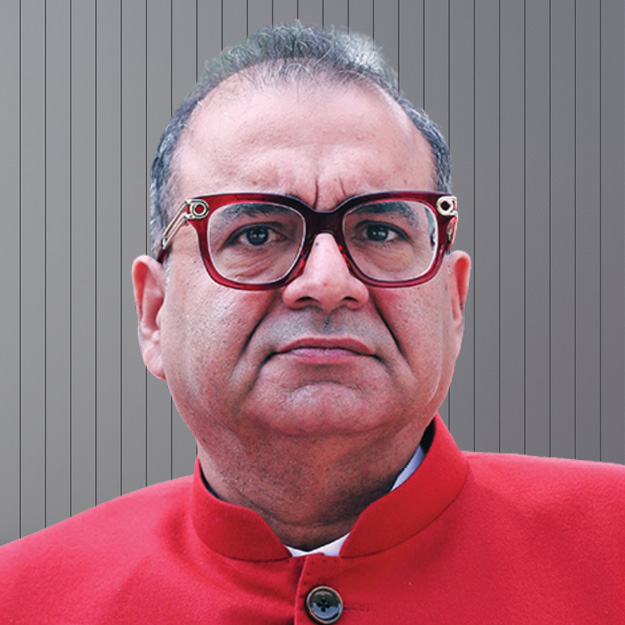
Mr Sameer Kochhar
Chairman, SKOCH Group
Reforms historian and author of best-seller ModiNomics, Sameer Kochhar is Chairman, SKOCH Group. He is a passionate advocate of social, digital and financial inclusion and is a foremost expert on governance and inclusive growth. His work has been acclaimed globally and endorsed by Mr Narendra Modi, Mr M Venkaiah Naidu, Dr Manmohan Singh, Mr Arun Jaitley, Mr P Chidambaram, Mr Yashwant Sinha, Dr C Rangarajan and Dr Montek Singh Ahluwalia and so on. In his thinking and writings and activities, his profound admiration for India's economic reforms and in extension, those outstanding personalities who strive to make these reforms more meaningful and broad-based comes out clear and unambiguous.
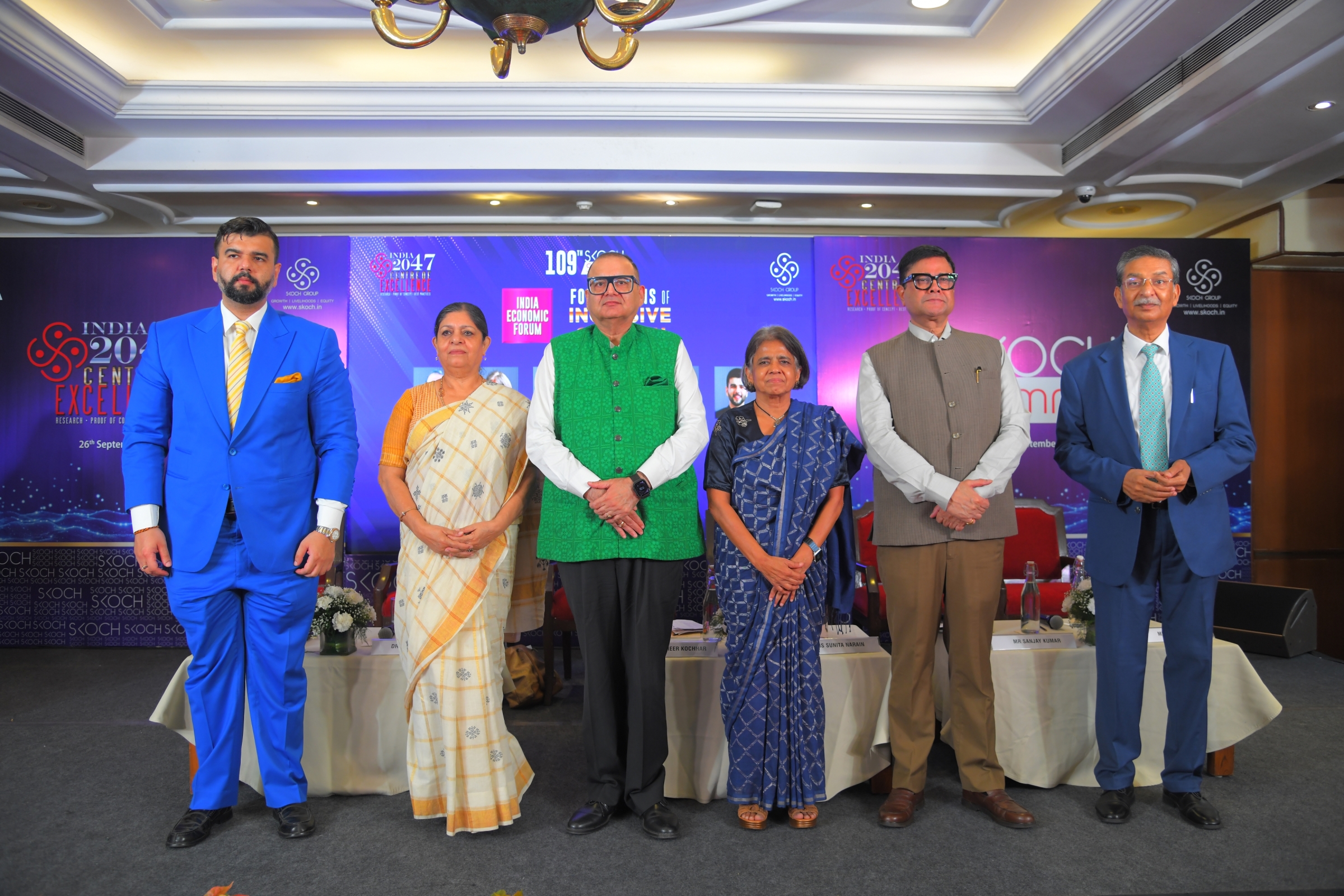
Mr Sameer Kochhar at the 109th SKOCH Summit: Foundations of Inclusive Growth.
Mr Sameer Kochhar
Chairman, SKOCH Group
Key Points*
- The speaker traces India’s inclusive growth journey from a poverty-focused approach to a broader framework centered on jobs, regional development, equity and sustainability.
- He explains the SKOCH Model of Inclusive Growth, first proposed in 2008, as an economic architecture connecting citizens, institutions, technology and finance.
- He argues that inclusive growth requires both inclusive governance and inclusive economics, supported by citizen empowerment, financial outreach and relevant products.
- He emphasizes that simply providing access to a bank account is not enough; citizens also need financial literacy, capability and economic enablement to use financial services effectively.
- He notes that by 2012, the key challenge had shifted from creating access to ensuring implementation, institutional coordination, viability and scalable delivery systems.
- He explains that the 2014 revision expanded the model beyond banking to include skills, digital literacy, health, education, protection, payments and investments.
- He observes that India’s present policy architecture now covers many of the functional layers envisioned in the inclusive growth framework.
- He highlights the remaining challenge of converting financial access into active and comprehensive use, as many accounts remain inoperative or have zero balances.
- He identifies financial literacy, financially viable delivery models and products suited to household cash flows as key priorities for completing financial inclusion.
- He concludes that access must lead to capability, capability must be backed by protection, and finance must ultimately support productive activity and wider participation in economic growth.
* This content is AI generated. It is suggested to read the full transcript for any furthur clarity.
Transcript
Thank you, Rohan. I belong to... Rohan, of course, is much younger and he giving me the credit of deducting the paper. This actually is... I have supported him because I think I am of an age where I should now hang up my boots and make way for the young.
I belong to a generation like maybe some of us here, which is what I call roti kapda or makan generation. You know, the biggest problem in our life till fairly recently, till early 2000s, was poverty. Gareebi.
Gareebi hatao used to be a slogan. And every time, you know, we would get into a poverty discussion, the government's response would be ke aisa karte hain ke gareebi ke baare mein toh hum kya kar sakte hain. Pehle ek pariharsha banate hain ke gareebi hoti kiya hai.
Toh hamesa, you know, it would start with setting up a committee. Ek committee decide kar rahi hain ke kaun gareeb hain, kaun gareeb nahin hain. Toh Aradh sahab ki committee thi, pehle Lakhnawala sahab ki committee thi, pehle Nulkhand committee thi.
Toh everybody used to give their own solution to this poverty problem. Ke chalo gareebi toh bohot hai, toh aap aisa kijiye gareebi kaise hathegi? Toh team hoti thi, atha aap ekko internet dekhijiye gareebiye jayegi.
Toh koi aur bhota tha, aisa kijiye ki aap common service centre dekhijiye, yeh computer operator ke baad jayenge, apna land record access karenge, toh gareebi hai jayegi.
Koi aur bhota tha ki inko khaata dekhijiye, bank account dekhijiye, jinke baad bank account nahin hai, bank account aayega, toh yeh toh basically yeh jayegi ho jayega, toh gareebi hai jayegi.
So everybody was giving part of the solution, no one was actually examining what poverty was, the beast of poverty was and the inclusive growth thing that it started being called later. We started in 2008.
I want to present to you today the model of inclusive growth which was proposed by us in 2008. Remember the year, it is not now. It is an economic architecture that connects citizens, institutions, technology and finances so that access produces capability and participation and the model has evolved over two decades of research and field evidence.
Today I will trace that evolution, assess where India stands and identify the unfinished agenda. So what is the definition of inclusive growth? The definition of inclusive growth as per Scotch is it must have job generator.
Toh aaj kal jab bhi baat hoti hai toh dekhe, public discourse mein gareebi ki baat nahin hota hai. Aaj kal baat hoti hai, jobs ki aur quality roh jobs ki. Regional development ki baat hoti hai, specially dispersed huni chahiye, equitable huni chahiye, ke aapko apne haq ke barabar ho mil raha hai ki nahin mil raha hai, toh ho sustainable huni chahiye.
So unless these four tests are passed, the growth cannot be inclusive.
India has built much of the architecture for inclusive growth but the unfinished task is to convert access into active and comprehensive use. This is the timeline of our published work on inclusive growth. This is not comprehensive, this is indicative.
So in 2008 we came out with Scotch model of inclusive growth which I am going to share shortly. This framework emerged through a continuous program of research, fieldwork and policy engagement.
Each state responded to a practical question, how do citizens reach formal finance? What prevents delivery at scale? Which capabilities must a company access? How do protection, livelihoods and human development turn into finance?
The publications on this slide show continuity rather than a collection of separate projects. The model widened as the evidence widened. It began with the architecture of financial inclusion and developed into a broader approach of how citizens acquire the means to participate in growth.
So this is the 2008 model of integrated inclusive growth.
It looks pretty similar to what is happening today. Although it has evolved and I will take you through that evolution. So when we said that poverty is actually a governance failure and an economic failure.
It is not a one side thing. So there are two sides to it. One is inclusive governance. The second is inclusive economics. You have citizens. Citizens lack absorptive capacity, empowerment and economic enablement.
These can be handled through individuals and self-improvement. Then you go on to self financial outreach model. Finally go to inclusive economics which talks about products that are relevant to these people.
The channel alone could not create inclusion. Outreach and financial literacy had to help citizens understand and use the service. Citizens also needed absorptive capacity, empowerment and economic enablement.
Those capabilities determined whether a financial product became useful in everyday life. Inclusive economics and inclusive governance therefore formed the two ends of the architecture.
The economic system had to produce suitable products and viable delivery. Governance had to build trust, capability and accountability. The moral score inside was that a bank account by itself represented an ending point, not the other.
By 2012, we found that a lot of this was being experimented, piloted and tried across the country by state governments as well as the central government.
The challenges had changed by 2012. India understood the need for access but implementation and viability constraints scaled. The architecture required political will and coordination.
Delivery models needed a credible business case. Institutions had to resolve interoperability, trust and product relevance. Technology required partners, infrastructure and the ability to scale.
This was effectively a stress test for the 2008 model. It showed that a sound policy idea can stall when no institution owns the whole chain. When funding covered enrollment but not sustained services.
Or when products do not match the lives and cash flows of users. The lesson was direct: access would endure only when the delivery systems work both for the citizens and the providers.
In 2014 again, we revised the model. The revision broadened the framework beyond banking. The original core remained single capability, outreach, literacy, technology enabled delivery, financial products and institutions.
The revision added the capabilities and services that allow finance to improve people's lives. Skill development and economic enablement entered the model more explicitly. Social engagements and digital literacy became part of inclusion.
Health, hygiene and education were recognized as foundations of participation. The financial layer widened from microcredit and savings to payments, investments and protection.
The model also placed greater emphasis on institutional and financial viability. So you see elements of multidimensional poverty are coming in and being addressed.
The revision marked the transition from financial inclusion to inclusive growth. Finance remained essential but it also became one part of a larger system that builds human capability, protects households and relates jobs into productive activity. This was 2014.
Multidimensional poverty index by DPI was adopted in 2020. So if you look at India's present policy architecture, it now maps closely to the vision layers of the model.
I am not suggesting that the government formally adopted this model. But the way the policy has been mapped out, it very closely maps to what we have been saying since 2018. This is an analytical mapping.
The point is that the instruments developed over time now cover much of the same functional architecture.
Capability programs improve development and targeted environment. Livelihood program support, self-help groups, urban livelihoods, street vendors, micro-enterprises and artisans, financial mediums such as UPI, Aadhaar level payment system, Rupee, Kisan credit card, credit guarantees and branches, branchless banking across the cost of access and transactions.
Household production has expanded through life and excellent insurance. Health production and pensions, human development programs connect education, nutrition, sanitation, healthcare and disability.
Together these policies create a far broader platform than the banking centric architecture with which India prepared. The important issue now concerns how these layers connect.
A person may have an account but lack appropriate credit. A worker may have accident insurance but no pension. A micro-enterprise may receive a loan but lack market access or skills.
Inclusive growth emerges when programs reinforce one another around the citizen households and enterprises.
The scale achieved is substantial. As of 16th September 2026, the Pradhan Mantri JNNL reported 59.31 crore beneficiary accounts with balances of about 3.2 lakh rupees.
Formal banking access has therefore become national infrastructure rather than a marginal intervention. The evidence of account activity reveals the remaining gap.
An RTI response for 12th August 2026 classified 15.37 crore of 59.04 crore PMG in returns as inoperative. That is approximately 26%.
The same response identified 5.72 crore accounts as zero balance accounts. These two categories must remain separate and should not be related as one.
So there are three priorities now for complete financial inclusion. The first priority is active use. Financial literacy must help people make practical decisions.
And programs need realistic funding for continuing in the Indian market. Financial literacy started with a big bang. And slowly you found that there was a regulatory creep.
To the extent that today if you are doing a financial literacy program, what kind of photographs you take is also a regulation. You actually have to report to the regulator. Did you take a photo from this angle or that angle? It is micro managed to that extent.
And it is somehow assumed that financial literacy has to be not for profit. It barely covers the costs. So therefore it has become a non-starter.
It has become a tick marker. So that must change. It has to be financially viable.
Products that are available must reflect household cash flows and needs. The measure of progress is lower in share of inoperative accounts and more regular use.
So together these priorities change the unit of success. We move from counting access points to examining whether finance builds resilience and productive capability.
That requires better management of accounts. Activity production credit to viable enterprises, regional distribution and consumer outcomes.
So India has now built resilience. Our task now is to make the journey complete. Access must produce capability.
Capability must be supported by protection. Finance must reach productive activity. And productive activity must widen participation.
Just to give you a sense of how much activity has happened and where are the gaps. Life insurance, we have 27.43 beneficiaries of PM Jeevan Jyoti Bhima Yojana. Which is about 18.66% of the population.
And Ayushman Bharat, the progress is much better. 48.51%. 48.51 crore beneficiaries is 33% of the population. And accident insurance is 40%.
So relatively insurance seems to be doing well. Still a lot of ground has to be covered. But pensions and investments are very very weak.
Now these are the areas where we have to pull up our socks and strengthen. Now one of the challenges essentially is that all these products are available through different instrumentalities.
So you may have an investment product available. I remember when we were young, Tisaan Vikas Patra used to be very popular. It still exists but no one knows about it. National Small Saving Certificates used to be there.
If you have a Zandan account and you want to save 200-300 rupees a month. What is the instrumentality available in the Zandan account for doing that? The answer is none.
You can only put a balance with very low interest on it. But you cannot really have a product available.
Similarly if you look at a product like Microsim. You want to get systematic investment plan of 300-400-500 rupees a month. Not available through Zandan accounts.
New pensions scheme, pension writing. Not available through Zandan accounts.
So while there are scattered implementations, I think one of the strong recommendations that we have is if all of these could be channelized through the Zandan accounts.
A, the number of inoperative accounts would go down. Secondly, you will get a better holistic view of and the combined impact of the collaborative development that happens.
So recommendations are essentially improve financial literacy and awareness which is actually a financial function. Unless it is made viable and not looked at as not for profit, it is not going to change.