SKOCH Summit
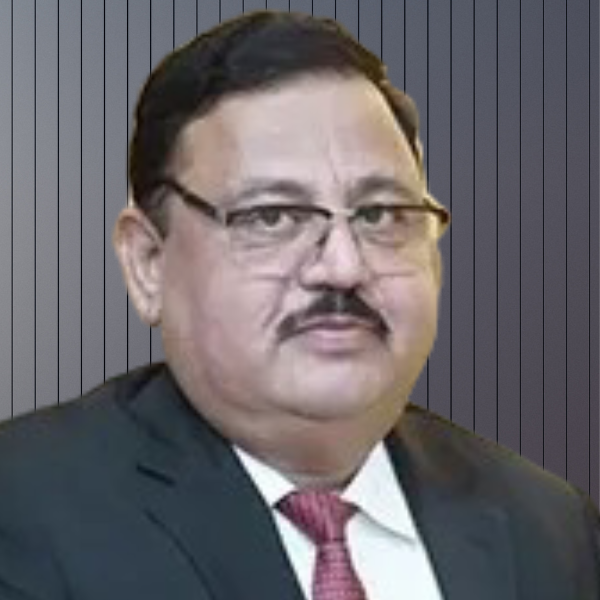
Mr Lal Singh
Executive Director, Bank of Baroda
Shri Lal Singh joined Bank of Baroda as an Executive Director on October 9, 2023. He started his career as a Rural Development Officer in Union Bank of India in 1990. As a career banker, he has 33 years of deep and distinguished experience including MSME Credit, Corporate Finance, Rural and Agri Business, and Human Resource Development. As the Zonal Head, he has successfully spearheaded large and prestigious zones such as Varanasi, Lucknow, Chennai as well as Regions such as Mumbai West and Udaipur (Rajasthan). Shri Singh has diverse experience across Metro Urban Semi-Urban Rural (MUSR) locations, and has led exponential growth as Regional Head and Branch Head across Rajasthan, Gujarat, Maharashtra and UP. Post amalgamation of Andhra Bank and Corporation Bank with Union Bank of India, he led the business transformation of the Bank's MSME, Rural and Agri Business. In Shri Singh’s last assignment, he was the Chief General Manager for the Bank's strategic HR function. He directly led the Bank's flagship project, Union Prerna, establishing a new performance culture, succession planning and improving talent engagement with the 75,000+ employees of the Bank. Under his leadership, the HR function has won 12+ awards from leading global organisations, and an ISO certification for digital and data enablement. He has also anchored the setup of an advanced L&D unit, through the creation of a rich learning ecosystem to build market-ready skills in employees. Shri Singh has served multiple board and leadership level positions. He was the Chairman of the Sub Committee of the State Level Bankers’ Committee, Uttar Pradesh for Credit Deposit Ratio and Bringing Green Revolution to Eastern India (BGREI). He was a nominee director on the board of the UP Industrial Consultants Limited (UPICO), M/s. Nab Samruddhi Finance Ltd (subsidiary of NABARD), PSB Alliance Pvt. Ltd., Supervisory Board of India Micro Finance Equity Fund (SIDBI), Trustee on the Governing Board of Indian Institute of Bank Management (IIBM), Guwahati and also Union Bank of India Social Foundation Trust (UBSFT) for Corporate Social Responsibility as well as Union Bank of India’s Employees Trust for Pension, Provident Fund and Gratuity..
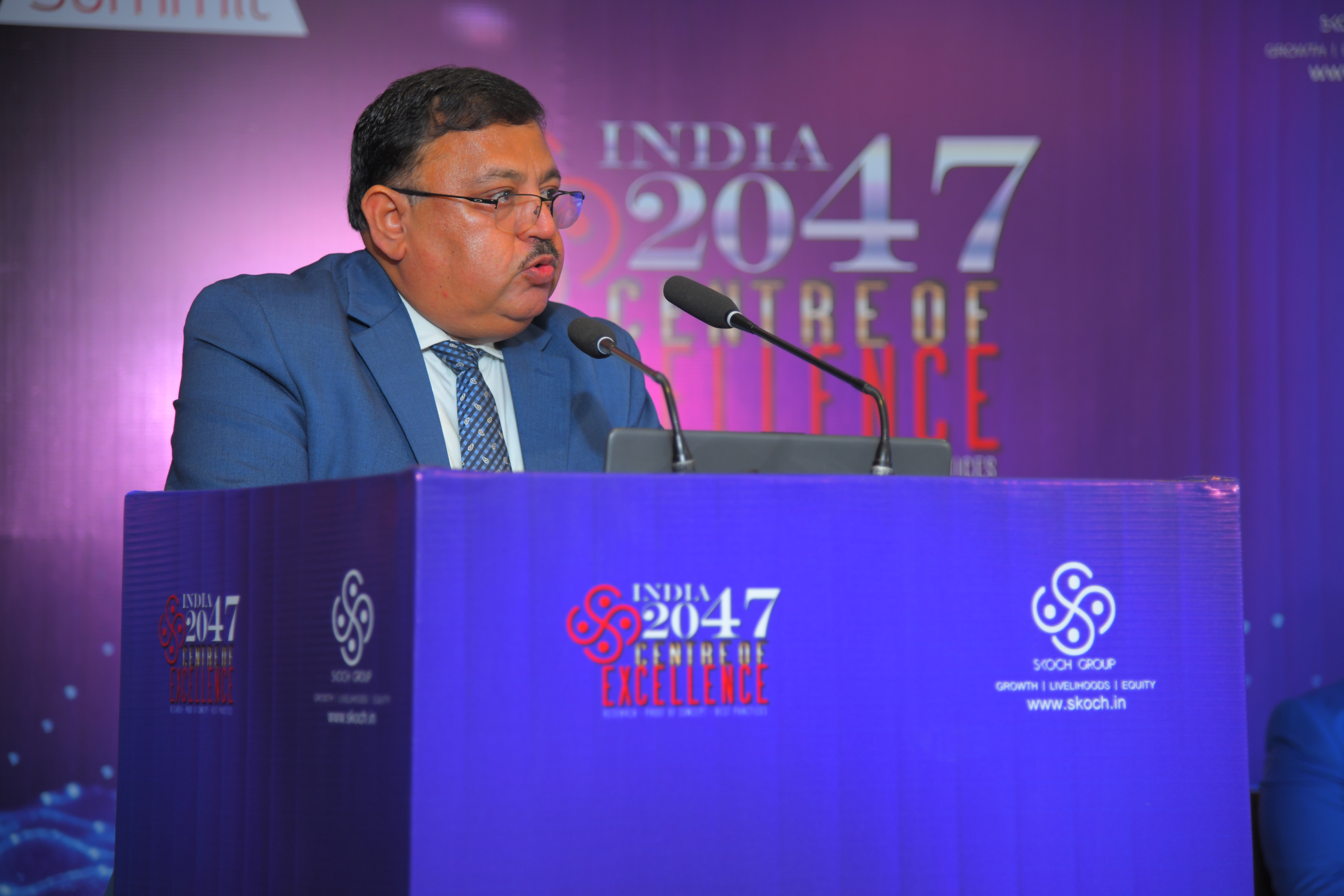
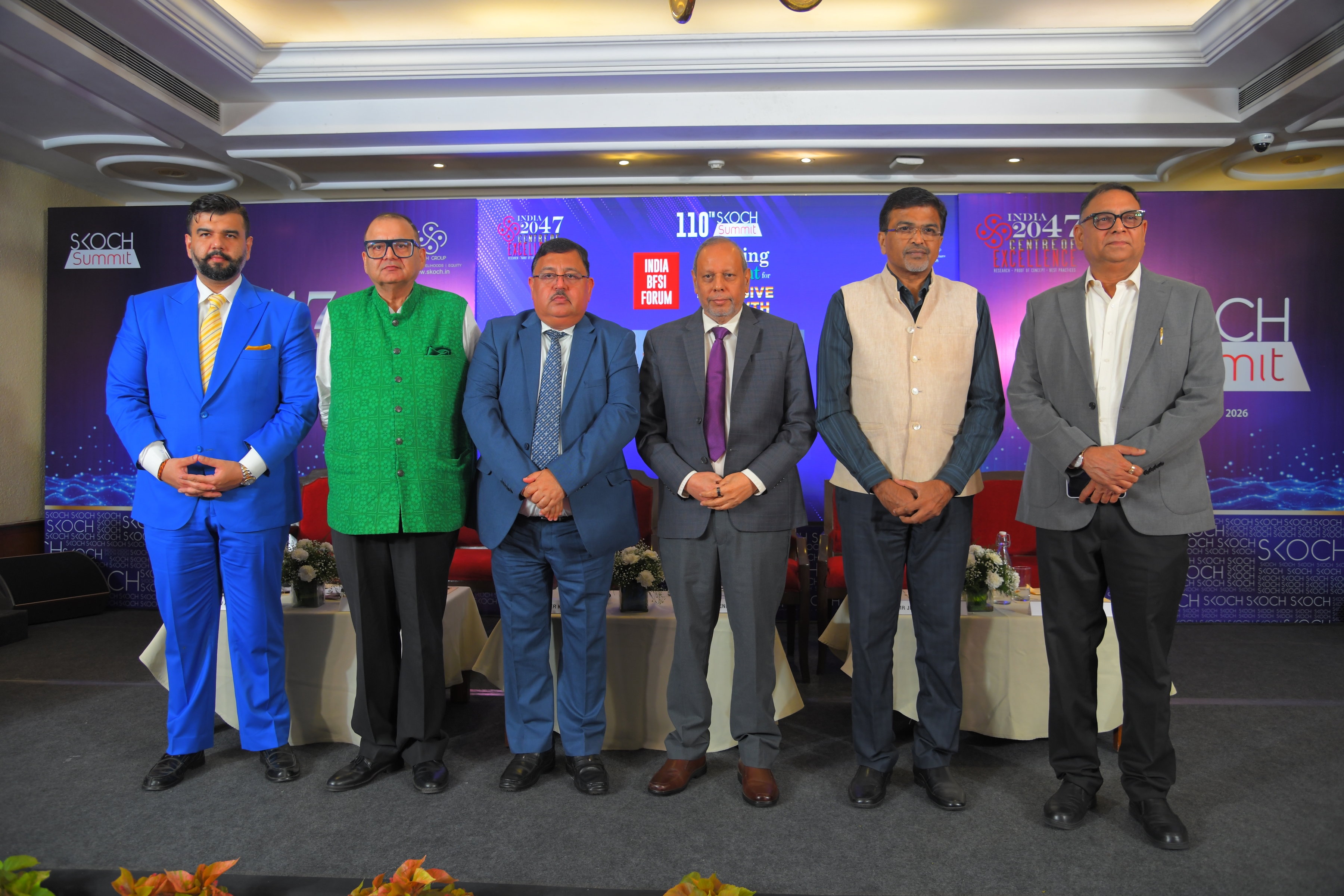
Mr Lal Singh at the 110th SKOCH Summit: Banking Bharat for Inclusive Growth
Mr Lal Singh
Executive Director, Bank of Baroda
Key Points*
- The speaker describes India’s financial inclusion journey as a major public policy transformation driven by Jan Dhan, Aadhaar, mobile connectivity, Digital Public Infrastructure, UPI and Direct Benefit Transfers.
- He argues that the next stage of financial inclusion should move beyond opening accounts and focus on transforming lives.
- He presents Financial Inclusion 2.0 as a progression from access to usage, usage to credit, credit to entrepreneurship, entrepreneurship to wealth creation and finally to financial empowerment.
- He says every citizen should be able to save regularly, access affordable formal credit, obtain insurance, build retirement security and participate in wealth creation.
- He highlights Bank of India’s role in serving large numbers of PMJDY account holders through branches, business correspondents, RuPay cards and social security schemes.
- He identifies activation of every PMJDY account as a major priority and calls for turning transaction accounts into prosperity accounts.
- He emphasizes regular savings, digital payments, auto-bachat, financial literacy, awareness and investment readiness as key tools for empowerment.
- He calls for democratising credit through technology and AI using transaction history, UPI footprints, DBT flows, consent-based data sharing and cash-flow assessment.
- He argues that credit decisions should increasingly move from collateral-based assessment to potential, behaviour and cash-flow-based assessment.
- He identifies MSMEs as major capacity builders for entrepreneurship, employment, income generation, local development and wealth creation.
- He proposes a structured graduation pathway from PMJDY accounts to overdrafts, Mudra loans, MSME loans, enterprise growth and wealth creation.
- He calls for government-sponsored schemes to operate as an integrated credit progression ecosystem rather than as isolated schemes.
- He emphasizes the need to hand-hold first-generation entrepreneurs and help successful borrowers graduate to higher levels of formal credit.
- He says the goal should be to transform account holders into borrowers, borrowers into entrepreneurs, entrepreneurs into employers and employers into growth creators.
- He argues that the next stage should focus not only on women’s financial inclusion but on women’s financial leadership.
- He says success should be measured by how many women become entrepreneurs, employers and community leaders.
- He proposes transforming business correspondents from transaction facilitators into financial empowerment facilitators offering savings, credit, insurance, pensions, investments and financial literacy.
- He stresses that technology must drive inclusion rather than exclusion and should adapt to customers, especially rural households, women, senior citizens, first-time digital users and farmers.
- For Viksit Bharat 2047, he says banks must become builders of financial resilience, catalysts for entrepreneurship, enablers of livelihoods and partners in wealth creation.
- He calls for financial literacy to become a core life skill and highlights the need to close gender and digital gaps.
- He emphasizes moving households from basic savings toward long-term wealth creation through mutual funds, systematic investment plans and retirement planning.
- He concludes that India’s financial transformation shows how policy, technology and human ambition can work together to build a more resilient, equitable and empowered economy.
* This content is AI generated. It is suggested to read the full transcript for any furthur clarity.
Transcript
Good evening to everyone. Honourable Chairman, SKOCH Group, Shri Sameer Kochar, Honourable Chairman, Economic Advisory Council to the Prime Minister, Professor Mahendra Dev Sahib, Managing Director and CEO, Shri Saurabh Saha ji, Shri G. G. Memani ji, Founder of SKOCH Law Offices, Mr. Rohan Kochar, all distinguished guests and jury members, distinguished industry leaders, ladies and gentlemen. It is a privilege to be part of this distinguished forum discussing a subject that is central to India's development journey, that is Banking Bharat for Inclusive Growth.
But before that, I express my sincere gratitude to SKOCH Group and the jury for giving me this prestigious award. This award is not for me, but for all the underprivileged people whom we are trying to serve and for whom we are trying to develop products and services for their betterment. So, coming to the topic, Banking for Inclusive Growth, India has achieved financial inclusion at scale.
India's financial inclusion journey has emerged as one of the world's most successful public policy transformations through the convergence of JAM, Jan Dhan accounts, Aadhaar and mobile, Digital Public Infrastructure, the UPI ecosystem, Direct Benefit Transfer architecture and a strong banking and BC network. Today, the challenge before us is not merely access to banking services, but the empowerment of the underprivileged people of India.
The question is no longer how many accounts have been opened, but rather how many lives we have transformed. So now, Financial Inclusion 2.0, the next national agenda, should focus on moving from access to usage, from usage to credit inclusion, from credit inclusion to entrepreneurship, from entrepreneurship to wealth creation, and lastly from financial inclusion to financial empowerment and financial transformation of the underprivileged sections of society.
The ultimate objective is to ensure that every citizen can save regularly, access affordable formal credit, protect against risks through insurance, build retirement security, participate in wealth creation and investment, and use digital finance safely and confidently.
Next, I would like to talk about the contribution of Bank of India in this inclusive growth journey. As a leading participant in India's financial ecosystem, Bank of India today serves 6.74 crore-plus PMJDY accounts and has generated more than Rs. 43,000 crore in deposits in these accounts. It has provided RuPay cards to more than 6.25 crore beneficiaries, provided social security coverage to more than 6.54 crore people of India and delivers these services through more than 8,600 branches and over 50,000 business correspondents.
There are five strategic priorities for financial empowerment. The first is to activate every PMJDY account. That should be the priority. The future lies in converting these bank accounts into engines of economic participation.
The focus areas should include regular savings, digital payments, auto-bachat through UPI, financial literacy, financial awareness and investment readiness. Every PMJDY account must evolve from a transaction account into a prosperity account for India's underprivileged people.
The next priority is democratised credit through technology and AI. The next wave of inclusion will come from democratising formal credit by leveraging transaction history, UPI footprint, DBT flows, consent-based data sharing and AI-driven credit assessment models.
Banks can move from credit based only on collateral to credit based on potential, behaviour and cash flows. AI should become a tool for expanding opportunities, especially for first-time borrowers, women, farmers and micro-entrepreneurs.
MSMEs are the most powerful capacity builders for financial empowerment. MSMEs are not merely business units. They are India's largest capacity-building platforms for common citizens, creating entrepreneurship, employment, income generation, local economic development and wealth creation.
The future of financial inclusion should ensure that MSME financing becomes seamless, accessible and graduation-oriented. Our vision is PMJDY account to overdraft, overdraft to Mudra, Mudra to MSME loan, MSME loan to enterprise growth and enterprise growth to wealth creation.
Government-sponsored schemes must operate as an integrated credit progression ecosystem rather than standalone schemes. Specifically, we need structured graduation pathways like we have seen in the case of Mudra. Shishu to Kishore, Kishore to Tarun and Tarun to Tarun Plus.
Similarly, beneficiaries who successfully complete one level of a government credit programme should seamlessly graduate to higher levels of formal credit. PM Vishwakarma beneficiaries should be enabled to migrate to higher credit products after successful repayment and enterprise growth.
MSME schemes should support customers periodically and over time, enabling them to graduate from subsistence activity to sustainable enterprises. This will ensure lower credit risk, better utilisation, improved hand-holding and sustainable business growth.
To scale successful entrepreneurs, we need to hand-hold first-generation entrepreneurs. Enhancement of PMMY and continued support for first-generation entrepreneurs through schemes such as Stand-Up India can significantly strengthen entrepreneurship, livelihood creation and employment development.
For PMJDY account holders, this framework creates a clear pathway: account holders to borrowers, borrowers to entrepreneurs, entrepreneurs to employers and employers to growth creators. So they not only create self-employment for themselves, but they also create employment for others.
Next is women and financial leadership. The next criterion is not merely women's financial inclusion, it is women's financial leadership. We must strengthen the ecosystem of women BCs, SHGs and savings-led models, moving from savings to credit, credit to enterprise, enterprise to financial independence and eventually to a stronger contribution by women to the country's economic development.
The real measure of success should not be how many women enter banking, but how many women become entrepreneurs, employers and community leaders. This should be the measurement of our efforts.
We also need to reimagine the business correspondent network. The business correspondent of the future should evolve from a transaction facilitator into a financial empowerment facilitator. BC operators should become one-stop empowerment centres in this country.
They should provide savings, credit, insurance, pension, investment, financial literacy and assisted digital banking. Last-mile service delivery must evolve into last-mile empowerment. At Bank of India, we are providing more than 62 services through this network of BC operators.
Technology must drive inclusion, not exclusion. Inclusion belongs to vernacular banking, voice banking, AI-assisted banking, assisted digital models and vigilant banking practices. Technology should adapt to the customer, not vice versa. This is especially important for rural households, women, senior citizens, first-time digital users and our farmers.
Now coming to the final point, the vision for Viksit Bharat 2047. As India progresses towards Viksit Bharat 2047, banks must become builders of financial resilience, catalysts for entrepreneurship, enablers of livelihoods and partners in wealth creation.
The national aspiration should be that every citizen should not only have a bank account, but also a pathway to prosperity. Every PMJDY account holder should have a gateway to savings, credit, enterprise, wealth creation and economic self-reliance.
Every MSME should emerge as a capacity builder that creates jobs, develops entrepreneurship and contributes to inclusive economic growth. All these contribute to the larger vision of Sabka Saath, Sabka Vikas, Sabka Prayas and Sabka Vishwas.
Before concluding, let me talk about the road ahead and what remains to be done by us. As we celebrate this progress, we must maintain a clear view of our challenges. Number one is expanding financial literacy. Opening accounts and adopting digital tools is step one. Navigating investment options, managing credit responsibly and avoiding online scams is step two.
Financial literacy must become a core life skill taught across schools and communities. Number two is closing the gender and digital gap. While millions of women have entered the banking fold, expanding internet access and credit penetration among women in tier-three cities and rural areas remains a priority for us.
The next challenge is deepening wealth creation. True empowerment requires moving households from basic savings towards long-term wealth creation through mutual funds, systematic investment plans and retirement planning as well.
The journey from inclusion to empowerment to transformation demonstrates what is possible when policy, technology and human ambition are aligned. We started by giving every Indian an identity and a bank account. Today, we are providing them the tools to build businesses, purchase homes, protect their families and fund their aspirations.
India's financial transformation is not just a domestic success story. It is a model for the Global South, proving that inclusive technology can build a resilient, equitable and empowered economy.
Finally, I would like to say to all of you: work hard so that you can become an identity. Take every step so that you can become an example. Here, everyone takes a cut. Live your life so that you can become an example.