SKOCH Summit
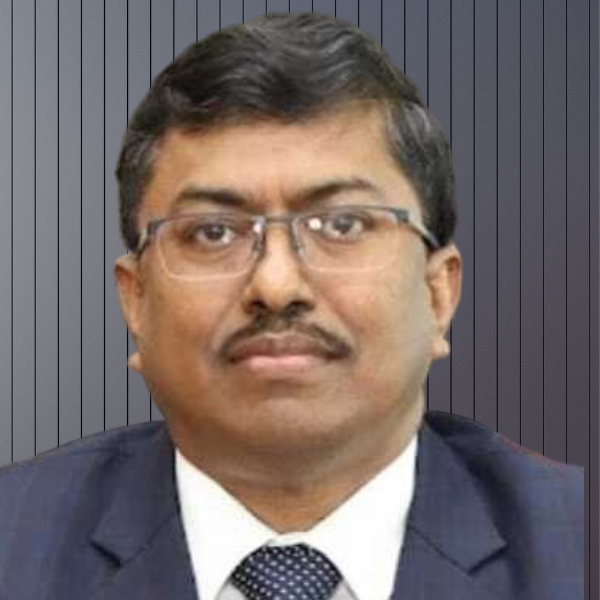
Mr Swarup Kumar Saha
Managing Director & CEO Punjab & Sind Bank
Shri Swarup Kumar Saha assumed the charge as MD & CEO of Punjab & Sind Bank on June 3rd 2022. Before taking up this assignment he was Executive Director of Punjab National Bank since March 10, 2021. Shri Saha, a graduate in Science from University of Calcutta, Kolkata, started his career in Banking in erstwhile Oriental Bank of Commerce in the year 1990 as Probationary Officer. He is a Certified Associate member of Indian Institute of Bankers (CAIIB). He also holds a Diploma in Treasury, Investment and Risk Management (DTIRM) from Indian Institute of Banking and Finance (IIBF) and Certificate in Risk in Financial Services from IIBF in collaboration with CISI, London along with various certifications related to IT Security, Cyber Crimes and Fraud Management. Shri Saha was one of the participants for the flagship Leadership Development Program of Banks Board Bureau (BBB) in 2019 conducted through IIM, Bangalore. He has also participated in Advanced Management Program conducted by CAFRAL/Stern Business School, New York and Leadership Development Program conducted by NIBM & Kellogg School of Management, USA. In a career spanning over 30 years, he has worked in different capacities and has worked across the country. He has wide exposure in Human Resource Development, Treasury, International Banking, Credit, Risk Management, Organization Restructuring and Board matters. During his tenure at Head Office of erstwhile Oriental Bank of Commerce, he headed Treasury and International Banking, Human Resource Development Division and Board Division.
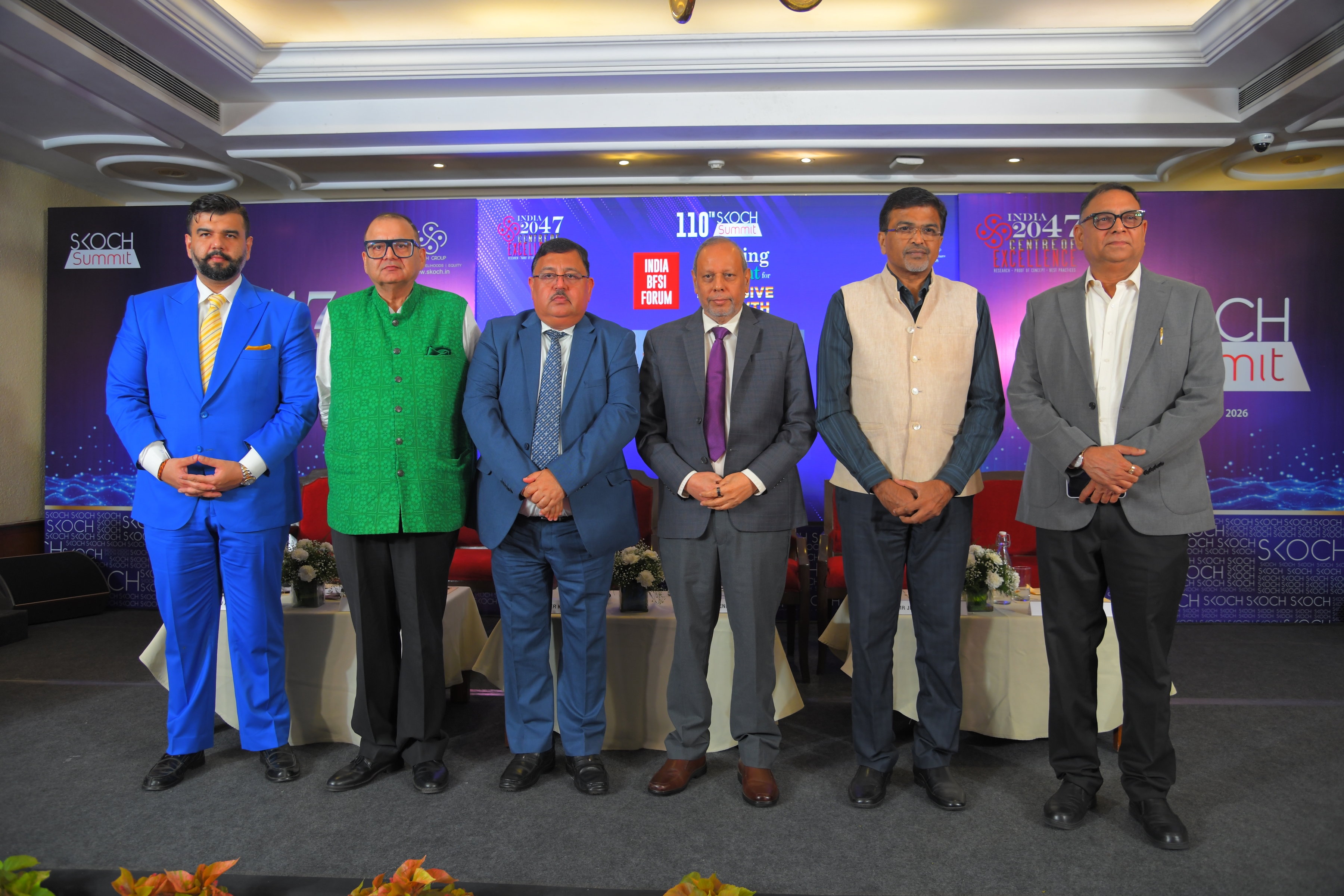
Mr Swarup Kumar Saha at the 110th SKOCH Summit: financing the foundations of Inclusive Growth
Mr Swarup Kumar Saha
Managing Director & CEO Punjab & Sind Bank
Key Points*
- Mr. Swaroop Kumar Saha describes Punjab and Sindh Bank’s transformation from balance sheet repair to sustainable, digital and inclusive growth.
- He attributes the bank’s transformation to the collective efforts of employees, customers, board members, regulators, the Government of India and other stakeholders.
- He links the bank’s new corporate vision with the broader national aspiration of Viksit Bharat 2047.
- He says the bank’s transformation has focused on business growth, profitability, asset quality, digitization, customer experience, operational efficiency, risk management and institutional capability.
- He emphasizes the important role of public sector banks in financial inclusion and in supporting agriculture, MSMEs and other critical sectors.
- He identifies food and agro-processing as a champion sector for Punjab and Sindh Bank and commits to meaningful lending in this area.
- He says the bank has shifted from a balance sheet repair mindset to sustainable, quality-led growth with greater focus on retail, agriculture and MSMEs.
- He highlights MSME banking as an important growth area and notes the introduction of straight-through processing for MSME loans up to Rs. 3 crore.
- He explains that cash flow-based banking is helping the bank assess businesses on actual cash flows and business activity instead of relying only on traditional collateral.
- He describes digital transformation as a major part of the bank’s journey, with a shift from branch-centric banking to an integrated omni-channel model.
- He says digital platforms across mobile banking, internet banking, UPI and digital loan journeys are improving access, speed and convenience.
- He stresses that sustainable transformation also requires people transformation, including employee capability, leadership development, engagement, welfare and ownership.
- He highlights the Navjyoti programme as an employee-focused initiative aimed at strengthening belonging, well-being, engagement and holistic development.
- He argues that deeper financial inclusion requires both digital access and a strong physical presence across villages, semi-urban centres and small towns.
- He says the bank is strengthening its branch and business correspondent network and aims to create more than 10,000 delivery channels by FY29.
- He emphasizes that digital expands access while branches deepen trust, and that both are necessary for inclusive banking.
- He states that transformation without governance is incomplete, growth without risk discipline is unsustainable and digitisation without cyber-resilience cannot create lasting trust.
- He highlights continued investment in risk management, compliance, vigilance, audit, technology and cyber-security to address emerging digital fraud risks.
- He says the bank’s ambition is not simply to become larger, but to become stronger, more trusted and more capable of supporting India’s economic aspirations.
- He concludes that Banking Bharat for Inclusive Growth and Viksit Bharat are deeply connected, with Punjab and Sindh Bank committed to playing a pivotal role in this journey.
* This content is AI generated. It is suggested to read the full transcript for any furthur clarity.
Transcript
Mr. Swaroop Kumar Saha, Managing Director and CEO, Punjab and Sindh Bank, we welcome you, sir. Ladies and gentlemen, he has steered a remarkable institutional journey from balance sheet repair to sustainable, digital and inclusive growth. Since assuming charge as Managing Director and CEO in June 2022, his decisive leadership has brought together growth, technology, people and public purpose. Under his stewardship, the bank's total business has grown from 1.73 lakh crore to 2.64 lakh crore. In financial year 2025-26, the bank reported its highest operating profit of 2,182 crore and net profit of 1,322 crore. The improvement in asset quality was equally impressive, with GNPA declining from 12.17% to 2.40% and NNPA to 0.79%. He has championed a future-ready technology-led institution, with digital channels now accounting for 95% of transactions. This is complemented by systematic investment in people and leadership development.
Ladies and gentlemen, let's put our hands together and congratulate Mr. Swaroop Kumar Saha, Managing Director and CEO, Punjab and Sindh Bank. And as sir, I can see he is here online with us, I request sir to kindly address the gathering.
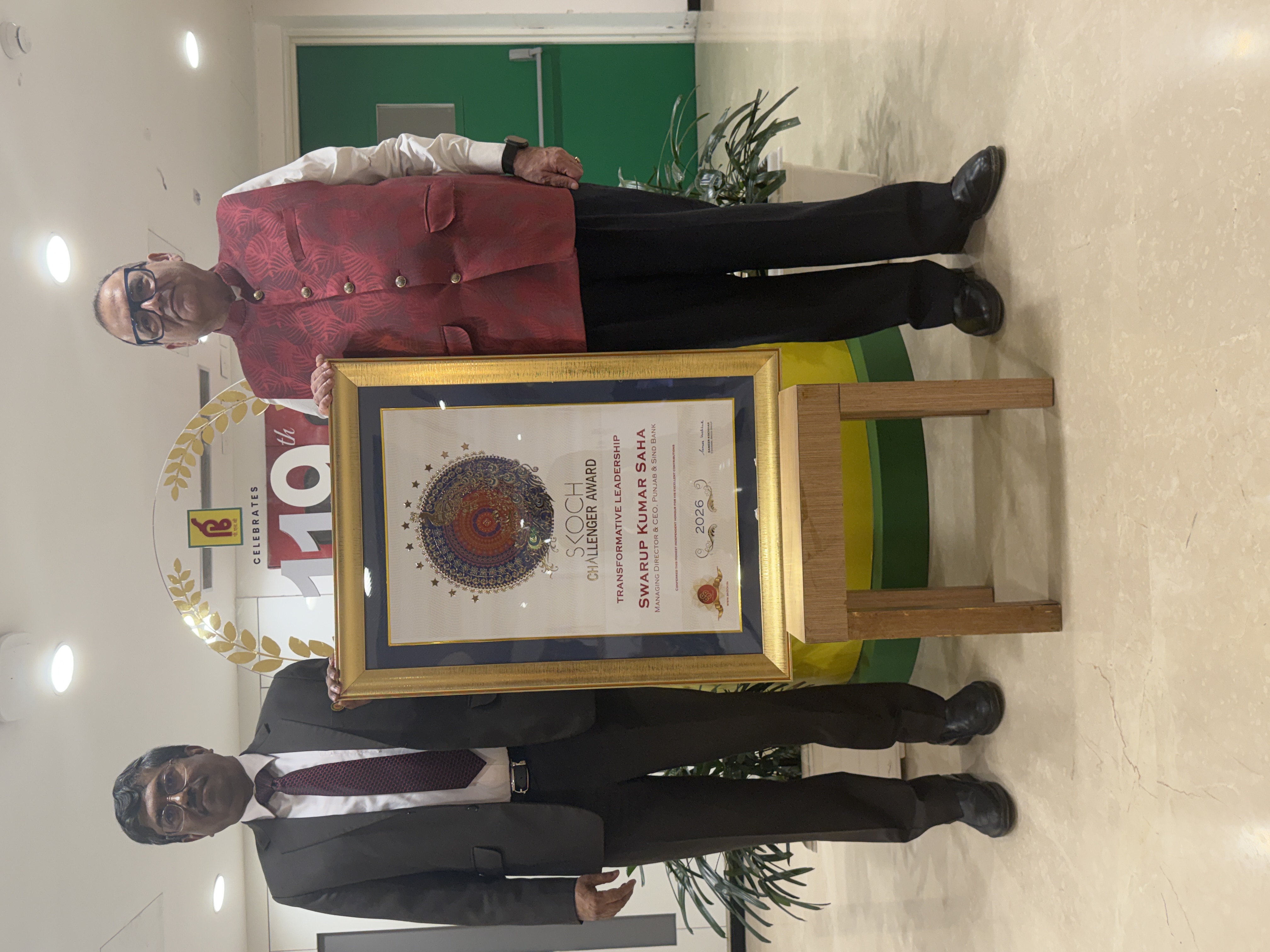
Yes, sir, you are audible. Thank you, SKOCH Group, respected Professor S. Mahendra Dev, Chairman, Economic Advisory Council to the Prime Minister, Shri Sameer Kocharji, Chairman, SKOCH Group, Shri Lal Singh, my colleague, Executive Director, Bank of Baroda, other distinguished members of the dais, fellow bankers, colleagues and stakeholders, a very good afternoon to all of you. It's a matter of immense honour and jubilation for me to receive this recognition from the Honourable Jury for considering me for the SKOCH Challenger Award.
I accept this award not as an individual recognition, but as a recognition of a collective journey, the journey of Punjab and Sindh Bank, its employees, customers, board members, regulators, Government of India and other stakeholders who have contributed to the bank's transformation. I am also delighted to receive this recognition at a forum whose theme, Banking Bharat for Inclusive Growth, resonates deeply with the transformative agenda of Punjab and Sindh Bank. As Professor Dev has just said, financial inclusion is very important for the country.
I would like to inform you that we have now created a new corporate vision for the bank which captures its journey in just a few words. It is a commitment to be a trusted financial institution that runs on confidence and technology, reaches every part of Bharat and contributes meaningfully to India's development. It also aligns naturally with the larger national aspiration of Viksit Bharat 2047, a developed, inclusive, resilient and globally competitive India.
I would also like to place on record my sincere gratitude to the Honourable Prime Minister of India for providing a clear and inspiring national vision of Viksit Bharat, and to the Honourable Union Finance Minister for the continued guidance and support that has strengthened the public sector banking ecosystem. This has provided an important enabling environment for institutions like ours to transform, grow responsibly and serve the nation with greater purpose.
Since I took charge of Punjab and Sindh Bank in June 2022, the bank and the team at PSB had already embarked upon a journey of recovery and renewal after passing through a challenging period. Our basic task was to take the journey forward and build an institution that was stronger, more agile, more technology-enabled and more customer-centric. We therefore pursued transformation across multiple dimensions: business growth, profitability, asset quality, digitization, customer experience, operational efficiency, risk management and in-built capability.
Some of the highlights of the tenure have already been highlighted, so I will not go into that. But the most important part of what Professor Dev said is that banks have to play a critical role in terms of financial inclusion and supporting the sectors which are very important for the country, like agriculture, MSMEs and allied sectors.
I would be very glad to inform you that in our bank, as Professor Dev said, food and agro-processing is very important. We have determined that food and agro-processing would be a champion sector for the bank as far as Punjab and Sindh Bank is concerned. We have recognized food and agro-processing as a champion sector of the bank and we will continue to lend in this sector in a very meaningful way.
In terms of agriculture, let us feel the confluence that happened. There was a great discussion on how we can fund agriculture and multi-crop balance sheet finance. I think all the public sector banks will slowly get into the action points, and now this sector which is very important and critical for the country will be moving forward.
In all these circumstances, as a bank, we consciously moved from the mindset of balance sheet repair to one of sustainable, quality-led growth. Our focus shifted increasingly towards retail, agriculture and MSME segments, segments that are closely connected with the everyday economic life of the country.
Within this journey, MSME banking has emerged as a particularly important growth area. Punjab and Sindh Bank recorded the highest growth in MSME advances amongst the public sector banks in FY25-26. We have also introduced straight-through processing journeys for MSME loans up to Rs. 3 crore, enabling faster, simpler and more transparent delivery.
In parallel, our cash flow-based banking approach is helping us to assess businesses on the strength of their actual cash flows and business activity, rather than relying only on traditional collateral-based assessment. These initiatives are helping us to make credit more responsive to the needs of India's emerging enterprise ecosystem.
That is why the theme of today's event resonates so strongly with our transformation journey. One of the points highlighted was digital and technology transformation in these areas. The banking system is also going through that transformation process.
One of the most visible dimensions of our transformation has been digital banking. We have been consciously moving from a branch-centric banking model to an integrated, omni-channel model, where the customer can access the bank whenever and wherever required. Various digital platforms have strengthened the digital experience across mobile banking, internet banking and UPI, while our digital loan journeys are bringing greater speed and convenience to credit delivery.
The reform agenda of DFS has also enabled the bank to undertake various innovative and technology-driven projects in the market. People transformation is a very critical aspect for any financial sector institution and no transformation can be sustainable unless the organisation itself transforms. Technology can transform processes, strategy can transform business, but people transform institutions.
We have therefore placed considerable emphasis on employee capability, leadership development, engagement, welfare, accountability and the culture of ownership. The objective has been to create an organisation in which employees are not merely implementing change, they are the owners of change.
An important part of this people-centric journey is our Navjyoti programme, which is an employee-focused initiative aimed at strengthening the sense of belonging, well-being, engagement and holistic development across the Punjab and Sindh Bank family. It reflects our belief that employee transformation is not only about skills and performance, it is also about creating an environment where our people feel valued, supported and empowered to give their best.
Banking power requires presence beyond the major metropolitan centres. Deepening financial inclusion requires a bank that understands the aspirations of villages, semi-urban centres, small towns, farmers, entrepreneurs and emerging customer segments.
We have consequently been strengthening our distribution architecture and taking branches closer to customers. The bank has undertaken organisational restructuring, strengthened its rural and regional presence, and is pursuing branch expansion and expansion of the business correspondent network with a sharper focus on location, productivity and customer potential. Further, we intend to have 10,000-plus delivery channels of branches, business correspondents and ATMs by FY29.
This is how we see the relationship between digital and physical banking. Digital expands access, branches deepen trust, and together they create an inclusive model.
On governance and cyber-resilience, transformation without governance is incomplete. Growth without risk discipline is unsustainable, and digitisation without cyber-resilience cannot create lasting trust. We have therefore strengthened the architecture around risk management, compliance, vigilance and audit.
We have continuously upgraded our technology and cyber-security mechanisms and strengthened pre-emptive measures against emerging digital fraud risks. Our aspiration now is to take Punjab and Sindh Bank to a business level of 3 lakh crore by this year-end and 4 lakh crore by FY29.
Our ambition is therefore not simply to become a large bank. It is to become a stronger, more trusted and more capable bank, and one that can support a larger share of India's economic aspirations.
Our focus on retail, agriculture and emerging banking reflects our philosophy as a public sector bank. We remain committed to fulfilling the social objectives of the Government of India by contributing to the financial inclusion goalposts through opening PMJDY accounts, Jan Suraksha schemes, insurance and pension programmes, rooftop solar initiatives, PM Vishwakarma schemes and other inclusion-focused programmes.
We are presently in the midst of a pilot programme in collaboration with the Indian School of Business for uplifting the economic empowerment of PM Vishwakarma beneficiaries. That is why Banking Bharat for Inclusive Growth and Viksit Bharat are, for us, deeply connected ideas.
We are committed to the goals of Viksit Bharat and our bank will continue to play a pivotal role in this endeavour. I once again would like to express my sincere gratitude to the SKOCH Group and the jury for this recognition. Thank you.