SKOCH Summit
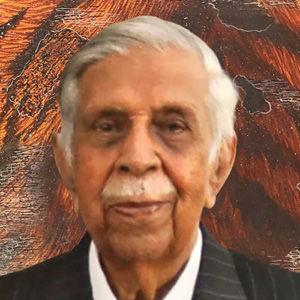
Justice M N Venkatachaliah
Former Chief Justice of India
Justice M N Venkatachaliah at the 94th SKOCH Summit: India Law Forum - Intersection of Law & Life
Justice M N Venkatachaliah
Former Chief Justice of India
Key Points*
- The speaker expressed deep humility and gratitude for the affection and recognition shown by the SKOCH forum and panelists.
- He emphasized that praise received reflected the generosity of others rather than his own deserving.
- He identified three major threats to human society: existential risks to survival, concentration of power through disruptive technologies, and a crisis of ethical leadership.
- He warned that democracy cannot coexist with extreme concentration of wealth and economic power.
- He described modern human tragedies as arising from blind loyalty to leaders or causes rather than individual greed alone.
- He stressed that law cannot be separated from values when defining a just and good society.
- He highlighted the core purpose of law and justice as protecting the weak against the strong and minorities against majorities.
- He referenced constitutional ideals of justice, equality, and fraternity as sources of collective hope.
- He noted that constitutional supremacy is a metaphor for the judiciary’s duty to interpret enduring principles in changing contexts.
- He concluded with optimism, gratitude to the Bar, and a reaffirmation of lifelong devotion to duty and service.
* This content is AI generated. It is suggested to read the full transcript for any furthur clarity.
Transcript
It is an honor for us that, uh, Justice would be joining us virtually. He is already here. Ladies and gentlemen, I welcome sir, and I request Justice to kindly address the gathering.
Sir, namaskar. We welcome you, sir.
Hello. Yes, sir, am I audible?
Yes, sir, you’re audible. We welcome you, sir.
Thank you, thank you, thank you.
Ladies and gentlemen, I am deeply indebted to Dr. Bivek Debroy and more particularly the eminent panelists for the affection that was bestowed on me. I must, however, hasten to add that the good and kind things they have said about me are expressions of their kindness and generosity of their hearts. I do not have the impertinence to think that I ever even remotely deserve them.
SKOCH India, as a forum, has honored truly legendary personalities and traditions. His grandfather, Justice Nikam, in the Indian judicial tradition—a general—please convey my respectful greetings to the Chief Justice who has been honored today.
Ladies and gentlemen, human societies have three major threats today. Human survival’s twilight can soon become darkness. New disruptive technologies can create new oligarchies, bring about unimaginable concentration of events and economic power in the hands of a few. Nations that exploit these technologies can overpower other countries and establish unshakable economic empires. We can have democracy or concentration of wealth in the hands of a few—we cannot have both.
The third is the crisis of modern leadership. In recorded history, major human tragedies are not the result of individual selfishness and greed, but the selfless loyalty and dedication of great masses of people to a cause, to a leader, to a symbol, or to other emotive issues. That’s man’s paradox. This is the crisis of ethical leadership.
What are the good aspects of a good society? What are the aspects of a just society? English sages attempted an answer to this question—what is law, what is law for, what constitutes a good law, how much is it different from a law which is bad? But it is clear that no answer is possible without addressing the issue of values.
One of the main purposes of law and justice—courts, judges, governments, and parliaments—is to protect the weak against the strong, and in extreme cases, the individual against the many, and the unpopular against the populace. This is the essence of what we owe each other—justice.
Justice, it is said, is the greatest interest of humans on earth. There are some emotive state sentiments in the Preamble to the Constitution—justice, equality, and fraternity. They open up a vast musical hope and justice.
Speaking of the emergence of the American Supreme Court as a great institution in the American constitutional system, Justice Holmes said some very emotive words. Speaking of the Supreme Court of the United States, he said: The Court has not been infallible. It has made mistakes. It sometimes has run counter to the deliberate and better judgment of the community. It would be as irrational to talk of a solar system without the sun as to talk about a government of the United States without the doctrine of the supremacy of the Supreme Court.
The supremacy is really a metaphor. The concept of supremacy is really a metaphor. What really is its duty is to provide, from time to time, meaning to the fixed words of the Constitution in changing contexts, utilizing the purpose, the purposefulness, and the vagueness of constitutional philosophy.
Ladies and gentlemen, I am deeply touched. I am entering my ninety-fourth year in a couple of months, and the heartwarming experience of your kindness has enabled me to look at the future with more optimism than an old man can do.
I am most grateful to each one of you for the very kind words and sentiments expressed to me. But I’ll tell you from the heart of my heart—what I have done is nothing. Yes, just my devotion to what I consider my second duty. I remember, with spotless clarity, the great amount of affection I have received from the members of the Bar.
I am deeply indebted to them. For the rest of my life—whatever is left of me—to be able to retain in my thoughts the gratitude that I owe to each one of you.
Thank you very much for your kindness. And SKOCH. Thank you so much.
Thank you so much, sir. We just love to hear from you, and indeed, it’s a pleasure.