SKOCH Summit
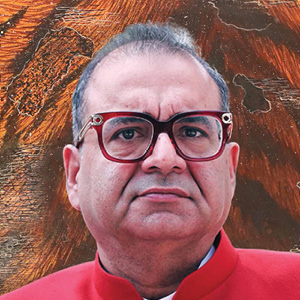
Mr Sameer Kochhar
Chairman, SKOCH Group
Reforms historian and author of best-seller ModiNomics, Sameer Kochhar is Chairman, SKOCH Group. He is a passionate advocate of social, digital and financial inclusion and is a foremost expert on governance and inclusive growth. His work has been acclaimed globally and endorsed by Mr Narendra Modi, Mr M Venkaiah Naidu, Dr Manmohan Singh, Mr Arun Jaitley, Mr P Chidambaram, Mr Yashwant Sinha, Dr C Rangarajan and Dr Montek Singh Ahluwalia and so on. In his thinking and writings and activities, his profound admiration for India's economic reforms and in extension, those outstanding personalities who strive to make these reforms more meaningful and broad-based comes out clear and unambiguous.
Mr Sameer Kochhar at the 94th SKOCH Summit: India Law Forum - Intersection of Law & Life
Mr Sameer Kochhar
Chairman, SKOCH Group
Key Points*
- The Independence of India Act shaped the nation but also caused one of the greatest human tragedies through Partition.
- Personal experiences of Partition underline the deep intersection between law and lived human consequences.
- Jingoism, whether in cinema or public discourse, is not a solution to complex issues like Indo-Pak relations.
- Public policy debates today allow little room for dissent, especially in areas like cryptocurrency, fintech, and gaming.
- Media-driven narratives often promote risky economic behavior among citizens in the name of progress or skill development.
- Despite pressure, courts and public policy have so far resisted being swayed by populist jingoism.
- Technology is expanding expressions of diversity, but India must reassess whether current legal support is sufficient.
- The proposal for a Diversity Commission goes beyond sexuality to address discrimination, employment, and equal opportunity.
- The Uniform Civil Code raises critical questions about evolution versus revolution and the protection of personal belief.
- The gaming and gambling debate highlights constitutional concerns over taxation, federal powers, and the role of the Ministry of IT.
* This content is AI generated. It is suggested to read the full transcript for any furthur clarity.
Transcript
So, please, thank you and namaskar to you all. Uh, no other law has intersected life more deeply than perhaps the Independence of India Act. It gave us this country. It also resulted in one of the biggest human tragedies of all times, and that is why I think the prism on intersection of law and life is extremely important, because we see that happening and playing out in front of us time and again.
I am from a partition family. It took my family 20 years after Partition to get her bearings straight and get back on our feet. I recently watched a movie, Gadar 2. You know, it was good entertainment, and I heard children clap every time Sunny Deol almost, you know, socked it to the Pakistanis. But I can tell you one thing: even a hundred sequels of Gadar later, jingoism is not the answer to Indo-Pak problems in any way.
And we see the same jingoism being adopted in the public policy space extensively. Uh, there is hardly any space left for a differing voice or a dissenting voice to be heard when it comes to areas like cryptocurrency, when it comes to areas like fintech, when it comes to areas like gaming. Practically the entire media and their cousins are, you know, in unison singing the song that, you know, children of India must gamble because it’s good for skill development; children of India must trade in crypto because they’re going to get rich soon.
And this jingoism fortunately has not swayed public policy or the courts yet, and I hope it never does. So, in today’s space and time, while big technology looms large, a lot of things are happening. Technology is giving avenues for expressions of diversity. What is India going to do about diversity? As you all are aware, uh, short of gay marriage, everything else has been supported, but is that sufficient?
So today we discuss our position. SKOCH Group has asked for setting up of a Diversity Commission, on the lines of a Human Rights Commission, because I think the issue goes far beyond just sexuality and bedrooms and marriage. It is a larger issue of discrimination, employment, equal economic opportunity, and growth.
We also discussed Uniform Civil Code, a much-debated topic. While the Directive Principles, uh, have guided us that we should have a Uniform Civil Code, is that going to happen as a revolution? Is it going to have an evolution? And if there is indeed such a codified religion, where will be the personal spaces within that? What happens to belief? So that’s the other area that we are looking at.
And of course, we’re looking at gaming. One issue that has been set to rest by the last GST meeting is that there is no difference in terms of taxation on gaming and gambling. The argument essentially being given by the industry is that whether we are skill-based or we are a game of chance, the fact is the end result of both is gambling and betting.
So are we going to decide taxation on the process—that my process to come to betting is more intelligent than your process of coming to betting, because you are chance-based and I am skilled? The fact of the matter is, it is betting and it is wagering. So the point of law then would be: are we taxing the process, are we identifying the process, are we acknowledging the process, or are we acknowledging and identifying the line of business, which is betting?
Also, there are constitutional issues. Increasingly, areas that are, you know, defined as state areas—which gaming and gambling is, of course, one—are being put at the doorstep of the Centre by, again, concerted industry efforts, that this is Ministry of IT’s domain because it is digital. But the stock markets are also digital. Should the judiciary be replaced by the Ministry of IT? Panchayati Raj institutions are also digital. Should Panchayati Raj institutions be the domain of the Ministry of IT?
So that’s also a question to be pondered over and answered. Is the role of the Ministry of IT domain, or is it just enabling a digitalisation environment?
We welcome you to the still-independent 94th edition of the SKOCH Summit, and we hope when we are having the 200th SKOCH Summit, we still would be independent.
Welcome. Enjoy. Thank you so much.