SKOCH Summit
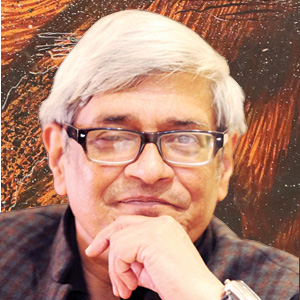
Dr Bibek Debroy
Chairman, Economic Advisory Council to the Prime Minister
Bibek Debroy is a visionary economist who has written extensively on economic growth covering the entire gamut from legal reforms to railway reforms. He was Consultant to the Department of Economic Affairs and worked on Legal Adjustments and Reforms for Globalising the Economy project by Finance Ministry and UNDP. He was the rapporteur for implementation in the Commission on Legal Empowerment of the Poor. Not only at the centre, even states have been beneficiaries of his expertise including Jharkhand, Rajasthan, Jammu & Kashmir and Gujarat. He Chaired the Committee to restructure Indian Railways. With more than 100 books and many more in the pipe, Debroy is a teacher at heart and believes in decentralisation and inclusive growth with the last person in the queue. He believes that the national income of any country is measured by the productivity of its citizens in the working age group.
Dr Bibek Debroy at the 92nd SKOCH Summit: India Economic Forum - India 2047
Dr Bibek Debroy
Chairman, Economic Advisory Council to the Prime Minister
Key Points*
- I came here for one hour, even on a rainy Saturday, because my dear friend Govinda Rao is receiving a Lifetime Achievement Award.
- Govind maintains a low profile, which makes this recognition even more special.
- Govind and I belong to a generation shaped by shortages, desperation, and the struggle of post-Independence India.
- Like Govind, I grew up without electricity and without tap water.
- Our generation carried a chip on its shoulder when defending India’s image abroad.
- We were taught the world had developed, developing, and least developed countries, but India often felt like a “refusing to develop country.”
- 2047 is an aspirational goal, and no one truly knows what India will look like then.
- Whatever growth forecasts say, India’s economic size and strategic clout will be very large by 2047.
- Reforms will not all happen because reforms are not win-win — some people win and some lose.
- Even so, India in 2047 will be remarkably different, with new leaders and new subjects we cannot imagine today.
* This content is AI generated. It is suggested to read the full transcript for any furthur clarity.
Transcript
Good morning, ladies and gentlemen.
Thank you for having shown me the honor of inviting me here to present these awards to people I know extremely well.
As you know from the newspapers, there’s a lot of stuff going on in Delhi right now, this particular weekend — some stuff that harks back to 1947, some stuff that looks forward to 2047. And I needed to disappear for one hour to come and be here. So someone asked me, “Where are you going? How can you afford to vanish, that also on a rainy Saturday morning?” So I said, “No, no, I have to go. My dear friend Govinda Rao is getting a Lifetime Achievement Award.”
So he said — and Govind himself said he maintains a low profile — so he said, “Oh, the actor?” I said, “No, no, no, no. I don’t have actors as friends. It is…” So he said, “Wait a minute, isn’t Govinda Rao too young to be getting a Lifetime Achievement Award?” I said, “Yes, yes, that’s true.” But there have been economists — not all — but there have been some economists who have done a considerable amount of good work after getting lifetime achievement awards. And I am particularly mentioning Govind.
Govind is a few years older than me, but I’m particularly mentioning Govind because Govind and I, in some sense, belong to a slightly different generation compared to Amit Kapoor, Sanjeev Sanyal, Charan Singh — well, Charan pretends to belong to the other generation, who will go on to do many other things and with many other awards.
Govind said he grew up in a house which had no electricity — ditto for me. He grew up in a house which had no tap water — ditto for me. That was a generation immediately after Independence. It was a generation which grew up with shortages. It was a generation which grew up with desperation. It was a generation which grew up with a chip on its shoulder every time it went out into the outside world and had to defend India.
It was a generation where the image of India elsewhere in the world was about yoga and cuisine. “At the stroke of the midnight hour when the world sleeps, India awakes” — it may have been a masterly piece of oratory, but strictly speaking it was wrong, in the sense that at the stroke of the midnight hour the rest of the world was not sleeping. The rest of the world was chugging along, moving along, when Govind and I were still students.
We used to be taught — at least I was taught, I’m sure so was he — we used to be taught that there were three categories of countries in the world. Those terms are not quite used now. There were three categories of countries in the world: the developed countries, the developing countries, and the LDCs — the least developed countries.
As we began to grow up, we realized that there was another category, and that set consisted of only one single country, and that single country was India. And the acronym for that set was not LDC, but RDC — and RDC stood for “refusing to develop country.”
2047 and 1947 — 2047 is rather an interesting number. For those of you who are interested in numbers other than the obvious multiples of 1, 2047 has two other multiples, both of which are prime numbers: 23 and 89. I think that’s interesting because in some ways India is reflecting and carrying forward the legacy that’s almost 89 years old.
And in this book — which by the way is closely guarded — I am told only some privileged people have copies of this book. I am told it is going to be open to the public, available to the public, only when the new Parliament building is inaugurated. Anyway, there’s a book which says “India 2047,” which is a paper I am told by Dr Rangarajan, who is now 91.
So that 23 and 89 — it is a useful metaphor, particularly because the SKOCH Group also sometimes makes its presence felt. Rohan Kocher, who’s older again than 23, but pretends to be 23. But anyway, so looking forward to 2047 — it’s an aspirational goal. No one actually knows what India will be like in 2047.
Some of us have written papers. Despite life expectancy having increased, at least Govind and I will not be alive in 2047. So no one will criticize us for saying, “You are wrong.” Not necessarily true for the others.
Yes, that’s what I meant. That’s what I meant.
As I said, it’s aspirational. Whatever kind of prognosis you have about real growth rates, there is no denying that the size of the economy — and size does matter — is going to be fairly large: US, China, and India. The relative size — I’m not talking about per capita income, I’m talking about the total size — it depends on whether you’re doing purchasing power parity or official exchange rates, but there’s no denying the size will be considerable.
If you look at the work of Angus Maddison, the historical work of Angus Maddison and his colleagues, and you drag back to India in the past — that particular India was not geographically the same as India today — nonetheless, what distinguished India from the rest of the world was not purely the differential in per capita income, which was not much, but the differential in the size. So the size of the economy, the economic clout it brings, the strategic clout it brings — we can already see it being manifest — will come even more in terms of that aspiration.
A lot depends on what we do and what we don’t do. A list of reforms — every economist will churn out a wish list of reforms — some on the union list, some on the state list, and some actually on the local body list, although not much has been done in terms of decentralization and devolution to the local bodies.
Much of it is about factor market reforms. Much of it is about efficiency. Will those reforms happen? No, all of those will not happen. If you think in terms of ticking boxes — and I said number theory is pretty useful — 2047, you convert it into binary, you will have a series of ones. Will we tick all of those ones? No.
We ought because it’s a complete myth to say that all reforms are win-win. Reforms mean unbalanced — people win, but some people lose. So all of those will not happen.
But nonetheless, no matter how low your forecasts are, no matter how low your predictions are, there is no denying that 2047 will have an India that will be a remarkably different India. That will be an India in which the likes of Rohan Kocher will stand here and give awards on completely different subjects that we cannot even think of today.
Let me congratulate you, and congratulate everyone who has been awarded.
Thank you very much.