SKOCH Summit
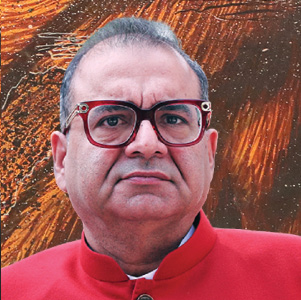
Mr Sameer Kochhar
Chairman, SKOCH Group
Reforms historian and author of best-seller ModiNomics, Sameer Kochhar is Chairman, SKOCH Group. He is a passionate advocate of social, digital and financial inclusion and is a foremost expert on governance and inclusive growth. His work has been acclaimed globally and endorsed by Mr Narendra Modi, Mr M Venkaiah Naidu, Dr Manmohan Singh, Mr Arun Jaitley, Mr P Chidambaram, Mr Yashwant Sinha, Dr C Rangarajan and Dr Montek Singh Ahluwalia and so on. In his thinking and writings and activities, his profound admiration for India's economic reforms and in extension, those outstanding personalities who strive to make these reforms more meaningful and broad-based comes out clear and unambiguous.
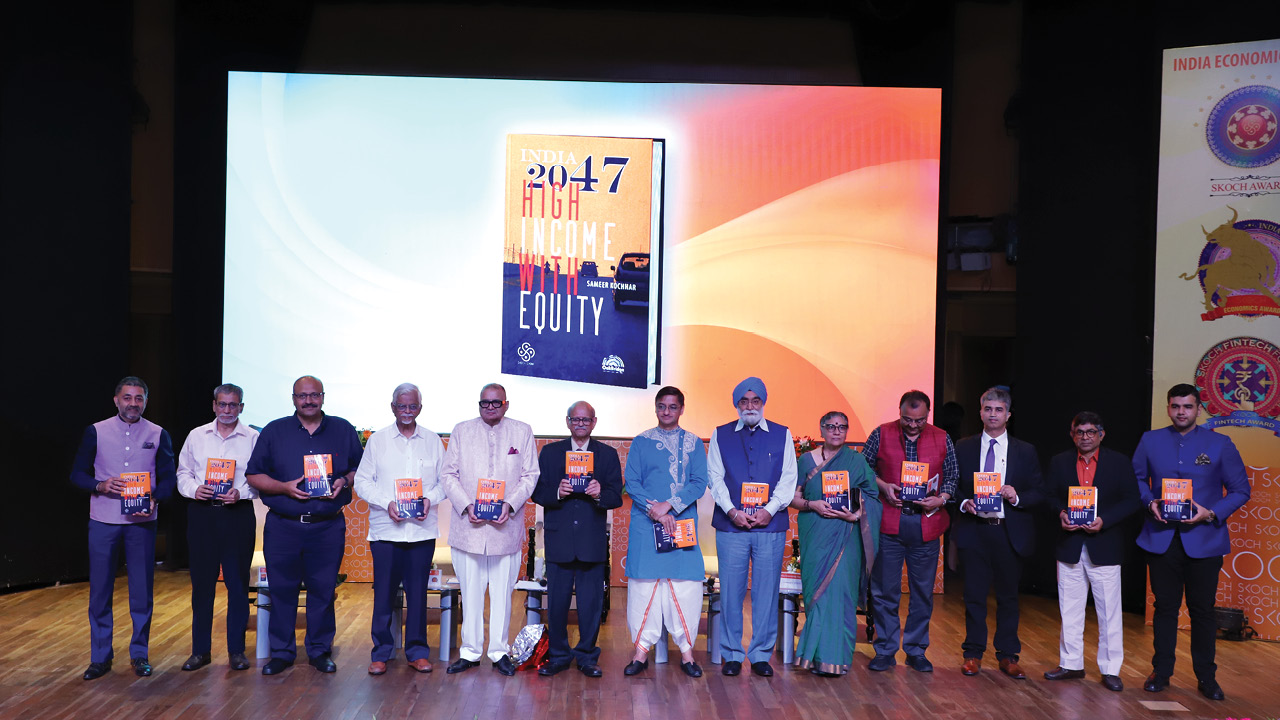
Mr Sameer Kochhar at the 92nd SKOCH Summit: India Economic Forum - India 2047
Mr Sameer Kochhar
Chairman, SKOCH Group
Key Points*
- I may be the only non-economist organizing an economic forum, but my learning comes from lived experience.
- Coming from poverty gives me a real understanding of what “felt needs” should look like in policy.
- Only the poor truly understand the daily burden and trade-offs of poverty.
- Debates on freebies should be grounded in reality, not theory alone.
- I grew up in Paharganj where even ₹50 meant impossible decisions between bills, school fees, and healthcare.
- My mother always prioritized education, even when it meant risking electricity disconnection.
- Labels like merit and non-merit goods raise a deeper question: who decides what is “good” for the poor?
- Free water and free electricity aren’t automatically bad—only a thirsty person knows the value of water.
- Freebies may be flawed, but the real issue is targeting: for all, or for those who truly need it.
- India’s inclusive growth will be built by the “little people,” and SKOCH exists to recognize and celebrate their successes toward 2047.
* This content is AI generated. It is suggested to read the full transcript for any furthur clarity.
Transcript
I am possibly the only non-economist in the world who organizes an economic forum. I have no formal education to back me up on what I say, what I do, what I write, what I recommend. But I do have a huge learning from my own life and my experience, from coming from poverty to where I am today, to depend on — to be able to bring what I say, felt needs, to the policy table.
It is only the poor who can understand the enormous burden of poverty. And in today’s day and age, when we are having such vibrant discussions on things like freebies and what should be given to the poor, what should not be given, I have opinions that are based only on my own experience.
I used to live in Paharganj. My mother was the only one who could, you know, keep track of money. We had very little of it. And if she had 50 rupees, there were challenging decisions to be made. I mean, whether you would use that 50 rupees to pay an overdue bijli ka bill — electricity bill — which was long overdue, would you pay that 50 rupees for my overdue school fee, or would you pay that 50 rupees to a doctor’s visit because she had a splitting headache for many, many years.
Now my mother, what she was, her priority was my education, and she put that money into my school. The next day, the people from Delhi electricity supply came to disconnect our meter. She cried in front of them with folded hands, saying that, you know, we will pay soon enough, and some opportunity them to keep the electricity running.
So when I hear things like merit goods and non-merit goods, and merit subsidies and non-merit, I often wonder who is to decide. Is free electricity bad? Is free water bad?
Water — again, in that same house in Paharganj, we were on the second floor. There was little or no water supply. And in this heat of May and June of Delhi, my mom used to go down two floors and to a public hand pump and bring up 40 buckets of water — 40 buckets — for a family of four.
Only a thirsty person knows the value of drinking water. So is the free water bad? I think these are things to ponder.
And when my economist friends tell me that freebies are bad and we should not give, I say, yeah, freebies generally are bad, but they have to be better targeted. It’s freebies for who. Is it free electricity for all? Is it free water for all? Or is it for some? And that is where the whole complexity of government systems and reaching and targeting comes into play.
My entire life has been devoted to inclusive growth of India. I wanted to see an India where there was no poverty, nobody like me. And I think the honorable Prime Minister has given us a vision by 2047 that is going to be the case. India is going to evixit Bharat.
I think he’s addressing the governing council of NITI Aayog on the same subject, and he’s been talking, he’s been doing this monkey bath ever since he became Prime Minister.
We have been able to make our own little attempt for 30 years now, where we have been collecting these little monkey baths. So if you look at national platforms, or you look at these glitzy awards at media and publications give you, don’t find Grameen banks, you don’t find SNG’s, you don’t find Panchayati Raj institutions. You find nobody.
But it is the literal successes of the little people who are going to make a giant nation, and that is what makes SKOCH different. All of you need to be celebrated and uploaded in your own little way. You have helped India become a developed country in 2047 time frame.
Jai Bharat.