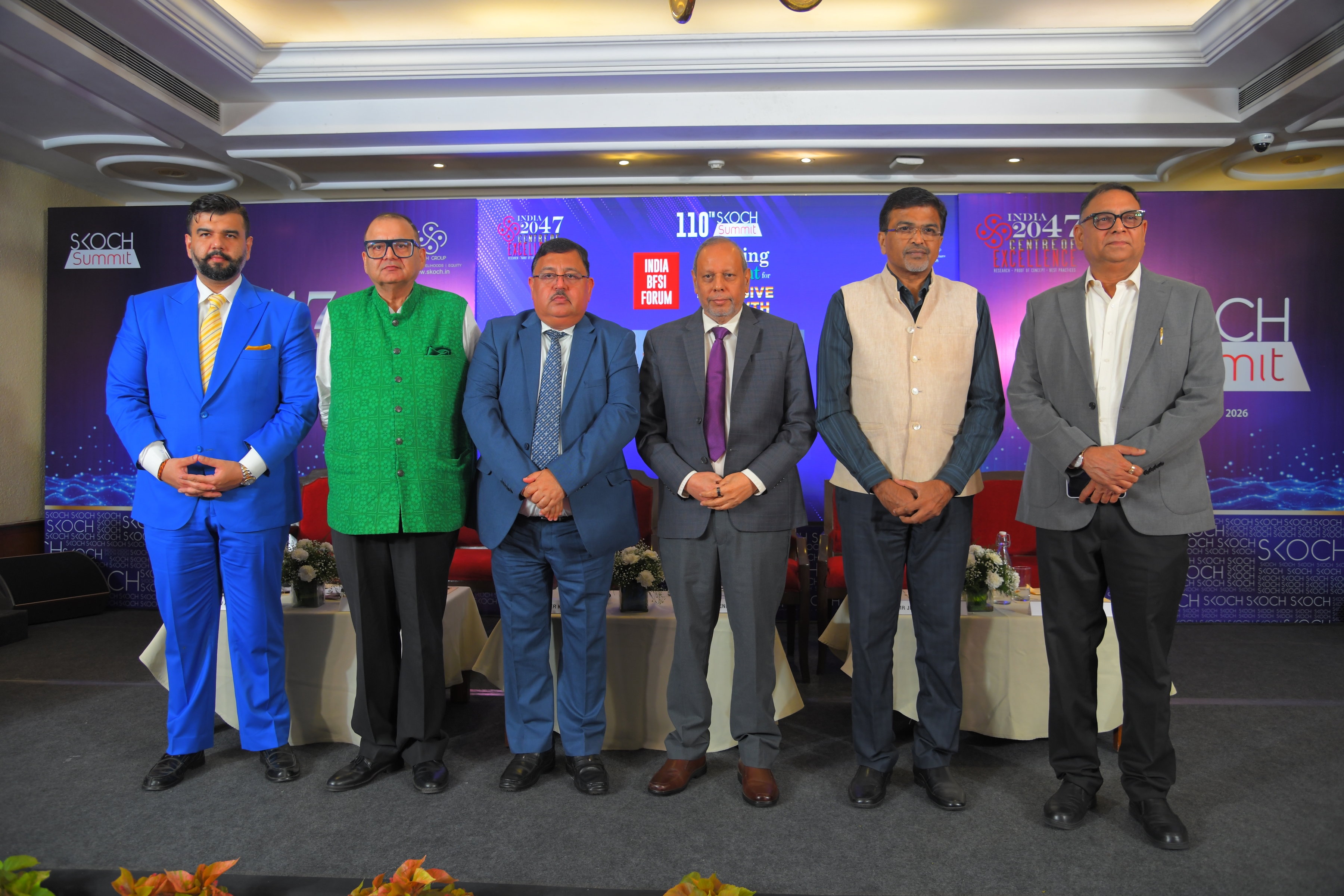
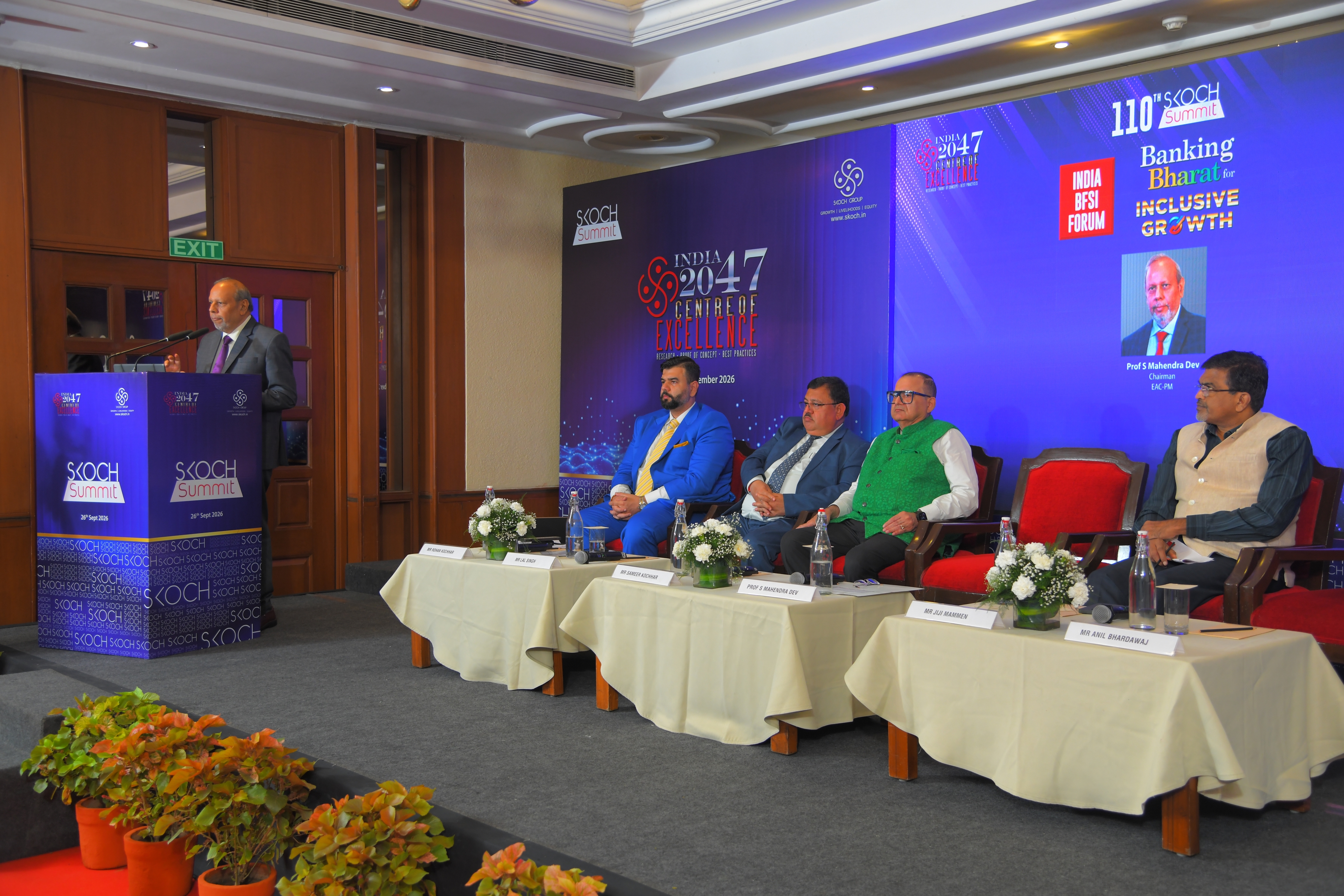
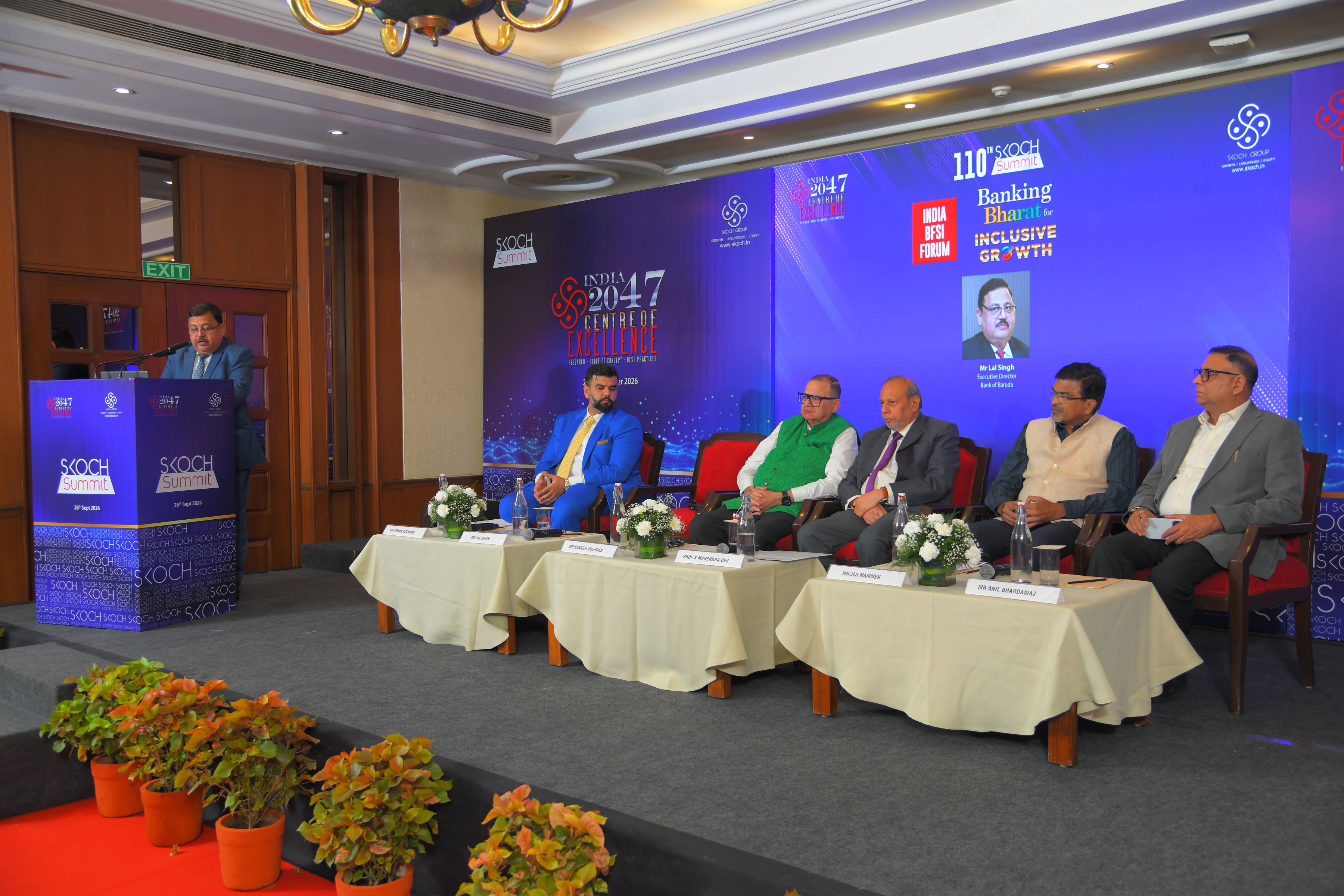
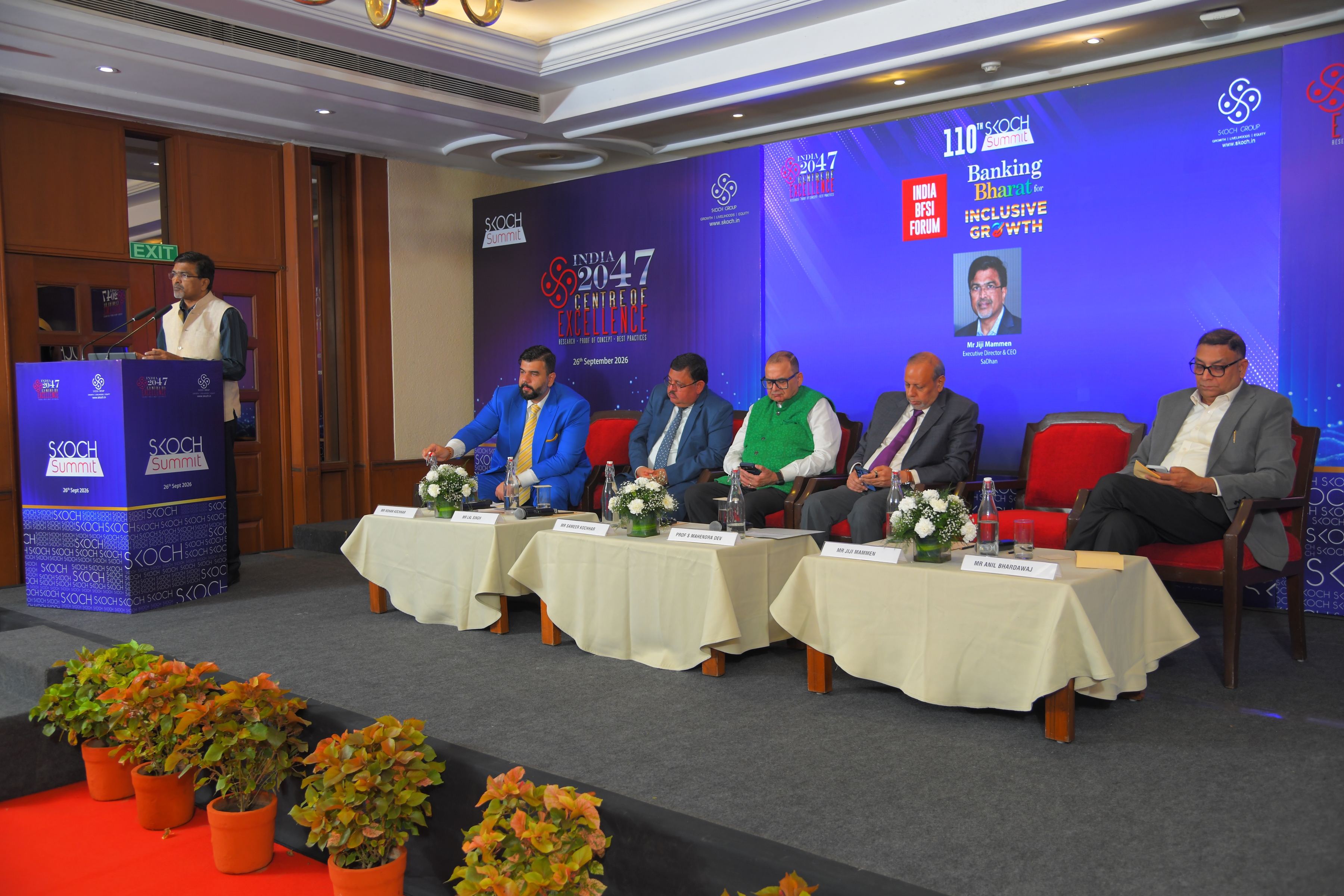
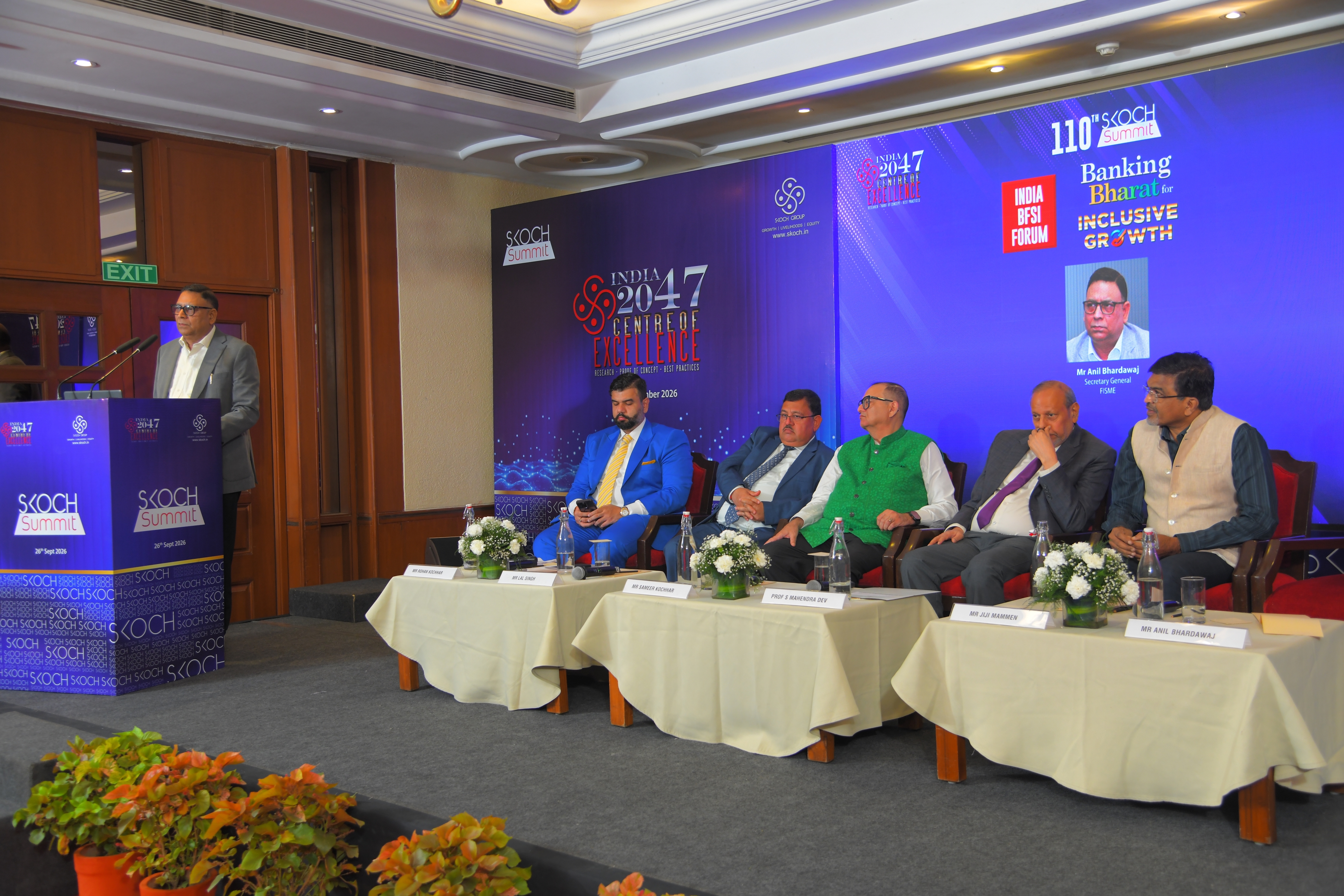
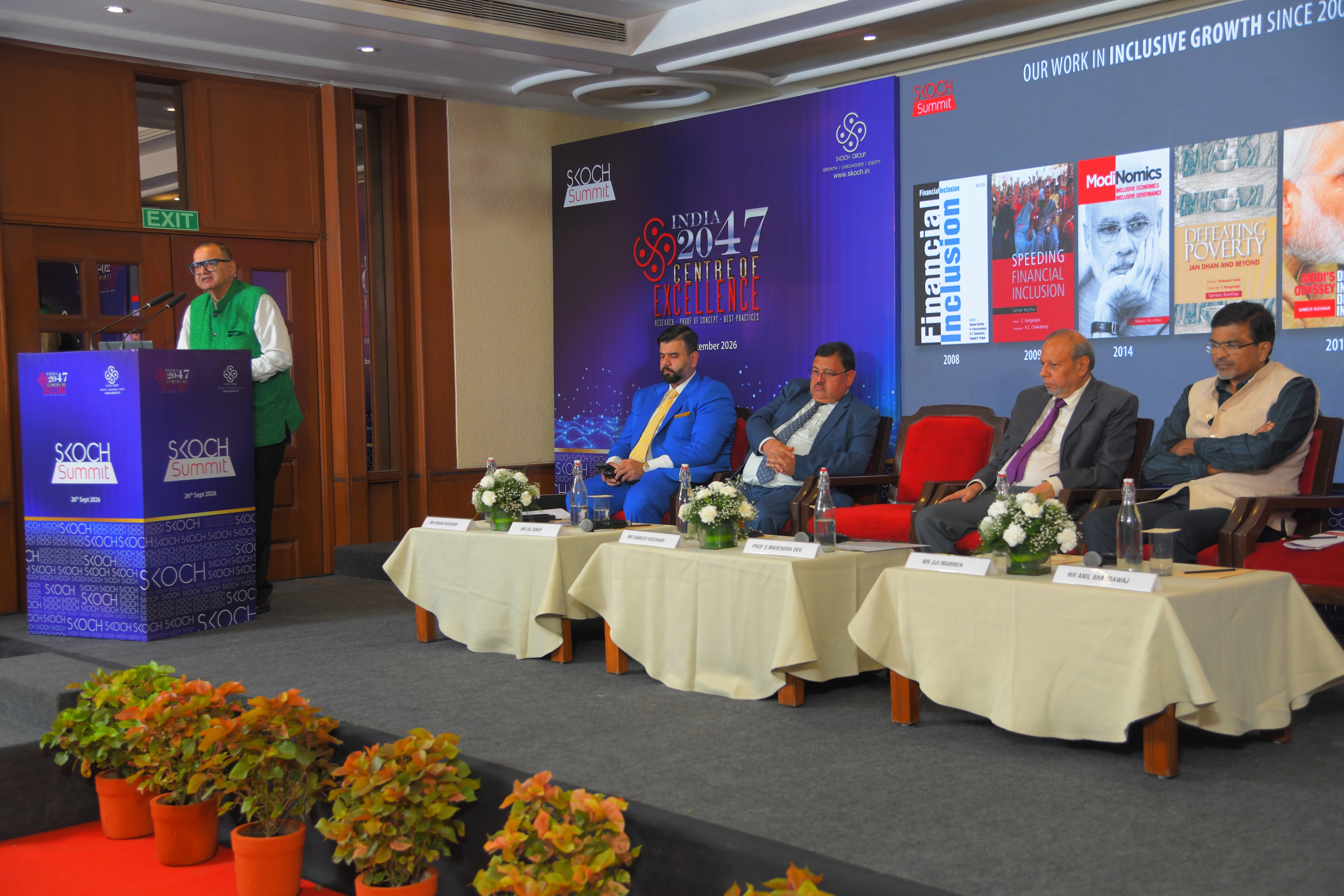
India has made remarkable progress in expanding access to formal finance. Bank accounts, digital payments, direct benefit transfers, Jan Dhan, Aadhaar-enabled services, UPI, credit platforms and a wider banking network have transformed the architecture of financial inclusion. The next challenge is to ensure that financial access translates into tangible outcomes: assets created, livelihoods strengthened, enterprises financed, risks mitigated and jobs generated..
This is the context for Banking Bharat for Inclusive Growth. The conference examines how India’s financial system can move from access to outcomes and from financial inclusion to productive and resilient finance. Inclusion can no longer be measured only by accounts opened, transactions processed or loans disbursed. It must be assessed by whether finance improves household security, supports farmers, strengthens small enterprises, creates local employment and builds resilience to economic, health, climate and business shocks.
SKOCH defines inclusive growth as spatially dispersed, job-generative, equitable and sustainable. Banking is central to each of these dimensions. It enables spatially dispersed growth by financing households, farmers and enterprises beyond metropolitan centres. It supports job generation through MSMEs, self-employment, rural enterprises and local value chains. It contributes to sustainability when finance supports climate-resilient agriculture, green MSMEs, clean mobility, energy efficiency, insurance protection and responsible lending.
The conference takes a broad view of banking and finance. Credit remains central, but inclusive growth also requires savings, insurance, pensions, guarantees, digital infrastructure, risk management, and financial literacy. The key question is whether the financial system can help people move from vulnerability to security, from subsistence to enterprise, and from access to opportunity.
A focused discussion on Retail, Agriculture and MSME Finance: Credit, Insurance and Livelihoods will examine the practical channels through which banking reaches Bharat. Retail finance can support housing, education, mobility, savings, pensions and insurance. Agriculture finance must move beyond seasonal crop loans towards rural livelihood finance, including allied activities and farm mechanisation. MSME finance must support working capital, supply-chain finance, cash-flow-based underwriting, credit guarantees and enterprise formalisation.
Insurance is integral to this architecture because credit enables investment, while insurance protects that investment against shocks. The conference will also examine how digital public infrastructure, data-led underwriting, account aggregators, fintech partnerships and branch-level trust can improve access without compromising prudence. The goal is not indiscriminate credit expansion, but rather finance that is productive, responsible and sustainable.
Arrival, Meet and Greet
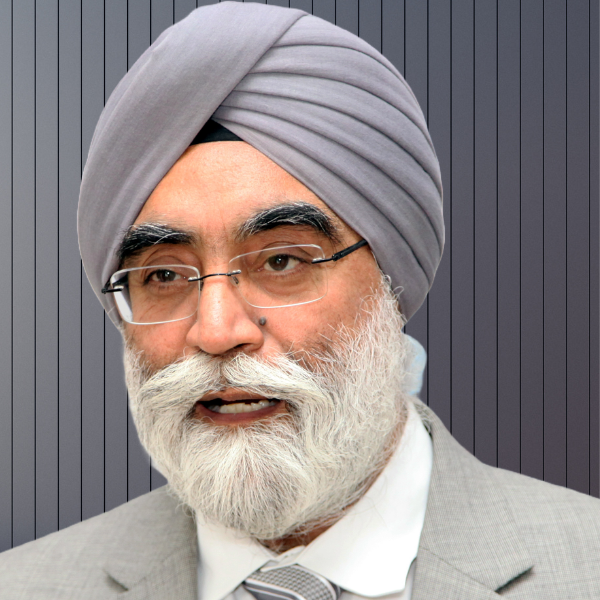
Welcome Dr Gursharan Dhanjal, Vice Chairman, SKOCH Group
Summary: Dignity is on the dice, ladies and gentlemen. It is my pleasure to welcome you all to this
gathering, Banking Parliament's 110th Court Summit. As it is already visible and seen that
we are at the 110th mark, meaning to say that we have led this agenda towards inclusive
growth via various means, various forums, various stakeholder consultations and that brings
us together once again to talk about as to moving forward, what do we do, where do we go.
Ten years into the liberalization, we started focusing on credit. Somewhere around next
three to four years, another fact came to life which was pointed out by the then Finance
Minister that less than 50% of cultivator households have formal access to credit. That
means to say the need was felt even at that time for a formal credit.*
View Full Transcript
Financial Deepening in India:
Scale, Function and the Regulatory Frontier:
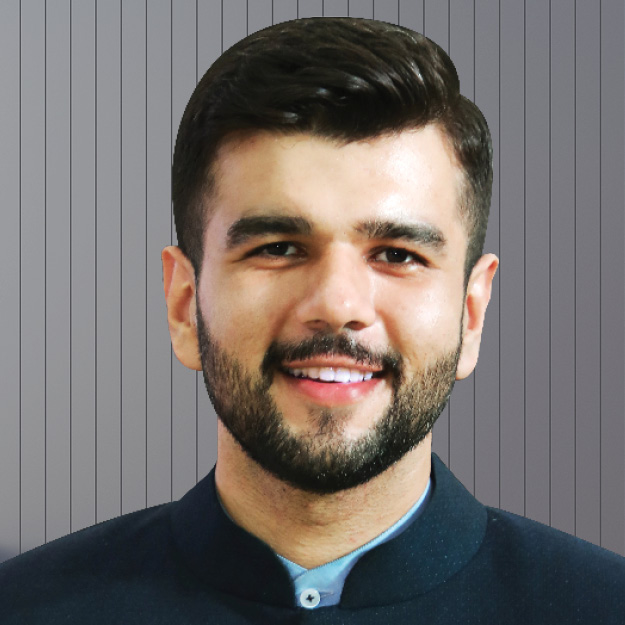
Mr Rohan Kochhar, Founder, SKOCH Law Offices & Mr Sameer Kochhar, Chairman, SKOCH Group
Mr Rohan Kochhar,
Founder, SKOCH Law Offices
Summary:
Thanku Rohan for giving us that macro view of financial debt unlike rohan and most of you,i
belong to a generation that i call Roti kapda and makaan generation you know the famous
film by manoj kumar where the biggest and overwhelming problem that india faced was
poverty and it kind of continued well in you ,well past 2000,2010,2011 poverty was the one
number that india
with their own definitions of poverty. So, since they could not conclude what poverty was,
the schemes to make it a poverty. Obviously, I have to lag behind it.
So, to be used, uneducated and not in the corners, I would say, very easily, simply lack of
money because there is no money, then I will go. So, about a 30%-40% of the population is
very poor. So, whatever policies you make, you make sure that that population is taken care
of.
View Full Transcript
Dignity is on the dice, ladies and gentlemen. It is my pleasure to welcome you all to this
gathering, Banking Parliament 110th Court Summit. As it is already visible and seen that
we are at the 110th mark, meaning to say that we have led this agenda towards inclusive
growth via various means, various forums, various stakeholder consultations and that brings
us together once again to talk about as to moving forward, what do we do, where do we go.
Ten years into the liberalization, we started focusing on credit. Somewhere around next
three to four years, another fact came to life which was pointed out by the then Finance
Minister that less than 50% of cultivator households have formal access to credit. That
means to say the need was felt even at that time for a formal credit.
View Full Transcript
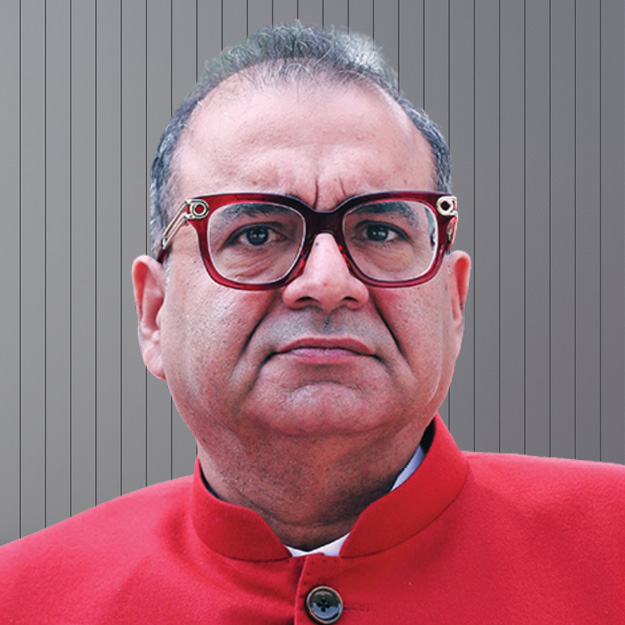
Prof S Mahendra Dev, Chairman, Economic Advisory Council to the Prime Minister (EAC-PM)
Summary: Good afternoon to all of you. First, let me thank the SCARCH group, Mr. Sameer Kochar and
Rohan and others, for inviting me to this 110th SCARCH Summit. The theme of today's
conference, you know, Banking, Bharat for Inclusive Growth, is important and timely,
because we have been talking about growth and inclusiveness also.
And the two presentations by Mr. Rohan, Dr. Rohan and Mr. Sameer, are very good on the
financial deepening and inclusive growth. And we also have very distinguished panel to
discuss this subject. So, I compliment the SCARCH group for organizing this important
summit.
So, there is no doubt that India has made remarkable progress in financial inclusion over the
last decade. The expansion of bank accounts, the general Aadhaar mobile architecture,
direct benefit transfer and digital payments, has brought a very large part of the population
into the formal financial system. So, around 56% of the general account holders are women
and about 78% of the accounts are in rural and semi-urban areas.*
View Full Transcript
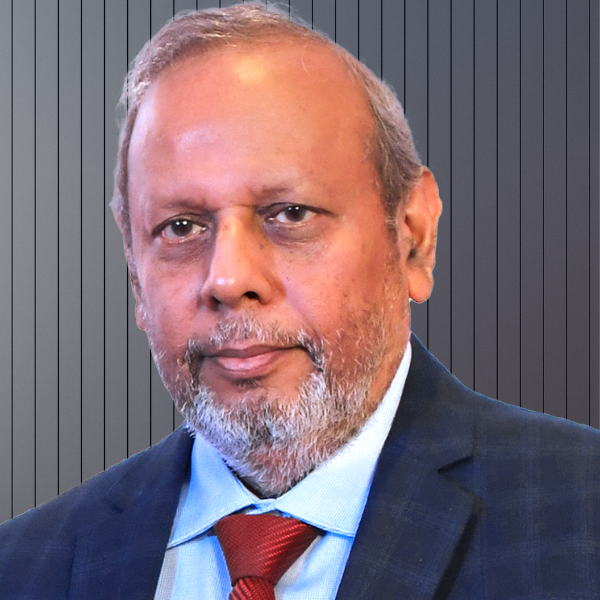
Conferring of SKOCH Challenger Award
Mr Swarup Kumar Saha, Managing Director & CEO, Punjab & Sind Bank
Summary: Under his stewardship, the bank's total business has grown from 1.73 lakh crore to 2.64 lakh
crore. In financial year 2025-26, the bank reported its highest operating profit of 2,182 crore
and net profit of 1,322 crores. The improvement in asset quality was equally impressive with
GNPA declining from 12.17% to 2.40% and NNPA to 0.79%. He has championed a future-
ready technology-led institution with digital channels, now accounting for 95% of
transactions.
This is complemented by systematic investment in people and leadership development.
Ladies and gentlemen, let's put our hands together and congratulate Mr. Surul Kumar Saha,
Managing Director and the CEO, Punjab and Sindh Bank. And as sir, I can see he is here
online with us, I request sir to kindly address the gallery.*
View Full Transcript
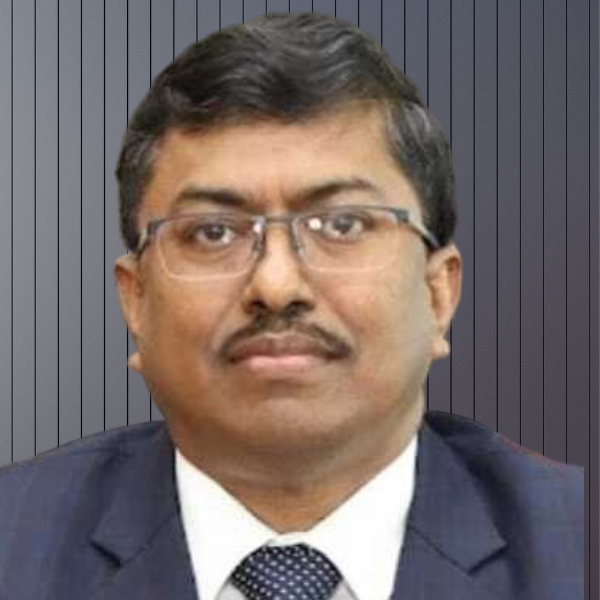
Mr Lal Singh, Executive Director, Bank of Baroda
Summary: Good evening to everyone. Honourable Chairman, Sports Group, Shri Sameer Kochar,
Honourable Chairman, ESC, Prime Minister, Professor, Mahendra Dev Sahib, Managing
Director and CEO, Tajat Hassan Bank, Shri Saurabh Sahaji, CEO, Sajan, Shri G.G. Memonsa,
Founder of Sports Law Offices, Mr. Rohan Kochar, all distinguished guests and jury members
and distinguished industry leaders, ladies and gentlemen. It is a privilege to be part of this
distinguished forum discussing a subject that is central to India's development journey that
is Banking Bharat for Inclusive Growth.
But before that, I express my sincere gratitude to Sports Group and the jury for giving me
this prestigious award. This award is not for me, but this is for all the underprivileged people
whom we are trying to serve and trying to develop the products and services for their
betterment. So, coming to the topic, Banking for Inclusive Growth, India has achieved
financial inclusion at scale.*
View Full Transcript
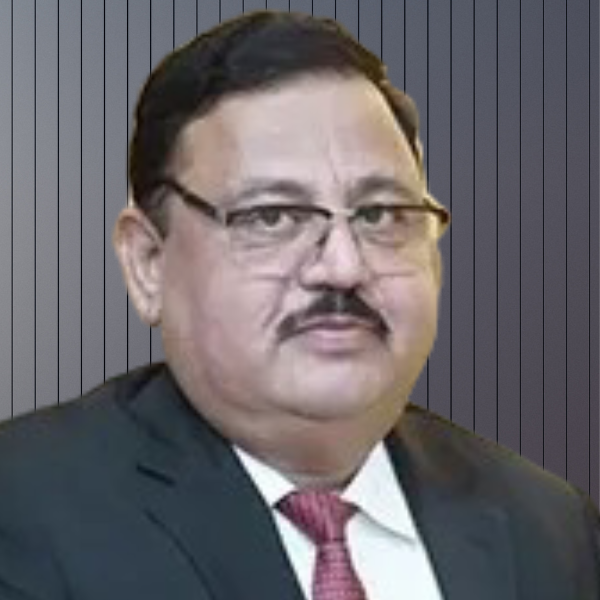
Mr Jiji Mammen, Executive Director & CEO, SaDhan
Summary: Thank you very much. Good evening to all of you. Respected Mahendra Devji, Honorable
Chairman of EACPM, Mr. Samir Kocharji, Chairman of this Coach Club, Sri Narasimhaji,
Executive Director, Mahabharata, Sri Anil Parthasarathy, Secretary General, Mr. Rohan,
Founder of Coach Club School, Mr. Sahaji, who was there on the timeline, and all my friends
sitting here.
Good afternoon, good evening to all of you. First of all, let me thank the Coach Club, Mr.
Samir Kocharji and Rohan and the entire team of Gujarat and the entire team of this Coach
Club for inviting me for today event. I have become a part of this Coach family, I believe,
because I have been attending some of these events for the last several years, and I find
that every time, you know, the program becomes one better than the other.*
View Full Transcript
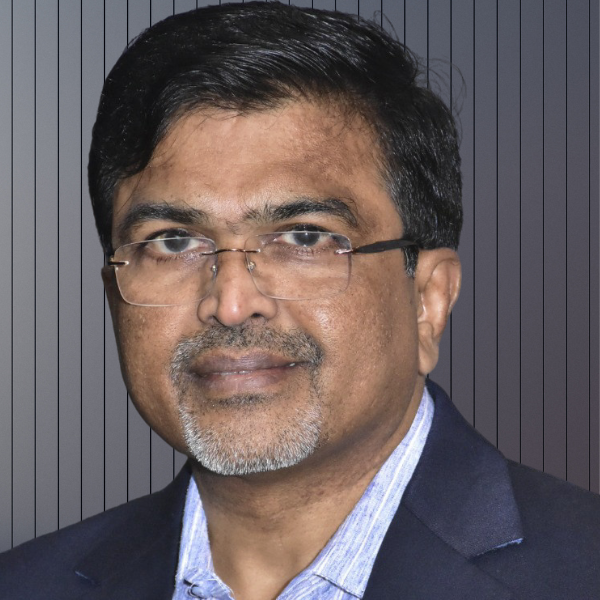
Mr Anil Bhardawaj, Secretary General, FISME
Summary: Ladies and gentlemen, I must thank Mr.Kaushik for giving me this opportunity to invite me
and giving me this opportunity to share something with you. Today, for the last two days
actually, this may have been organizing an international conference of media of EUFDA in
Sonipat. And it was difficult to come out.
But Mr.Kaushik's order was there. And the subject was very close to my heart. Of
inclusiveness.
So, I thought that I should take it. I am happy that I was able to make it and enter the hall
and accept his warm welcome. Thank you for sitting here.*
View Full Transcript
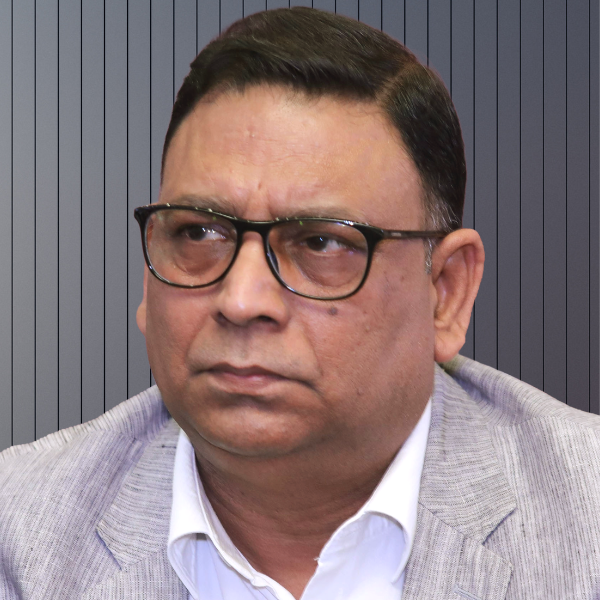
Prof. S. Mahendra Dev is presently Chairman, Economic Advisory Council to the Prime Minister (EAC-PM). He was the Director and Vice Chancellor, Indira Gandhi Institute of Development Research (IGIDR) in Mumbai for 12 years during 2010-2022. Prior to this position, he was Chairman of the Commission for Agricultural Costs and Prices, Ministry of Agriculture from 2008 to 2010. He was Vice Chairman of the Board of Trustees of International Food Policy Research Institute (IFPRI), Washington, D.C. He was also member of the Board of IFPRI for seven years from 2013 to 2019. He was member and Acting Chairman of the National Statistical Commission, Government of India. He got the prestigious Malcolm Adisesaiah Award in 2016. He was Director, Centre for Economic and Social Studies, Hyderabad, India for 9 years from 1999 to 2008.He is member of executive committee of International Economic Association. He did Ph.D. from the Delhi School of Economics and post-doctoral from Yale University, USA.
He is Chairman of the Institute for Development Studies, Andhra Pradesh and Distinguished Professor at ICFAI Faculty of Social Sciences, Hyderabad. He was independent director in Axis Bank and Kotak Mahindra Bank. He is currently the Association President of the Indian Society of Agricultural Marketing. He was Association President of the Indian Economic Association for three years 2018 to 2021. He was conference President of the Indian Econometric Society (TIES), Indian Society of Agricultural Economics, Indian Society of Labour Economics, and Indian Association of Social Science Institutions (IASSI).
His main areas of interest are development economics, agricultural economics Macroeconomics. He has around 150 research publications in national and international journals in the areas of agricultural development, poverty and public policy, inequality, food security, nutrition, employment guarantee schemes, social security, farm and nonfarm employment. He has written or edited 23 books. His well cited publication is “Inclusive Growth in India: Agriculture, Poverty, and Human Development” published by Oxford University Press. His book “Perspectives on Equitable Development” was released by the former Prime Minister of India.
He has been a consultant and adviser to many international organizations, such as UNDP, World Bank, International Food Policy Research Institute, UNESCO, ILO, FAO, ESCAP, UNICEF, DFID, and OECD. He has been a member of several government committees in India, including the Prime Minister’s Task Force on Employment chaired by Dr. Montek Ahulwalia, advisory committee for the National Commission on the Enterprises in the Unorganized sector, member of the Committee on Financial Inclusion chaired by Dr. C. Rangarajan, member of the Expert Group on Poverty chaired by Dr. C. Rangarajan. He was the Chairman of the Committee on Terms of Trade on Agriculture constituted by the Ministry of Agriculture. He was member of several working groups for 9th, 10th, 11th and 12th Five-Year Plans in India. He is also member of several committees of NITI Ayog. He has received honors for eminence in public service. He got awards for best teacher in economics and outstanding contribution to education. He received honorary doctorate (D.Litt) from the Acharya Nagarjuna University, Andhra Pradesh.
Shri Swarup Kumar Saha assumed the charge as MD & CEO of Punjab & Sind Bank on June 3rd 2022. Before taking up this assignment he was Executive Director of Punjab National Bank since March 10, 2021. Shri Saha, a graduate in Science from University of Calcutta, Kolkata, started his career in Banking in erstwhile Oriental Bank of Commerce in the year 1990 as Probationary Officer. He is a Certified Associate member of Indian Institute of Bankers (CAIIB). He also holds a Diploma in Treasury, Investment and Risk Management (DTIRM) from Indian Institute of Banking and Finance (IIBF) and Certificate in Risk in Financial Services from IIBF in collaboration with CISI, London along with various certifications related to IT Security, Cyber Crimes and Fraud Management. Shri Saha was one of the participants for the flagship Leadership Development Program of Banks Board Bureau (BBB) in 2019 conducted through IIM, Bangalore. He has also participated in Advanced Management Program conducted by CAFRAL/Stern Business School, New York and Leadership Development Program conducted by NIBM & Kellogg School of Management, USA. In a career spanning over 30 years, he has worked in different capacities and has worked across the country. He has wide exposure in Human Resource Development, Treasury, International Banking, Credit, Risk Management, Organization Restructuring and Board matters. During his tenure at Head Office of erstwhile Oriental Bank of Commerce, he headed Treasury and International Banking, Human Resource Development Division and Board Division.
View MoreAnil Bhardwaj is Secretary General of the Federation of Indian Micro Small & Medium Enterprises (FISME).
He has worked extensively in the fields of international trade and SME development. He has advised or led several SME development projects supported by multilateral and bilateral donor agencies in India.
His recent engagements include Member, Damodaran Committee for Reforming the Regulatory Environment for Doing Business in India (Ministry of Corporate Affairs); Member, Drafting Committee for ‘National Voluntary Guidelines on Social, Environmental and Economic responsibilities of Business’ since notified by Ministry Corporate Affairs (Govt. of India);.
View MoreShri Lal Singh joined Bank of Baroda as an Executive Director on October 9, 2023. He started his career as a Rural Development Officer in Union Bank of India in 1990. As a career banker, he has 33 years of deep and distinguished experience including MSME Credit, Corporate Finance, Rural and Agri Business, and Human Resource Development.
As the Zonal Head, he has successfully spearheaded large and prestigious zones such as Varanasi, Lucknow, Chennai as well as Regions such as Mumbai West and Udaipur (Rajasthan). Shri Singh has diverse experience across Metro Urban Semi-Urban Rural (MUSR) locations, and has led exponential growth as Regional Head and Branch Head across Rajasthan, Gujarat, Maharashtra and UP.
Post amalgamation of Andhra Bank and Corporation Bank with Union Bank of India, he led the business transformation of the Bank's MSME, Rural and Agri Business. In Shri Singh’s last assignment, he was the Chief General Manager for the Bank's strategic HR function. He directly led the Bank's flagship project, Union Prerna, establishing a new performance culture, succession planning and improving talent engagement with the 75,000+ employees of the Bank. Under his leadership, the HR function has won 12+ awards from leading global organisations, and an ISO certification for digital and data enablement. He has also anchored the setup of an advanced L&D unit, through the creation of a rich learning ecosystem to build market-ready skills in employees.
Shri Singh has served multiple board and leadership level positions. He was the Chairman of the Sub Committee of the State Level Bankers’ Committee, Uttar Pradesh for Credit Deposit Ratio and Bringing Green Revolution to Eastern India (BGREI). He was a nominee director on the board of the UP Industrial Consultants Limited (UPICO), M/s. Nab Samruddhi Finance Ltd (subsidiary of NABARD), PSB Alliance Pvt. Ltd., Supervisory Board of India Micro Finance Equity Fund (SIDBI), Trustee on the Governing Board of Indian Institute of Bank Management (IIBM), Guwahati and also Union Bank of India Social Foundation Trust (UBSFT) for Corporate Social Responsibility as well as Union Bank of India’s Employees Trust for Pension, Provident Fund and Gratuity.
View MoreMr Jiji Mammen is the Executive Director & CEO of Sa-Dhan, a position he has held since June 17, 2022. With almost four decades of distinguished experience in microfinance, agriculture, and rural development, he is widely regarded as a leading voice in India’s inclusive finance ecosystem.
Before joining Sa-Dhan, Mr Mammen served as Managing Director of NABFINS, an NBFC-MFI promoted by NABARD. He was also the Founder, Managing Director & CEO of Micro Units Development and Refinance Agency Ltd. (MUDRA), established in 2015 to support the Government of India’s flagship initiative, the Pradhan Mantri Mudra Yojana.
During his long association with NABARD, he held senior leadership roles including Chief General Manager, where he headed key regional offices in Rajasthan, Andhra Pradesh, and Telangana, and led the Department of Refinance at the national level.
Mr Mammen holds a postgraduate degree from the Indian Agricultural Research Institute, New Delhi, as well as a law degree. He is a Certified Associate of the Indian Institute of Banking and Finance (IIBF) and has also served as a faculty member at the Bankers Institute of Rural Development, Mangaluru. A frequent speaker at national and international forums, he brings deep insights and practical perspectives on advancing financial inclusion and strengthening the microfinance sector.
View MoreReforms historian and author of best-seller ModiNomics, Sameer Kochhar is Chairman, SKOCH Group. He is a passionate advocate of social, digital and financial inclusion and is a foremost expert on governance and inclusive growth. His work has been acclaimed globally and endorsed by Mr Narendra Modi, Mr M Venkaiah Naidu, Dr Manmohan Singh, Mr Arun Jaitley, Mr P Chidambaram, Mr Yashwant Sinha, Dr C Rangarajan and Dr Montek Singh Ahluwalia and so on. In his thinking and writings and activities, his profound admiration for India's economic reforms and in extension, those outstanding personalities who strive to make these reforms more meaningful and broad-based comes out clear and unambiguous.
View MoreRohan Kochhar stands at the intersection of economics, social science, and law, leveraging his multidisciplinary expertise to drive impactful change in public policy, emerging technologies, and ESG (Environmental, Social, and Governance) initiatives. As the founder of SKOCH Law Offices, Rohan has built a boutique law firm renowned for its deep domain knowledge and innovative approach to legal challenges.
View MoreAwards